Turn Your Dealer Website Into a Lead Machine
In today’s hyper-competitive automotive market, your dealership’s website is no longer just a digital business card—it’s your primary showroom, your lead generation engine, and often, the very first interaction a potential customer has with your brand. Gone are the days when a simple listing of available cars and a phone number would suffice. Modern car buyers are savvy, informed, and expect a seamless, intuitive digital experience that mirrors the ease and convenience they find in other online retail environments. If your website isn’t optimized to meet these expectations, you’re not just losing clicks; you’re losing customers to the dealership down the street whose site is doing the job better. A high-performing website is the single most powerful tool in your digital marketing arsenal, working for you 24/7 to attract, engage, and convert visitors into qualified, actionable leads.
This article will serve as a comprehensive guide to transforming your website from a passive online brochure into an active sales machine. We will dive deep into the essential components that make a car dealer website truly effective. We’ll explore the critical role of user experience (UX) and why a mobile-first design is non-negotiable. We’ll break down the anatomy of a high-converting inventory search tool, revealing the filters and features that empower customers to find their perfect vehicle. Furthermore, we’ll examine the strategic importance of an integrated trade-in valuation tool and a streamlined financing application. Finally, we’ll tie it all together by discussing the backend integrations that are the invisible engine powering a frictionless customer journey. By implementing these strategies, you can significantly increase your lead capture rate and drive more foot traffic to your physical showroom.
The Unshakeable Foundation: A User-First Website Design
Before a customer ever clicks on a vehicle, they first experience your website’s design and functionality. This initial impression is defined by User Experience (UX) and User Interface (UI). Think of UX as the overall feeling a visitor gets while using your site—is it easy, frustrating, or confusing? UI is the specific look and feel—the buttons, the layout, the colors. For a dealership, a positive UX is paramount. If a user can’t easily find what they’re looking for, they won’t hesitate to hit the “back” button and go to a competitor’s site. A user-first design is built on a few core principles that you cannot afford to ignore.
Mobile-First Is the Only Approach
The majority of initial car shopping research now happens on a smartphone. This means your website must be designed for the small screen first, and then adapted for desktop, not the other way around. This “mobile-first” philosophy ensures that the experience is optimized for the largest segment of your audience. Key elements of a strong mobile experience include:
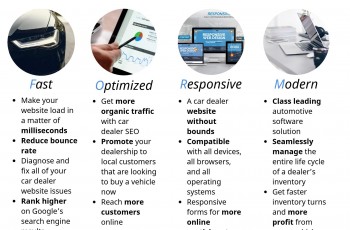
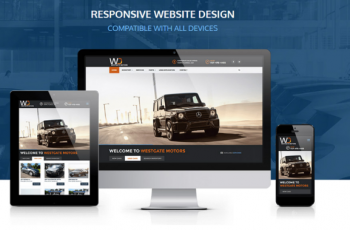
- Responsive Design: The website layout should automatically adjust to fit any screen size, from a large desktop monitor to a small smartphone, without pinching or zooming.
- Thumb-Friendly Navigation: Buttons and clickable links should be large enough and spaced far enough apart to be easily tapped with a thumb. Menus should be simple and collapsible (often called a “hamburger” menu).
- Fast Load Times: Mobile users are notoriously impatient. Every second your site takes to load increases the bounce rate. Optimize images, use efficient code, and invest in quality hosting to ensure your site is lightning fast. A slow website is a lead killer.
Intuitive Navigation and High-Quality Visuals
When a user lands on your homepage, they should immediately understand how to get where they want to go. Your main navigation menu should be clean and predictable. Use common sense labels like “New Vehicles,” “Used Vehicles,” “Finance,” “Service & Parts,” and “Contact Us.” Avoid confusing jargon. The goal is to reduce the number of clicks it takes for a user to find a car they’re interested in.
Alongside clear navigation, high-quality imagery is non-negotiable. You are selling a high-value, visual product. Grainy, poorly lit, or stock photos will instantly erode a customer’s trust. Invest in professional photography for your inventory. Showcase multiple angles of each vehicle, both interior and exterior. Even better, incorporate 360-degree interactive views and short video walkarounds. These rich media elements allow customers to explore the vehicle from the comfort of their home, building confidence and a stronger desire to see it in person.
The Engine Room: Advanced Inventory Search and Filtering
The single most important function of your dealership website is allowing customers to browse your inventory. This is the digital equivalent of them walking the lot. A weak, clunky, or limited search function is a direct path to user frustration and lost leads. To create a truly effective search experience, you need to provide users with robust tools that empower them to quickly narrow down your entire inventory to the few vehicles that perfectly match their needs and desires. A simple search bar is not enough.
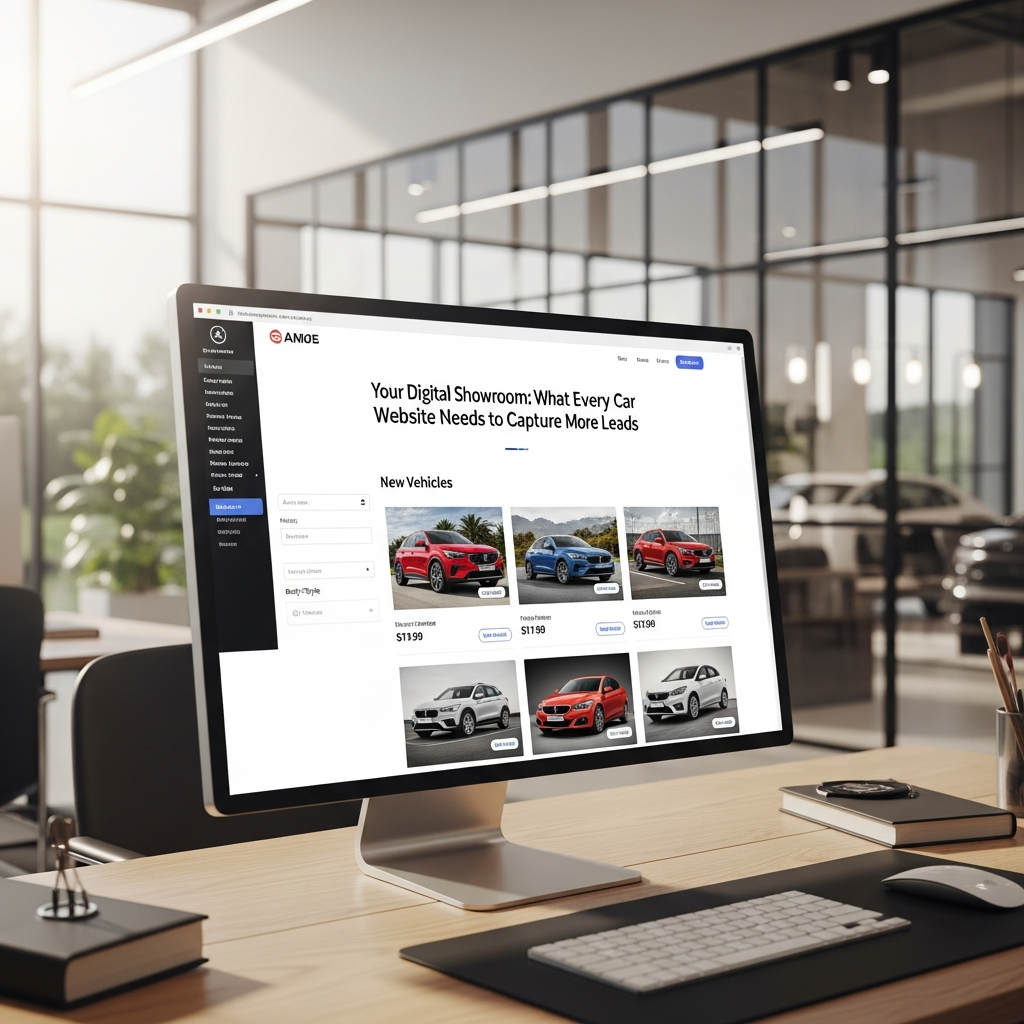
An advanced filtering system is the key. By giving users control, you make them feel more invested in the shopping process. Your inventory search page should include a comprehensive set of filters that customers actually use. Essential filters include:
- Core Identifiers: Make, Model, Year, and Trim.
- Condition: New, Used, and Certified Pre-Owned (CPO).
- Price: A slider for a price range is far more user-friendly than fixed dropdowns.
- Mileage: Especially crucial for used car shoppers.
- Body Style: SUV, Sedan, Truck, Coupe, Van, etc.
- Features: This is where you can truly stand out. Allow users to filter by specific, desirable features like Sunroof, Leather Seats, Navigation System, Apple CarPlay/Android Auto, Third-Row Seating, and advanced safety features.
- Technical Specs: Drivetrain (AWD, FWD, RWD), Transmission (Automatic, Manual), and Fuel Type (Gas, Hybrid, Electric).
Once the user applies these filters, the Search Results Page (SRP) must present the information clearly. Use a clean grid or list layout. Each vehicle listing should display a high-quality primary photo, the year, make, and model, the price, and key stats like mileage. Most importantly, each listing must have a clear and compelling Call to Action (CTA) like “View Details” or “See Vehicle” that leads them to the Vehicle Detail Page (VDP).
The Conversion Hub: The Vehicle Detail Page (VDP)
If the inventory search is where customers browse, the Vehicle Detail Page (VDP) is where they decide to take the next step. This page is arguably the most important page on your entire website for lead conversion. Its sole purpose is to provide the visitor with all the information and tools they need to move from a passive browser to an active lead. A poorly designed VDP can stop a promising customer journey in its tracks.
An effective VDP is a careful balance of detailed information and clear, actionable steps. It must include a comprehensive photo gallery with high-resolution images of the vehicle from every angle, including close-ups of the interior, dashboard, wheels, and any special features. A video walkaround adds another powerful layer of engagement. Alongside the visuals, you must provide transparent and complete information. This includes:
- Clear Pricing: Display the MSRP, any dealer discounts, and applicable rebates. If you offer a special “Internet Price” or “E-Price,” make it prominent. Avoid hidden fees and be upfront.
- Detailed Specifications: Pull vehicle specs directly from the VIN to ensure accuracy. List out all features, packages, and technical details.
- Vehicle History Report: For used vehicles, prominently display a link to a free CARFAX or AutoCheck report. This is a massive trust-builder.
Crucially, the VDP must be peppered with multiple, strategically placed CTAs. Don’t just have one “Contact Us” button. Give users options that align with their stage in the buying process. Essential VDP CTAs include:
- “Check Availability”: A simple, low-commitment form to confirm the car is still on the lot.
- “Schedule Test Drive”: A direct call to action that moves the customer toward a physical visit.
- “Get Pre-Approved”: For customers ready to talk financing.
- “Calculate Payments”: An interactive tool that helps users understand affordability.
- “Make an Offer”: A way for serious buyers to start a negotiation.
By providing these tools directly on the VDP, you capture the user’s intent at its peak, dramatically increasing the likelihood of converting them into a lead.
Capturing High-Intent Leads: The Smart Trade-In Form
Many, if not most, of your potential buyers also have a vehicle to sell or trade. A prominent and easy-to-use trade-in valuation tool is one of the most powerful lead generation assets you can have on your website. It addresses a key customer question—”What is my current car worth?”—and in exchange for providing that valuable information, you capture a high-intent lead. A person inquiring about their trade-in value is not a casual browser; they are actively considering a new vehicle purchase.
The key to a successful trade-in form is to reduce friction while building trust. Instead of presenting a long, intimidating form, break it down into a simple, multi-step process. For example:
- Vehicle Basics. Ask for the Year, Make, and Model. You can even include a VIN lookup tool to simplify this step.
- Vehicle Details. Ask for the Trim, Mileage, and a general condition assessment (e.g., Excellent, Good, Fair).
- Contact Information. This is the final step where you ask for their Name, Email, and Phone Number in order to deliver their valuation report.
The real magic happens when you integrate this form with a trusted, third-party valuation service like Kelley Blue Book (KBB), Edmunds, or Black Book. When a user sees that their estimate is powered by a well-known, objective source, it instantly builds credibility and trust in the offer you present. The CTA should be compelling, such as “Get Your KBB Instant Cash Offer” or “See Your Car’s Value Now.” This lead is incredibly valuable because it tells your sales team not only that the person is in the market to buy, but also that they have a trade-in, providing a complete picture of the potential deal.
The Invisible Framework: Critical Backend Integrations
A beautiful, user-friendly website is only half the battle. What happens after a user fills out a form is just as important. The most successful dealership websites are not standalone entities; they are seamlessly integrated into the dealership’s core operational software. These backend integrations are the invisible framework that ensures leads are handled efficiently, inventory is always accurate, and the customer experience is smooth from the first click to the final signature.
CRM and Inventory Management Integration
This is the most critical integration of all. Every single lead generated on your website—from a “Contact Us” form, a test drive request, a credit application, or a trade-in valuation—must automatically and instantly flow into your dealership’s Customer Relationship Management (CRM) system (like VinSolutions, DealerSocket, or eLeads). Manual data entry is slow, prone to errors, and leads to lost opportunities. An automated CRM integration ensures that your sales team receives the lead in real-time, allowing for immediate follow-up when the customer’s interest is at its peak. It also allows you to track the lead’s source and measure the ROI of your website effectively.
Equally important is the integration with your Inventory Management System (IMS). Your website’s vehicle listings must be a perfect mirror of what is actually on your lot. This integration ensures that when a car is sold, it’s immediately removed from the website, and when a new car arrives, it’s added with all its photos and specs. There is nothing more damaging to a customer’s trust than inquiring about a vehicle they saw online only to be told, “Sorry, that one was sold yesterday.”
Financing and Communication Integrations
Streamline the buying process by offering a full, secure online credit application directly on your website. By integrating with financing platforms like RouteOne or Dealertrack, you can allow customers to get pre-approved for a loan from their own home. This creates an incredibly “sticky” lead. A customer who has already been pre-approved through your dealership is far less likely to shop elsewhere. It also saves a tremendous amount of time for both the customer and your finance team when they arrive at the dealership.
Finally, integrate modern communication tools. Live chat and AI-powered chatbots can engage with website visitors 24/7, answering common questions, checking vehicle availability, and even scheduling appointments. These tools provide instant gratification for the user and capture leads outside of normal business hours, ensuring no opportunity is missed.
Conclusion: Building Your 24/7 Digital Salesperson
In the end, your dealership’s website should be viewed as your hardest-working salesperson—one that never sleeps, never takes a day off, and can handle thousands of customers at once. However, for it to perform at this level, it must be built with a strategic focus on the customer’s journey. It’s no longer enough to simply exist online; you must provide an experience that is intuitive, informative, and empowering for the user. This begins with a rock-solid, mobile-first design that loads quickly and is easy to navigate, establishing a foundation of trust and professionalism from the very first click.
From there, you must provide powerful tools that guide the customer through their shopping process. An advanced inventory search with granular filtering allows them to find their perfect car with ease, while a detailed and media-rich VDP gives them the confidence to take the next step. By integrating smart, high-value tools like an instant trade-in valuator and a secure online credit application, you are not just gathering contact information; you are capturing highly qualified, high-intent leads that are much further down the sales funnel. And finally, by ensuring all of these front-end elements are seamlessly integrated with your back-end CRM and inventory systems, you create an efficient, error-free workflow for your team, enabling them to turn those digital hand-raisers into satisfied customers. Investing in these essential website components isn’t an expense; it’s a direct investment in the growth and future success of your dealership.