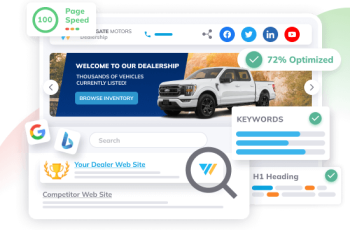
Dealership SEO Guide for Organic Growth and Leads
In the fiercely competitive automotive market, standing out is more challenging than ever. For years, dealerships have relied heavily on traditional advertising and, more recently, costly pay-per-click (PPC) campaigns to attract customers. While these methods have their place, they often feel like renting an audience rather than building one. The moment you stop paying, the leads dry up. But what if there was a more sustainable, long-term strategy to fill your pipeline with qualified, high-intent buyers? There is, and it’s called Search Engine Optimization (SEO). SEO is the engine for sustainable growth, a powerful set of practices designed to increase your dealership’s visibility in organic search results on platforms like Google. It’s about being the first answer a potential customer finds when they type “best used SUVs in [Your City]” or “Toyota service center near me.” This comprehensive guide will move beyond the basics and dive deep into the advanced dealership SEO tactics that truly move the needle. We will explore how to master long-tail keyword strategies to capture ready-to-buy customers, how to build unshakeable authority with content clusters, and how to dominate your local market through a meticulous maps strategy. This is your roadmap to building a powerful digital asset that drives organic growth for years to come.
Decoding the Customer Journey: From ‘Just Looking’ to ‘Ready to Buy’
Before you can optimize for search engines, you must first understand the modern car buyer. Their journey no longer begins by driving from lot to lot on a Saturday morning. It starts weeks, or even months, earlier on a smartphone, tablet, or laptop. In fact, studies consistently show that over 90% of vehicle buyers use digital channels as a primary source of information during their shopping process. This journey is not linear; it’s a series of fragmented interactions that Google calls “micro-moments.” These are intent-rich moments when a person turns to a device to act on a need—to know, to go, to do, or to buy.
Effective dealership SEO is about being present and useful in each of these moments:
- I-want-to-know moments: This is the initial research phase. A potential customer might be searching for “most reliable sedans,” “Honda CR-V vs. Toyota RAV4,” or “what is the benefit of a certified pre-owned car?” Your dealership can capture this traffic with informative blog posts, detailed model comparison pages, and helpful buyer’s guides.
- I-want-to-go moments: This signals local intent. The searcher is looking for a physical location, typing in queries like “Ford dealership near me” or “car dealerships in [Your City].” A perfectly optimized Google Business Profile is absolutely critical to winning this moment.
- I-want-to-do moments: These are often service-related queries, such as “how to change a tire” or “schedule an oil change online.” Your service department pages and how-to content can attract these valuable, long-term customers.
- I-want-to-buy moments: This is the bottom of the funnel. Searches become highly specific and transactional, like “2022 Honda Pilot EX-L for sale in [Your City]” or “best lease deals on a new F-150.” Your Vehicle Detail Pages (VDPs) and inventory search functionality must be optimized to capture this high-intent traffic.
By understanding this digital journey, you can see that SEO isn’t just about one keyword. It’s about creating a comprehensive web presence that builds trust and provides value at every single touchpoint, establishing your dealership as the go-to authority long before the customer is ready to sign on the dotted line.
Beyond “Car Dealership Near Me”: Mastering Long-Tail Keyword Strategy
When most people think of SEO, they think of broad, highly competitive “head” terms like “used cars” or “Ford dealer.” While ranking for these is a great goal, the real gold for dealerships lies in long-tail keywords. A long-tail keyword is a longer, more specific search phrase, typically three or more words. Think “used Ford F-150 with tow package in Houston” instead of just “Ford F-150.” While these terms have lower individual search volume, they are significantly less competitive and, most importantly, carry much higher purchase intent.
Someone searching for “used cars” is likely in the early ‘I-want-to-know’ stage, just browsing. Someone searching for “2021 certified pre-owned Toyota Highlander XLE under $40,000” is a serious buyer who knows exactly what they want. By targeting these specific phrases, you attract a more qualified audience that is further along in the buying cycle and more likely to convert into a lead or a sale.
How to Uncover Valuable Long-Tail Keywords
Finding these gems requires thinking like your customer. What questions do they ask? What specific features are they looking for? Here are some practical methods:
- Analyze Google’s Features: Simply type a broad term like “used Honda Civic” into Google and look at the “People Also Ask” box and the “Related searches” at the bottom of the page. These are questions and terms real users are searching for, providing a direct line into their thought process.
- Brainstorm Customer Questions: Sit down with your sales and service teams. What are the most common questions they hear every day?
- “Which trim level of the Jeep Wrangler is best for off-roading?”
- “What’s the difference in cargo space between the Tahoe and the Suburban?”
- “Do you offer financing for people with bad credit?”
Each of these questions is a powerful long-tail keyword you can build content around.
- Use SEO Tools: While tools like Ahrefs and SEMrush are powerful, you can start with free resources. AnswerThePublic visualizes search questions around a keyword, while Google Keyword Planner can provide ideas and volume estimates.
Once you’ve identified these keywords, the key is to integrate them naturally into your website. Create dedicated blog posts answering specific questions, optimize your Vehicle Detail Page (VDP) descriptions with specific features and trim levels, and build out service pages that address specific maintenance needs for the models you sell.
From Blog Posts to Buyer’s Guides: Structuring Your Content with Topic Clusters
Simply creating random blog posts based on a list of keywords is an outdated SEO tactic. To truly establish your dealership as an authority in the eyes of both customers and Google, you need a more strategic approach: the topic cluster model. This model involves creating a central, comprehensive “pillar page” on a broad topic, which then links out to multiple “cluster pages” that cover specific subtopics in greater detail. In turn, each cluster page links back to the pillar page.
This structure does two crucial things. First, it creates an excellent, organized user experience, allowing visitors to easily navigate from a general overview to specific information they need. Second, it sends powerful signals to search engines. The dense network of internal links tells Google that your pillar page is the main hub of information for a topic, and that you have a deep well of expertise on the subject. This can boost the rankings for every single page within the cluster.
Real-World Dealership Topic Cluster Examples
Let’s make this tangible. Here are two examples of how a dealership could implement this model:
Cluster 1: Focus on a Core Model
- Pillar Page: “The Ultimate Guide to the Ford Explorer” – This would be a long, in-depth page covering everything a buyer would want to know: history, available engines, safety ratings, technology features, and links to your current inventory.
- Cluster Content (Blog Posts/Pages):
- “Ford Explorer vs. Toyota Highlander: A Head-to-Head Comparison”
- “A Detailed Breakdown of Every Ford Explorer Trim Level”
- “What is the Real-World Towing Capacity of a Ford Explorer?”
- “Common Maintenance and Service Schedule for a Ford Explorer”
- “Test Drive Review: The Performance of the Ford Explorer ST”
Cluster 2: Focus on a Customer Need
- Pillar Page: “Your Complete Guide to Car Financing in [Your City]” – A comprehensive resource explaining credit scores, loan terms, leasing vs. buying, and how your dealership’s finance department works.
- Cluster Content (Blog Posts/Pages):
- “How to Get a Car Loan with Bad Credit”
- “5 Common Car Financing Mistakes to Avoid”
- “What is a Good APR for a Car Loan in [Current Year]?”
- “Should I Use a Co-Signer for My Car Loan?”
- “Using Our Online Pre-Approval Form: A Step-by-Step Guide”
By building out these clusters, you’re not just targeting keywords; you’re owning entire topics. You become the definitive resource for customers in your area, building trust and attracting organic traffic throughout the entire buying funnel.
Winning the “Near Me” Battle: A Deep Dive into Local SEO
For a brick-and-mortar business like a car dealership, local SEO isn’t just part of the strategy—it is the strategy. When a potential customer searches “Chevy dealership near me,” you want your business to appear prominently in the Google “Map Pack” (the box with three local business listings and a map). The single most important tool for achieving this is your Google Business Profile (GBP).
Think of your GBP listing as a digital storefront. It’s often the very first impression a customer has of your dealership. Optimizing it thoroughly is non-negotiable.
A Checklist for a Perfect Google Business Profile
- Complete Every Single Field: Don’t leave anything blank. This includes your full business name, address, and phone number (known as NAP). Crucially, your NAP must be perfectly consistent across your website and all other online directories. Add your hours, website, appointment links, and especially your business categories. Be specific: use “Ford Dealer,” “Used Car Dealer,” and “Auto Repair Shop” rather than just “Car Dealer.”
- Upload High-Quality Photos & Videos: Showcase everything. Post professional photos of your new and used inventory, your clean and welcoming showroom, your state-of-the-art service bays, and your friendly staff. A 360-degree virtual tour can dramatically increase engagement. Keep adding new photos regularly to show your profile is active.
- Leverage Google Posts: This is a free mini-blog within your GBP listing. Use it at least once a week to announce new arrivals, promote special offers, highlight a 5-star review, or link to your latest blog post. Posts expire, so consistent activity is key.
- Proactively Manage the Q&A Section: Don’t wait for customers to ask questions. Seed this section yourself by asking and answering common questions like “Do you offer test drives?” “What are your service department hours?” and “Do you work with all credit types?” Monitor it closely and answer any new user questions promptly.
The Unrivaled Power of Customer Reviews
Reviews are a massive ranking factor for the local Map Pack and a huge conversion driver. A steady stream of positive reviews tells Google that you are a trusted, authoritative local business. You need a proactive system to generate them. Implement an automated email or SMS follow-up campaign that sends a review request link to customers a day or two after a sale or service appointment. Most importantly, you must respond to every single review, good and bad. Thank positive reviewers, and address negative feedback professionally and offer to take the conversation offline to resolve the issue. This shows potential customers that you care about their experience.
Under the Hood: Essential Technical SEO for Your Dealership Website
All the great content and keyword strategies in the world won’t matter if search engines can’t properly crawl, understand, and index your website. Technical SEO is the foundation upon which your entire digital marketing strategy is built. It’s about ensuring your digital showroom is fast, secure, and easy for both users and search engine bots to navigate.
Here are the critical technical elements every dealership website must get right:
- Mobile-First Experience: The vast majority of initial car research happens on a smartphone. Your website must be fully responsive, meaning it looks and functions perfectly on any screen size. Text should be readable without pinching and zooming, and buttons should be easily tappable. Use Google’s Mobile-Friendly Test tool to check your pages.
- Blazing-Fast Page Speed: A slow-loading website is a lead-killer. Studies show that if a page takes more than three seconds to load, over half of mobile users will abandon it. Fast speeds are also a confirmed Google ranking factor. You can improve your site speed by compressing image files, using a quality website hosting provider, and minimizing unnecessary code. Use Google’s PageSpeed Insights tool to analyze your site and get actionable recommendations.
- Logical Site Structure and URLs: Your website’s navigation should be intuitive. A user should be able to easily find your New Inventory, Used Inventory, Service, Finance, and About Us pages from anywhere on the site. Your URL structure should also be clean and descriptive. For example:
- Good: `yourdealership.com/used-inventory/honda/civic-sedan/`
- Bad: `yourdealership.com/inventory.php?id=892&cat=2`
The first example is easy for both users and search engines to understand at a glance.
- Implement Schema Markup: Schema is a type of structured data, or code, that you add to your website to help search engines better understand the content. For dealerships, this is incredibly powerful. You can use specific schema types like `AutomotiveDealership`, `Vehicle` (to specify make, model, year, mileage, price), `Service`, and `Review`. Properly implemented schema can lead to “rich snippets” in search results—like star ratings, price ranges, and inventory counts appearing directly under your link—making your listing far more eye-catching and clickable than your competitors’.
While some of these tasks may require help from a web developer, understanding their importance is crucial for any dealership manager or marketer serious about SEO.
Beyond Vanity Metrics: How to Track Real SEO ROI
SEO is a significant investment of time and resources, and you need to be able to measure its return. Simply tracking keyword rankings is a “vanity metric”—it feels good to see you’re number one for a term, but it doesn’t directly tell you if it’s impacting your bottom line. To truly understand the value of your SEO efforts, you must focus on the Key Performance Indicators (KPIs) that translate to real business growth.
The Dealership SEO KPIs That Actually Matter
- Organic Traffic Growth: Is the number of visitors arriving at your site from non-paid search results increasing over time? This is the most fundamental measure of SEO success.
- Lead Conversions from Organic Traffic: This is the most critical metric. You must track how many valuable actions are being completed by visitors who came from organic search. These conversions include:
- Online credit application submissions
- “Contact Us” or “Get a Quote” form fills
- Clicks on your phone number on mobile (using call tracking)
- Vehicle Detail Page (VDP) views, which are a strong indicator of interest
- Chats initiated from your website
- Google Business Profile Insights: Your GBP dashboard provides invaluable data. Track the number of phone calls, requests for driving directions, and clicks to your website that originate directly from your profile in the map pack. A steady increase here is a clear sign your local SEO is working.
- Keyword Ranking for High-Intent Terms: While you shouldn’t obsess over every keyword, you should track your rankings for your most important long-tail, high-intent keywords—the ones most likely to lead to a sale. Are you moving up for terms like “used Tacoma TRD Pro in [Your City]”?
Essential Tools for Measurement
You don’t need a massive budget to track these KPIs. Two free tools from Google are all you need to get started:
Google Analytics 4 (GA4): This is your website’s command center. It will show you exactly how many people are visiting your site, where they’re coming from (organic, paid, social, etc.), and what they do once they arrive. It’s crucial to set up “event tracking” to properly measure your key conversions like form submissions and clicks.
Google Search Console: This tool shows you how Google sees your website. It reveals which search queries are bringing people to your site, which pages are ranking, and alerts you to any technical issues (like mobile usability problems or crawl errors) that could be harming your performance.
By regularly reviewing the data in these tools, you can make informed decisions. You can see which blog topics are driving the most qualified traffic and create more content like it. You can identify which vehicle pages are underperforming and work to optimize them. This data-driven approach transforms SEO from guesswork into a predictable and scalable channel for growth.
Conclusion: Paving the Road to Long-Term Success
Navigating the digital landscape as a car dealership requires more than just a flashy website and a budget for paid ads. It demands a strategic, long-term commitment to building a powerful online presence that attracts, engages, and converts customers. As we’ve explored, a successful SEO strategy is a multifaceted engine with several critical, interconnected parts. It begins with a deep understanding of the modern car buyer’s digital journey, anticipating their needs at every micro-moment. It’s fueled by a sophisticated long-tail keyword strategy that targets high-intent buyers, not just casual browsers. It builds unshakeable authority through well-structured content clusters that establish your dealership as the definitive local expert. It dominates the all-important “near me” searches through meticulous optimization of your Google Business Profile and a proactive review generation strategy. All of this is built upon a solid technical foundation that ensures your website is fast, mobile-friendly, and easy for search engines to understand. Finally, it’s guided by a commitment to tracking what truly matters: not just rankings, but real, measurable business outcomes like leads, calls, and sales. SEO is not a quick fix; it is the deliberate process of building a valuable digital asset that will pay dividends for years to come. By embracing these tactics, you pave a smoother, more profitable road to sustainable growth, ensuring your dealership thrives in the digital age and leaves the competition far behind in the rearview mirror.