How a DMS Drives Dealership Profit and Efficiency
In the fast-paced, high-stakes world of automotive retail, efficiency isn’t just a goal; it’s the key to survival. Dealership managers and owners often feel like they’re juggling a dozen different tasks at once, from tracking hundreds of vehicles and managing complex service appointments to nurturing leads and closing deals. In the past, this chaos was managed with a patchwork of spreadsheets, separate software for each department, and towering stacks of paperwork. This fragmented approach is not only inefficient but also prone to costly errors, lost opportunities, and a disconnected customer experience. In today’s digitally-driven market, where customers expect seamless and personalized service, this old way of operating is no longer viable. The solution lies in a centralized, powerful platform that acts as the dealership’s central nervous system. This is the role of the Dealer Management System, or DMS. It’s a comprehensive software solution designed specifically to unify every facet of a dealership. This article will dive deep into what a DMS is, why it’s an absolute necessity, and how it revolutionizes key areas like operations, inventory management, and the entire sales process, transforming a dealership from a collection of separate departments into a single, high-performance engine.
Demystifying the DMS: More Than Just Software
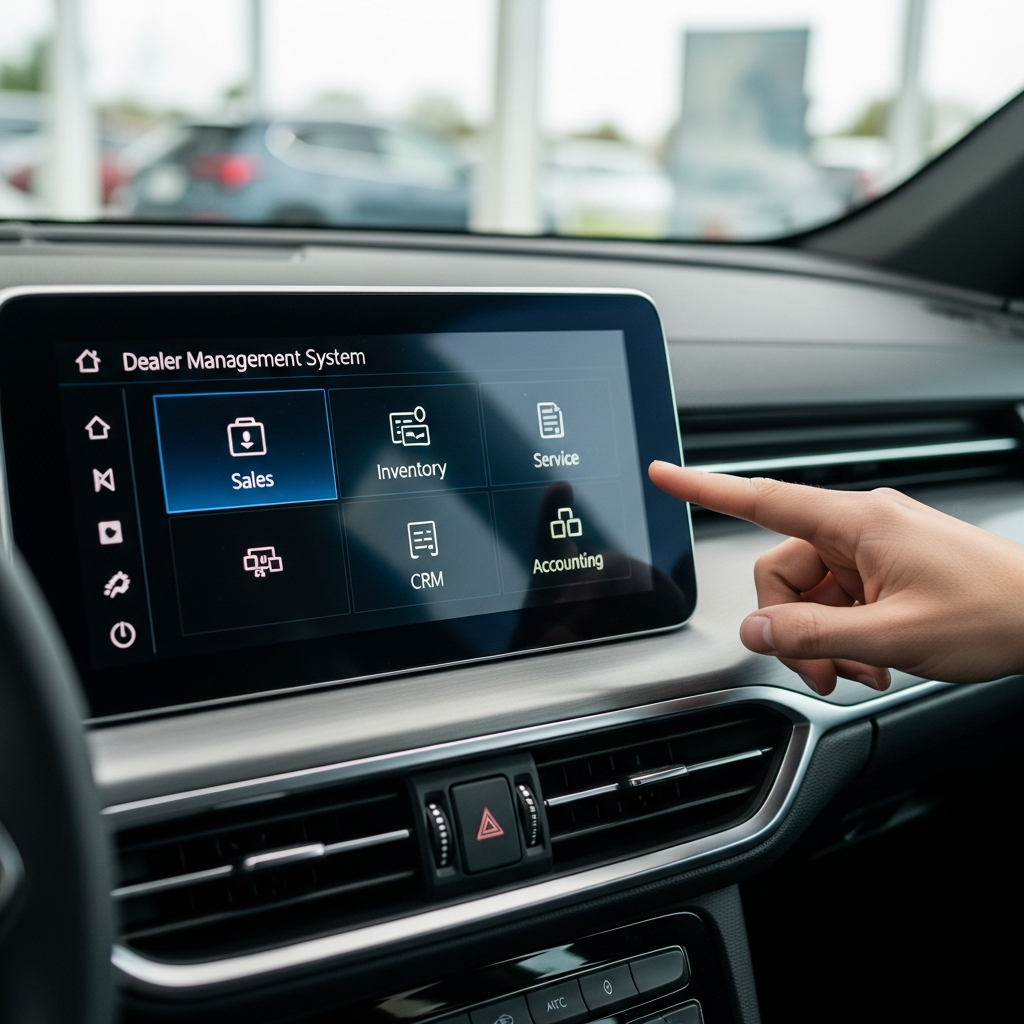
At its core, a Dealer Management System (DMS) is an integrated software suite that manages all aspects of an auto dealership’s business from a single, unified interface. To call it “just software” would be a gross understatement. It’s more accurate to think of it as the dealership’s digital backbone, providing structure, communication, and intelligence to every department. It connects the dots between sales, finance and insurance (F&I), service, parts, and accounting, ensuring that data entered in one area is instantly and accurately available across the entire organization. This eliminates the dreaded “data silos” where the service department has no insight into a customer’s sales history, or the sales team is unaware of a profitable service relationship.
A modern DMS typically consists of several interconnected modules, each tailored to a specific departmental function:
- Sales and F&I: Manages everything from lead tracking and customer relationship management (CRM) to deal structuring (desking), credit applications, and printing final sales contracts.
- Service Department: Handles appointment scheduling, repair order creation, technician time tracking, and customer communication, including automated service reminders.
- Parts Department: Manages inventory of parts, ordering from suppliers, and integration with the service department’s repair orders.
- Inventory Management: Tracks every vehicle on the lot from acquisition to sale, including costs, reconditioning status, and market pricing data.
- Accounting: The financial heart of the system, integrating data from all other modules to handle payroll, accounts payable/receivable, and generate real-time financial statements.
By bringing these functions under one roof, the DMS creates a single source of truth. This eradicates the time-consuming and error-prone task of double-entry, where an employee has to manually input the same customer or vehicle information into multiple, disconnected systems. The transition from a chaotic mix of spreadsheets and standalone programs to a unified DMS is a fundamental shift that lays the groundwork for profound improvements in efficiency and profitability.
The Efficiency Engine: How a DMS Streamlines Daily Operations
The most immediate and tangible benefit of implementing a DMS is the dramatic improvement in operational efficiency. It acts as a powerful engine that automates routine tasks and streamlines complex workflows, freeing up valuable time for your staff to focus on what truly matters: selling cars and providing excellent customer service. Imagine a typical car sale without a DMS. A salesperson writes down customer info on a form, which is then manually entered into a separate CRM. The deal structure is calculated on a spreadsheet. The F&I manager re-enters all the information into their system to pull credit and print forms. The accounting department gets a folder of paperwork to manually input into their books. Each step is a potential point of failure, a time sink, and a source of frustration for both the employee and the customer.
A DMS transforms this disjointed process into a seamless flow. The salesperson enters customer data once. That data flows automatically through the entire deal process, from the CRM to the desking tool, to the F&I module, and finally to the accounting system. Paperwork is generated automatically with pre-filled, accurate information. This not only saves immense amounts of time but also significantly reduces the chance of human error that could lead to compliance issues or financial discrepancies. Furthermore, a DMS breaks down the walls between departments. The service advisor can quickly look up a customer’s vehicle purchase history to provide a more personalized experience. The sales manager can see which vehicles are in the service lane for reconditioning and when they will be front-line ready. This level of inter-departmental visibility fosters collaboration and ensures everyone is working from the same playbook, creating a smoother, faster, and more professional experience for everyone involved.
Gaining Full Control: Inventory Management Perfected
For any auto dealership, the most significant asset is its inventory. Managing dozens, or even hundreds, of vehicles is a monumental task, and mismanagement can cripple profitability. A DMS provides the tools necessary to gain absolute control over every single unit, from the moment it’s acquired to the second it’s sold. It all starts with real-time tracking. Using features like VIN scanning, a new vehicle can be entered into the system in seconds. The DMS automatically decodes the VIN, populating all the standard features and specifications, which eliminates tedious manual data entry and ensures accuracy for online listings.
Beyond basic entry, the DMS becomes a hub for all vehicle-related data. It tracks the true cost of each vehicle, logging not just the acquisition price but every dollar spent on reconditioning, parts, and transportation. This gives you a crystal-clear view of the profitability of each unit, allowing you to make smarter decisions about your inventory mix. One of the most powerful features of a modern DMS is its ability to track inventory aging. You can instantly see which vehicles have been on the lot the longest, allowing you to adjust pricing or marketing strategies to move stale units before they depreciate further. Many systems integrate with market data tools, providing real-time analytics on what similar vehicles are selling for in your area. This empowers you to price your inventory competitively, maximizing both turnover speed and profit margins. You are no longer guessing at a vehicle’s value; you are making data-backed decisions to optimize your biggest investment.
From Lead to Loyal Customer: Revolutionizing the Sales Funnel
In the digital age, leads can come from anywhere: your dealership website, third-party listing sites, social media, or a traditional walk-in. Without a robust system to manage them, these valuable opportunities can easily fall through the cracks. The integrated Customer Relationship Management (CRM) module within a DMS is designed to prevent this, revolutionizing the entire sales process from the first point of contact to long-term customer retention. When a lead comes in, it’s automatically captured in the DMS and assigned to a salesperson. The system then prompts the salesperson with follow-up tasks, ensuring that every lead is contacted in a timely manner. Every interaction—every phone call, email, and text message—is logged in the customer’s profile. This provides complete transparency for sales managers, who can monitor their team’s activity, identify coaching opportunities, and ensure a consistent follow-up process is being followed across the board.
When the customer is in the showroom, the DMS continues to streamline the process. The salesperson can use the system to build and present different deal structures, instantly calculating payments for financing and leasing options. Once a deal is agreed upon, the information is seamlessly pushed to the F&I department. The F&I manager already has all the customer and vehicle information, allowing them to focus on presenting products rather than re-entering data. This dramatically reduces the time the customer spends in the F&I office, which is a common pain point in the car-buying experience. The relationship doesn’t end when the customer drives off the lot. The DMS stores this valuable customer data, allowing you to engage in targeted marketing campaigns and send automated reminders for their first service appointment, building a long-term relationship that drives repeat business for both sales and service.
Unlocking Business Intelligence: Data-Driven Decision Making
Perhaps the most transformative aspect of a comprehensive DMS is its ability to turn raw data into actionable business intelligence. A dealership generates a staggering amount of data every single day, but without a way to organize and analyze it, it’s just noise. A DMS acts as a powerful reporting engine, allowing owners and managers to move beyond gut feelings and make strategic decisions based on hard facts. The system can generate a vast array of reports at the click of a button, providing a real-time health check on every department.
You can analyze key performance indicators (KPIs) such as:
- Sales Performance: Track sales by individual salesperson, by vehicle model, or by lead source. This helps you identify your top performers, understand which models are most popular, and see which marketing channels are delivering the best return on investment.
- Inventory Analysis: Run aging reports to identify stale inventory, analyze turn rates to optimize your buying strategy, and track reconditioning costs to control expenses.
- Service Department Metrics: Monitor technician efficiency, parts sales, repair order profitability, and your service absorption rate (the percentage of your dealership’s total overhead covered by the profits from the service and parts departments).
- Financial Health: Generate up-to-the-minute financial statements, including profit and loss (P&L), balance sheets, and cash flow statements, without waiting for an accountant to close the books at the end of the month.
By regularly reviewing these reports, you can spot trends, identify potential problems before they escalate, and uncover hidden opportunities for growth. This proactive, data-driven approach to management is a hallmark of successful modern dealerships and is virtually impossible to achieve without the centralized data hub that a DMS provides.
Finding Your Perfect Fit: Key Considerations for Choosing a DMS
Once you recognize the necessity of a DMS, the next crucial step is choosing the right one. The market is filled with different providers, each offering a unique set of features and pricing structures. Selecting the wrong system can lead to employee frustration, inefficient processes, and a poor return on investment. To find the perfect fit, you must start by conducting a thorough assessment of your dealership’s specific needs. A small, independent used car lot will have vastly different requirements than a large, multi-franchise dealer group.
Here are some key factors to consider during your evaluation process:
- Cloud-Based vs. On-Premise: On-premise systems require you to host and maintain your own servers, which involves significant IT overhead. Cloud-based systems, or SaaS (Software as a Service), are hosted by the provider and accessed via the internet. They offer greater flexibility, accessibility from any device, and automatic updates, making them the preferred choice for most modern dealerships.
- Integration Capabilities: A DMS should be the hub, not an island. Ensure the system can seamlessly integrate with the other tools you rely on, such as your website provider, third-party lead sources, OEM-specific programs, and marketing platforms. Poor integration creates more manual work, defeating the purpose of the system.
- Ease of Use: The most powerful software in the world is useless if your team can’t or won’t use it. Look for a system with a clean, modern, and intuitive user interface. During the demo process, involve key personnel from each department to get their feedback on the user experience.
- Training and Support: A successful implementation depends on proper training and ongoing support. Investigate the provider’s training process. Is it online or on-site? Is it included or an extra cost? What are their support hours, and what is their typical response time? A strong support partnership is critical for long-term success.
- Scalability and Future-Proofing: Choose a provider that is continuously innovating and updating its platform. The automotive industry is constantly evolving, and your DMS needs to be able to adapt. Ensure the system can scale with your business as you grow.
Take your time with this decision. Request live demos from multiple vendors, ask for references, and speak to other dealers who are using the systems you are considering. This due diligence will ensure you invest in a platform that will be a true asset to your dealership for years to come.
Conclusion: The Indispensable Core of the Modern Dealership
The automotive retail landscape has fundamentally changed. Today’s customers are more informed, competition is fiercer, and operational margins are tighter than ever. Attempting to navigate this complex environment with outdated, fragmented systems is no longer a viable strategy; it’s a direct path to being left behind. The Dealer Management System has evolved from a helpful administrative tool into the indispensable digital core of any successful dealership. It is the unifying force that breaks down departmental silos, creating a cohesive and efficient organization where information flows freely and accurately. By providing total control over inventory, supercharging the entire sales and CRM funnel, and delivering the critical business intelligence needed for strategic decision-making, a DMS does more than just simplify daily tasks. It empowers a dealership to operate at its absolute peak potential. Investing in the right DMS is not merely a software expense; it is a foundational investment in the future of your business. It is an investment in efficiency, in an improved customer experience, in data-driven profitability, and in building a resilient, scalable operation that is equipped to thrive in the competitive decades ahead. In short, the DMS is the engine that will drive your dealership’s success on the road to a prosperous future.