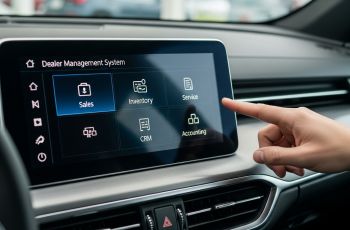
DMS and CRM, The Key Dealership Difference
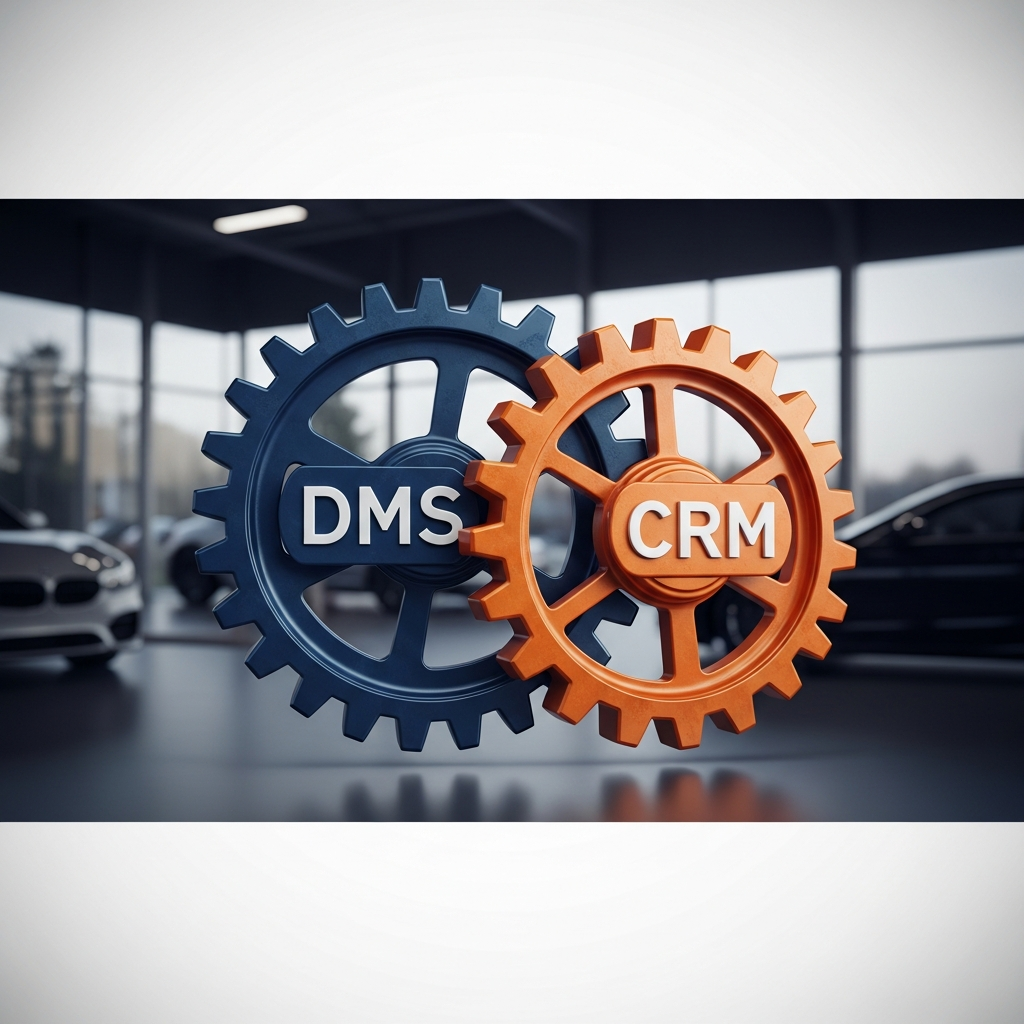
In the high-octane world of automotive retail, running a successful dealership is like conducting a complex orchestra. You have the sales team moving inventory, the service department keeping customers on the road, the F&I office finalizing deals, and the parts department managing a vast catalog. For all these sections to play in harmony, they rely on powerful technology. Two of the most critical, yet often confused, platforms are the Dealership Management System (DMS) and the Customer Relationship Management (CRM) system. Many in the industry use the terms interchangeably or see them as overlapping to the point of being redundant. This confusion can lead to inefficient processes, missed opportunities, and a disjointed customer experience.
However, a DMS and a CRM are fundamentally different instruments designed to play distinct roles. One is the unshakeable foundation of your entire operation, managing the concrete data of every transaction, vehicle, and part. The other is the dynamic, customer-facing tool that manages relationships, nurtures leads, and drives growth. Understanding the unique purpose of each system is the first step toward building a truly modern, efficient, and profitable dealership. This article will demystify the DMS vs. CRM debate once and for all. We will break down their core features, explore their crucial differences and surprising overlaps, and provide two simple yet powerful ways to help you and your team clearly understand when to use each system. By the end, you’ll see that the goal isn’t to choose one over the other, but to master how they work together to create a symphony of success.
What is a Dealership Management System (DMS)? The Digital Backbone of Your Operations
Think of the Dealership Management System as the central nervous system of your dealership. It is the primary system of record, the foundational software that handles the core transactional and operational functions of every department. If your dealership were a building, the DMS would be the concrete foundation, the steel beams, and the electrical wiring—the essential infrastructure that allows everything else to function. Its primary focus is on the tangible assets of the business: the cars, the parts, the money, and the repair orders. It is fundamentally a back-office powerhouse designed for operational efficiency, accounting accuracy, and process management.
The DMS is where the dealership’s most critical, legally-binding data lives. When a car is sold, the final deal jacket, the financing contracts, and the official entry into the general ledger are all managed within the DMS. When a customer comes in for service, the repair order (RO) is created, tracked, and billed through the DMS. It is built to handle the complex, multi-layered transactions that are unique to the auto retail industry. Essentially, the DMS is the dealership’s equivalent of an Enterprise Resource Planning (ERP) system, connecting disparate departments through a unified data platform.
Core Features of a DMS
While features vary by provider (like CDK, Reynolds & Reynolds, or Dealertrack), nearly all DMS platforms are built around these core modules:
- Inventory Management: This module is the heart of the sales operation. It tracks every vehicle by its Vehicle Identification Number (VIN), from acquisition to sale. It manages vehicle costs, pricing, aging, location on the lot, and all associated specifications.
- Deal Structuring and F&I: The DMS handles the complex calculations for vehicle sales, including trade-in values, taxes, fees, rebates, and financing options. It integrates with lenders, prints official sales contracts, and manages the entire F&I product sales process.
- Accounting: This is a comprehensive accounting suite tailored for dealerships. It includes a general ledger, accounts payable/receivable, bank reconciliation, and payroll. It provides the financial reporting necessary to understand the dealership’s fiscal health.
- Parts Management: This module tracks every part in inventory, from ordering and receiving to pricing and selling over the counter or to the service department. It helps optimize stock levels and prevent costly over- or under-stocking.
- Service Department Management: The DMS facilitates the entire service workflow. This includes scheduling appointments, writing repair orders, assigning jobs to technicians, tracking work progress, managing warranties, and processing final billing.
What is a Customer Relationship Management (CRM) System? The Engine of Your Customer Engagement
If the DMS is the dealership’s central nervous system, the Customer Relationship Management (CRM) system is its personality and its voice. The CRM is entirely focused on the customer. It is a front-office platform designed to manage and enhance every interaction a person has with your dealership, from their first click on a Facebook ad to the follow-up call after their 100,000-mile service. Its purpose is to track, manage, and optimize the customer journey, turning anonymous leads into prospects, prospects into buyers, and buyers into lifelong, loyal customers. It’s not concerned with the final accounting of a deal, but with every step and conversation that led to that deal happening.
A CRM is your sales and marketing team’s playbook. It houses all the “soft” data that provides context to the customer relationship: communication history, personal preferences, lead sources, and engagement with marketing campaigns. While the DMS knows *what* a customer bought, the CRM knows *why* they bought it, what their initial concerns were, and how your team successfully guided them through the process. It provides the tools to ensure no lead is forgotten, every follow-up is made on time, and every communication is relevant and personal. In short, the CRM is about proactively generating revenue by building and maintaining strong customer relationships.
Core Features of a CRM
Leading automotive CRMs (like VinSolutions, DealerSocket, or Elead) are built to manage the high-volume, long-term sales cycles of the car business. Key features include:
- Lead Management: This is a foundational CRM function. It captures leads from all sources—your website, third-party sites like Autotrader, social media, phone calls, and walk-ins—and routes them to the appropriate salespeople or BDC agents in a structured, measurable way.
- Sales Process and Pipeline Management: The CRM provides a clear view of the sales pipeline, allowing managers and salespeople to track every opportunity from the initial contact to the final sale. It includes tools for daily work plans, appointment scheduling, and task management.
- Marketing Automation: This powerful feature allows dealerships to automate communication. This can include sending personalized email or SMS campaigns to specific customer segments (e.g., customers with expiring leases), birthday greetings, or service reminders.
- Customer Communication Tracking: A CRM logs every single touchpoint with a customer. Every phone call, email sent and received, text message, and showroom visit is recorded in the customer’s profile, giving anyone on your team a complete history of the relationship.
- Reporting and Analytics: While a DMS reports on financial health, a CRM reports on sales and marketing health. It provides insights into lead conversion rates, salesperson performance, marketing campaign ROI, and customer engagement metrics.
The Key Difference: Transaction vs. Relationship
The single most important distinction between a DMS and a CRM comes down to their primary focus: the DMS is built to manage the **transaction**, while the CRM is built to manage the **relationship**. They answer fundamentally different questions for your dealership. The DMS is concerned with the “what” and “how much,” while the CRM is concerned with the “who” and “why.”
Let’s look at this through a few comparative lenses:
Focus Point
- DMS: The central entity in a DMS is the asset—the vehicle, the part, or the repair order. It asks: What is the stock number of this car? What is its cost? How much did we sell it for? What was the gross profit on this repair order?
- CRM: The central entity in a CRM is the person—the customer or prospect. It asks: Who is this person? Where did they come from? When was the last time we spoke to them? What is the next best action to move them forward in their journey?
Data Type
- DMS: Manages “hard data.” This is structured, transactional information like financial records, inventory specifications, parts numbers, and final sales figures. This data is the source of truth for your accounting and operational records.
- CRM: Manages “soft data” or interaction data. This includes communication logs, customer notes, stated preferences (e.g., “prefers to be contacted via text”), marketing engagement history, and future follow-up tasks. This data provides the rich context around the customer.
Primary Users
- DMS: Primarily used by back-office and fixed-ops personnel. This includes controllers, accountants, F&I managers, service managers, parts counter staff, and warranty administrators. Their goal is process efficiency and accuracy.
- CRM: Primarily used by front-office, customer-facing staff. This includes internet sales managers, BDC agents, salespeople, and marketing managers. Their goal is customer acquisition, satisfaction, and retention.
The Blurring Lines: Where DMS and CRM Overlap
In the past, the line between a DMS and a CRM was a rigid, uncrossable boundary. The DMS lived in the back office, and the CRM (or a simple rolodex) lived on the sales floor. Today, that line has become significantly blurred, as technology providers recognize the need for a more holistic view of the dealership and its customers. This evolution has led to significant areas of overlap and, more importantly, a critical need for seamless integration.
Many modern DMS providers now offer their own “CRM-lite” modules, attempting to provide an all-in-one solution. These modules might include basic lead management or follow-up task lists. Conversely, many advanced CRMs have developed “desking” tools that can structure a preliminary deal, encroaching on territory traditionally held by the DMS. This convergence can create confusion, but it also highlights the symbiotic relationship between the two systems.
Here are a few key areas where the two systems meet:
- The Customer Database: Both platforms maintain a database of your customers. However, they serve different purposes. The DMS database is the official record of ownership; it contains the definitive list of who bought what and when, along with their service history. The CRM database is a richer, more dynamic record of prospects and customers, including those who have never purchased from you. The power lies in syncing these databases, allowing the CRM to use the DMS’s transactional history to fuel targeted marketing campaigns.
- The Sales Process: A salesperson uses the CRM to manage their entire sales funnel, from lead to appointment. They might use a CRM desking tool to pencil out a first-pass deal to show a customer. However, once the customer agrees to buy, the deal is pushed to the DMS, where the F&I manager finalizes the financing, adds products, prints the official, legally binding contracts, and posts the sale to accounting.
- Service Appointments: The customer journey for service often begins with a marketing message sent from the CRM (e.g., “You’re due for a tire rotation!”). The customer might click a link and schedule their appointment using a tool connected to the CRM. That appointment data is then passed to the DMS, which the service advisor uses to create the official repair order, manage the repair process, and handle billing. After the service, the DMS sends the closed RO data back to the CRM, which can then trigger a “thank you” message and schedule the next service reminder.
The crucial takeaway here is that overlap does not mean redundancy. Instead, it necessitates a deep, bi-directional integration where each system can share data to make the other more powerful.
Two Ways to Understand the Difference: A Practical Approach
To cut through the technical jargon and truly internalize the distinct roles of these systems, you can use two simple but effective mental models. Teaching these concepts to your team can ensure everyone is using the right tool for the right job.
Method 1: The “Back Office vs. Front Office” Analogy
This is perhaps the most intuitive way to conceptualize the difference. Imagine your physical dealership building.
- The Back Office (DMS): This is the operational core that customers never see. It’s the accounting office where the books are balanced, the F&I manager’s office where contracts are finalized, and the parts department stockroom. These are the functions that are absolutely essential for the business to operate legally and profitably. The DMS is the digital equivalent of this space. It is focused inward on operational efficiency, financial accuracy, and asset management. Its goal is to make the *business* run smoothly.
- The Front Office (CRM): This is every customer-facing part of your dealership. It’s the showroom floor where salespeople greet customers, the BDC where agents answer calls and set appointments, and your dealership’s website with its chat windows and lead forms. It is where you build rapport, answer questions, and guide customers through their journey. The CRM is the digital embodiment of this space. It is focused outward on customer experience, lead nurturing, and relationship building. Its goal is to drive *revenue* by creating and retaining customers.
When an employee is unsure which system to use, they can ask themselves: “Is this task about managing an internal business process (Back Office), or is it about interacting with a customer (Front Office)?” The answer will almost always point them to the correct system.
Method 2: The “System of Record vs. System of Engagement” Analogy
This model, borrowed from the wider world of enterprise software, provides a more technical but equally clear distinction.
- System of Record (DMS): A system of record is the single, authoritative source of truth for a specific piece of data. The DMS is the undisputed system of record for the **deal**, the **vehicle**, and the **repair order**. When there is a dispute about the final sale price of a car or the specific labor operations performed on a service visit, the DMS holds the definitive, legally-binding answer. It stores the final state of a transaction.
- System of Engagement (CRM): A system of engagement is the platform where interactions and communications happen. The CRM is the system of record for the **conversation** and the **relationship**. If you want to know how many times a salesperson followed up with a lead, what was said in the last email, or which marketing campaign a customer responded to, the CRM holds that history. It tracks the entire journey of interactions that *lead up to* and *follow* the transaction recorded in the DMS.
This framework helps clarify data ownership. The final financial data belongs in the DMS. The entire history of the customer conversation belongs in the CRM. A well-integrated tech stack ensures that the system of engagement can seamlessly access relevant data from the system of record to make those engagements smarter and more effective.
Building the Perfect Tech Stack: Do You Need Both?
After breaking down their distinct roles, the answer to this question becomes crystal clear. For any modern dealership that is serious about growth, efficiency, and customer experience, the answer is an unequivocal **yes**. This is not an “either/or” decision; it is a “both/and” necessity.
A dealership simply cannot function without a DMS. It is the non-negotiable foundation required to sell and service cars, manage parts, and balance the books. It is the bedrock of the entire operation. However, trying to thrive in today’s hyper-competitive, digitally-driven market using *only* a DMS is like entering a Formula 1 race with a standard streetcar. You might be able to complete the race, but you have no chance of winning. Relying on the limited CRM functionalities of a DMS to manage customer relationships is inefficient and puts you at a massive disadvantage. It’s like asking your accountant to also be your head of marketing—they are different skill sets requiring different tools.
The true power is unlocked not just by having both systems, but by ensuring they are deeply and seamlessly integrated. A powerful, bi-directional integration creates a virtuous cycle of data that benefits every department. Imagine this common scenario:
- The CRM uses service history data pulled from the DMS to identify customers whose cars are over three years old and have positive equity.
- A targeted marketing campaign is launched from the CRM, offering these specific customers a special trade-in appraisal.
- A customer responds, becoming a hot lead in the CRM, which schedules an appointment for a salesperson.
- The salesperson works the deal in the CRM, and upon agreement, pushes the customer and deal information to the DMS with a single click.
- The F&I department finalizes the deal in the DMS.
- The DMS then pushes the “sold” status and new vehicle information back to the CRM.
- This automatically enrolls the customer in a “new owner” communication workflow within the CRM, which includes a thank you email, a video from the service manager, and an automated reminder for their first oil change.
This closed-loop process is impossible without both a dedicated CRM and a dedicated DMS working in perfect harmony. It turns siloed data into actionable intelligence, creating a superior customer experience and maximizing the lifetime value of every person who interacts with your dealership.
Conclusion: Two Partners for a Singular Goal
The debate between a DMS and a CRM should not be a debate at all. These two powerful systems are not competitors fighting for the same role within your dealership; they are essential partners, each with a distinct and critical job to do. To summarize, the Dealership Management System is the operational backbone, the inward-facing system of record that efficiently manages the transactional nuts and bolts of your cars, parts, and finances. The Customer Relationship Management system is the customer-facing engine of growth, the outward-facing system of engagement that expertly manages the relationships and conversations that drive your business forward. One manages the assets; the other manages the people.
By using simple analogies like “Back Office vs. Front Office” or “System of Record vs. System of Engagement,” you can bring clarity to your team and ensure you are leveraging the full power of each platform. The DMS ensures your dealership runs efficiently and accurately, while the CRM ensures it continues to grow by attracting, delighting, and retaining a loyal customer base. In the modern automotive landscape, investing in a best-in-class DMS is the cost of entry. But investing in a powerful, standalone CRM and deeply integrating it with your DMS is how you win. Ultimately, they work in concert toward a singular goal: building a more profitable, efficient, and customer-centric dealership for the years to come.