What is Automotive CRM, A Guide for Dealers

In today’s hyper-competitive automotive market, the customer journey is more complex than ever. It no longer starts with a walk-in on a Saturday morning. It begins weeks, or even months, earlier with online research, comparing models on third-party sites, watching video reviews, and building a car on your dealership’s website. By the time a potential buyer contacts you, they are already highly informed and have high expectations for a seamless, personalized experience. Relying on spreadsheets, sticky notes, and individual salespeople’s memories to manage these intricate relationships is no longer a viable strategy. It leads to lost leads, inconsistent follow-up, and missed opportunities for repeat business in the service lane. This is where a powerful, industry-specific tool comes into play: the automotive Customer Relationship Management (CRM) system. A CRM is far more than a digital address book; it is the central nervous system of a modern dealership. It’s a strategy and a technology platform designed to help you manage and nurture every interaction with every customer and prospect, from their first click on your website to their tenth oil change. This article will provide a comprehensive explanation of what an automotive CRM is, why it’s indispensable for modern dealers, and how it revolutionizes your sales, marketing, and service departments.
Defining the Automotive CRM: More Than Just a Digital Rolodex
At its core, CRM stands for Customer Relationship Management. While the term applies to many industries, an automotive CRM is a software platform specifically designed to handle the unique workflows and customer lifecycles of a car dealership. Think of it as the single source of truth for all your customer data. It captures, centralizes, and organizes every piece of information about your prospects and customers, creating a complete 360-degree view of their relationship with your dealership.
This goes far beyond basic contact information. A robust automotive CRM tracks:
- Lead Information: Where the lead came from (website, OEM, third-party site, walk-in), the specific vehicle they’re interested in, and their budget.
- Communication History: A complete, time-stamped log of every phone call, email, text message, and even in-person visit. No more wondering if someone followed up with a lead.
- Sales Activity: The customer’s stage in the sales funnel, scheduled appointments, test drives, trade-in details, and deal negotiations.
- Vehicle Ownership: The make, model, year, and VIN of the vehicles they’ve purchased from you.
- Service History: A detailed record of every service appointment, repair order, work performed, and services declined.
- Marketing Engagement: Which emails they’ve opened, which links they’ve clicked, and what marketing campaigns they’ve responded to.
By consolidating this data, a CRM breaks down the traditional silos between your sales, BDC, marketing, and service departments. Everyone in the dealership operates from the same, up-to-the-minute information, ensuring a consistent and informed customer experience at every touchpoint. It transforms your operations from a series of disconnected transactions into a continuous, relationship-building cycle.
How CRM Transforms the Dealership Sales Process
For the sales team, a CRM is the ultimate tool for efficiency, accountability, and performance. It eliminates guesswork and empowers salespeople to build stronger relationships and close more deals. The impact is felt from the moment a lead enters the system to the final handshake.
Streamlined Lead Management
Leads pour into a dealership from dozens of sources. Without a CRM, managing them is chaotic. An automotive CRM automates this entire process. It instantly captures leads from your website, OEM portals, sites like CarGurus or Autotrader, and social media ads. Using predefined rules, it can automatically assign leads to the next available salesperson, ensuring near-instantaneous response times—a critical factor in converting online leads. This eliminates lead leakage and ensures every single opportunity is tracked and pursued.
Intelligent Follow-Up and Task Automation
One of the biggest challenges in sales is maintaining consistent, long-term follow-up. A CRM automates this. It can create daily task lists for each salesperson, reminding them who to call, email, or text. More advanced systems enable the creation of automated follow-up “cadences.” For example, a new internet lead could automatically receive a personalized introductory email, followed by a text two hours later, and then a task is created for the salesperson to call the next day. This ensures a persistent and professional follow-up process for every lead, not just the ones a salesperson remembers.
Data-Driven Conversations
Imagine a salesperson calling a prospect and being able to say, “Hi John, I’m calling from ABC Motors. I see you were on our website last night looking at the new F-150 Lariat, and you previously owned a 2018 XLT. We just got a new Lariat in stock with the tow package you were looking at. When would be a good time for you to see it?” This level of personalization is only possible with a CRM. By having the customer’s entire history at their fingertips, salespeople can have more relevant, intelligent, and effective conversations that build rapport and accelerate the sales cycle.
Supercharging Your Marketing with a Dealership CRM
Generic, “spray and pray” marketing is expensive and ineffective. A CRM allows your marketing efforts to be laser-focused, personal, and measurable. It turns your customer database from a simple mailing list into a powerful marketing engine.
Precise Customer Segmentation
The true power of CRM in marketing lies in segmentation. Instead of sending the same email blast to everyone, you can create highly specific lists based on any data point in the system. Consider these examples:
- Lease-End Customers: Create a list of all customers whose leases expire in the next 90 days and send them a targeted campaign about new lease specials and loyalty offers.
- Equity Positive Owners: Identify customers who have positive equity in their current vehicle and send them a personalized “trade up” offer.
- Model-Specific Interests: When a new, redesigned SUV is launched, market it directly to past SUV owners or leads who previously expressed interest in SUVs.
- Inactive Service Customers: Segment customers who haven’t been to your service lane in over a year and send them a special “welcome back” service coupon.
This level of targeting dramatically increases the relevance of your marketing, leading to higher open rates, click-through rates, and, ultimately, more sales and service appointments.
Marketing Automation and ROI Tracking
A CRM can automate entire marketing journeys. For instance, you can set up a “drip campaign” that automatically sends a series of educational emails to a new lead over several weeks. More importantly, a CRM closes the loop on marketing spend. By tracking a customer from the initial lead source (e.g., a Facebook ad) all the way to a closed sale in the DMS, you can finally calculate the true return on investment (ROI) for each marketing channel. This allows you to stop wasting money on campaigns that don’t work and double down on the ones that do.
The CRM in the Service Lane: Driving Retention and Revenue
The most profitable part of a dealership is often the fixed-ops department. A CRM is a crucial tool for maximizing this revenue stream by driving customer retention and identifying new opportunities. A customer who services their vehicle with you is exponentially more likely to buy their next car from you.
Automated Service Reminders
A CRM integrates with your DMS to track service history and vehicle mileage. Based on this data, it can automatically send personalized service reminders via email or SMS. A text message saying, “Hi Sarah, our records show your Honda CR-V is due for an oil change. Click here to schedule your appointment online,” is incredibly effective at keeping your service bays full. This proactive communication prevents customers from forgetting routine maintenance or, worse, taking their business to a local independent shop.
Enhanced Service Advisor Experience
When a customer calls or pulls into the service drive, the service advisor can instantly pull up their complete history in the CRM. They can see all past repairs, notes from previous visits, and, critically, any previously declined services. This empowers the advisor to provide a better, more personalized experience. They can greet the customer by name and intelligently recommend services. For example, “Welcome back, Mr. Jones. I see that last time you were in, we recommended new front brake pads. We’re running a 10% special on brake services this month, would you like us to take care of that for you today?” This consultative approach increases the average repair order value and builds trust.
Integrating Your Dealership: The Power of a Unified System
An automotive CRM delivers its maximum value when it’s not a standalone tool but the central hub that connects all your other dealership technologies. Integration is the key to creating a truly seamless flow of information and eliminating duplicate data entry and inefficient workflows.
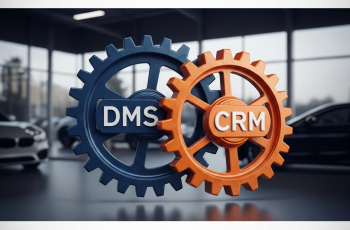
The most critical integration is with your Dealer Management System (DMS). When your CRM and DMS are connected, data flows in both directions. Sales data from a closed deal in the CRM can push to the DMS to finalize accounting, and service history from the DMS can flow back into the CRM to inform sales and marketing. This creates a complete, unified customer record across the entire dealership lifecycle.
Beyond the DMS, your CRM should integrate with:
- Your Website: To automatically capture every lead from “Contact Us” forms, trade-in value estimators, and credit applications.
- Inventory Feeds: To allow salespeople to easily insert specific vehicle information and photos into their emails and texts.
- Communication Tools: Integrating with your phone system to log calls automatically and with SMS platforms to track all text message conversations within the customer’s file.
- OEM and Third-Party Portals: To ensure leads from all sources are funneled into one central management system.
This connected ecosystem breaks down departmental walls, ensuring that whether a customer is talking to a BDC agent, a salesperson, or a service advisor, that employee has access to the same complete, accurate, and up-to-date information. This consistency is the foundation of a superior customer experience.
Choosing the Right Automotive CRM: Key Features to Look For
Not all CRMs are created equal. When evaluating options, it’s essential to choose a platform built specifically for the automotive industry. A generic, off-the-shelf CRM will lack the specific features and integrations a dealership needs to thrive. Here are some of the key features you should look for:
- Robust Mobile App: Your salespeople are on the lot, on test drives, and on the go. A powerful, intuitive mobile app that allows them to manage leads, log activities, scan driver’s licenses and VINs, and communicate with customers from their phone is non-negotiable.
- Intuitive User Interface: The most powerful software in the world is useless if your team won’t use it. Look for a clean, modern, and easy-to-navigate interface. Widespread user adoption is the single biggest factor in the success of a CRM implementation.
- Automotive-Specific Workflows: The system should have built-in processes for common dealership tasks, such as managing internet leads, setting sales appointments, and logging test drives. Features like VIN decoders and integration with desking tools are essential.
- Powerful Automation and Reporting: The ability to automate follow-up tasks and marketing campaigns is a core function. Additionally, the CRM must provide clear, easy-to-understand dashboards and reports that give managers insight into sales performance, lead sources, marketing ROI, and team activity.
- Strong Integration Capabilities: As discussed, the CRM must be able to seamlessly connect with your DMS, website, and other key dealership technologies. Ask any potential provider for a list of their certified integration partners.
Conclusion: Your Dealership’s Engine for Growth
In conclusion, an automotive CRM is no longer a “nice-to-have” technology; it is a fundamental requirement for any dealership that wants to compete and grow in the modern era. It is the operational backbone that connects every customer-facing department, transforming a collection of disparate interactions into a cohesive, managed relationship. By centralizing all customer data into a single platform, you provide your team with a 360-degree view of every prospect and client. This empowers your sales team with the tools for relentless and intelligent follow-up, turning more leads into buyers. It allows your marketing department to move beyond generic messaging, delivering highly personalized and measurable campaigns that drive real results. And it enables your service department to foster loyalty, increase retention, and maximize revenue from your existing customer base. Adopting a robust, automotive-specific CRM is an investment in efficiency, accountability, and, most importantly, in building the lasting customer relationships that fuel long-term, sustainable success. It is the engine that will power your dealership’s growth for years to come.