Lead Generation for Car Dealers: 10 Proven Tactics
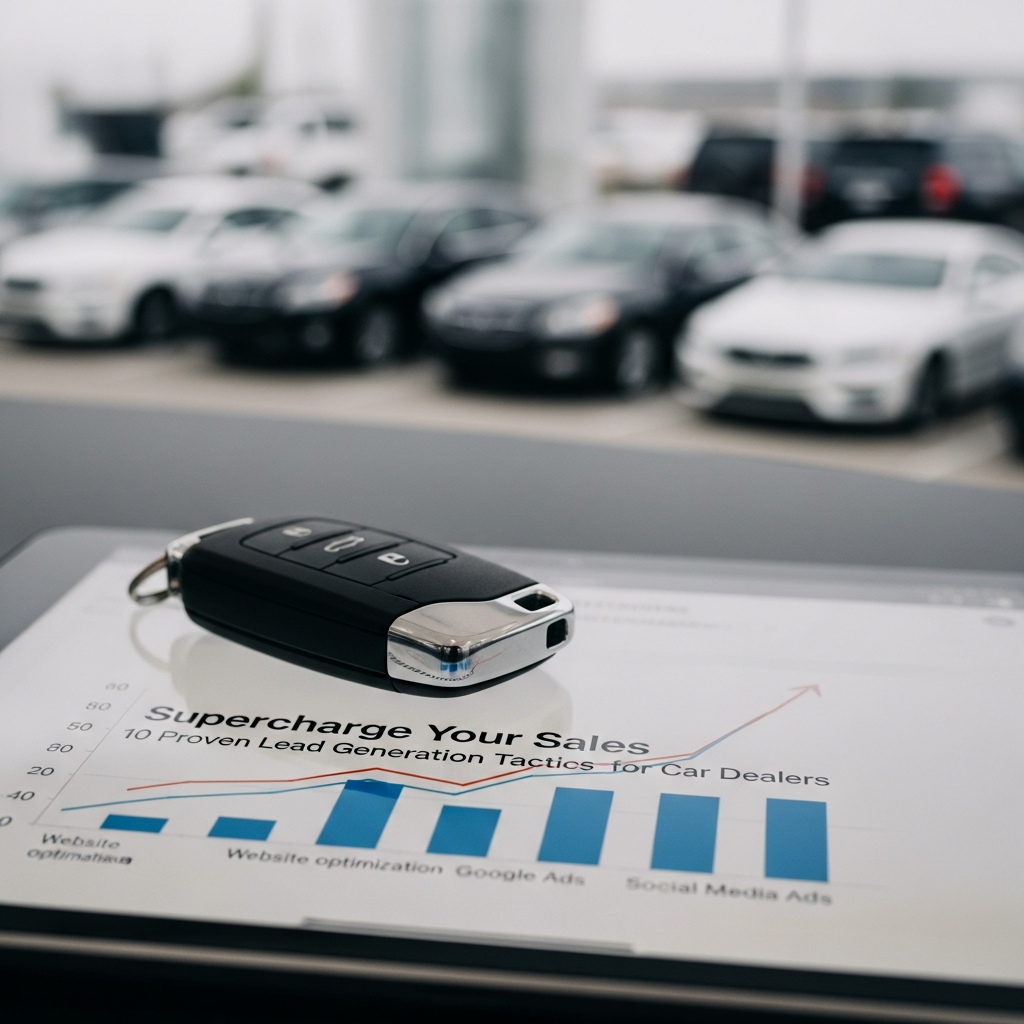
In the fast-paced world of automotive sales, the roar of an engine on the lot has been joined by the constant hum of digital activity. The traditional model of waiting for foot traffic to wander into your showroom is rapidly becoming a relic of the past. Today, the car buyer’s journey almost exclusively begins online. From researching models and comparing prices to reading reviews and even starting the financing process, your potential customers are making major decisions from their couch, their office, or their phone. For car dealerships, this seismic shift means that a powerful, multi-faceted digital lead generation strategy is no longer a luxury—it is the fundamental engine for growth and survival. A dealership’s success is now directly tied to its ability to meet customers where they are: online. This means creating a seamless, engaging digital experience that captures their interest and smoothly guides them from anonymous browser to qualified lead. In this comprehensive guide, we will move beyond the basics and dive deep into ten proven, actionable tactics designed to fill your sales pipeline. We will explore how to transform your website into a 24/7 lead-capturing machine, harness the precision of digital ads, create high-converting landing pages, leverage the undeniable power of trade-in offers, and streamline the entire process with intelligent digital forms.
Foundation First: Optimizing Your Dealership Website for Lead Capture
Your dealership’s website is the single most important asset in your digital marketing arsenal. It’s not just an online brochure; it’s your virtual showroom, your digital salesperson, and your primary lead generation hub, working for you around the clock. If this foundation is weak, any money you spend on advertising will be wasted. Therefore, the first step in any successful strategy is a top-to-bottom optimization of your website, focusing on two key areas: user experience and strategic calls-to-action.
Tactic 1: Transform Your Website into a Lead Generation Machine
A modern dealership website must be built with the user—and lead conversion—in mind. This means focusing on several critical components:
- Mobile-First Design: The data is clear: the majority of automotive research happens on a smartphone. If your website is difficult to navigate on a mobile device, potential customers will leave in seconds and go to a competitor. A responsive, mobile-first design ensures that your site looks great and functions perfectly on any screen size. This includes fast loading times (a key factor in Google’s Core Web Vitals), large, easy-to-tap buttons, and simple navigation menus.
- High-Quality Vehicle Detail Pages (VDPs): Your VDPs are where the magic happens. These pages are your most valuable real estate. A great VDP goes far beyond a few stock photos and a price. It should feature a comprehensive gallery of high-resolution, real photos of the actual vehicle, a 360-degree interior and exterior view, and ideally, a short video walkaround. Provide detailed specifications, a transparent pricing breakdown (including MSRP, dealer discounts, and potential rebates), and an integrated payment calculator. The goal is to answer every potential question a buyer might have before they even think to ask it.
- Intuitive Inventory Search and Filtering: Customers want to find what they’re looking for quickly. Your website must have a robust and easy-to-use search function. Allow users to filter your inventory by make, model, year, body style, price range, mileage, color, features, and more. The fewer clicks it takes for a user to find their perfect car, the more likely they are to engage and become a lead.
Tactic 2: Implement Strategic and Compelling Calls-to-Action (CTAs)
Once a visitor is impressed with your inventory, you need to guide them to the next step. Generic CTAs like “Contact Us” are passive and ineffective. Your CTAs must be specific, action-oriented, and contextually relevant. Sprinkle these powerful CTAs throughout your VDPs and other key pages:
- “Schedule a Test Drive”
- “Get Today’s e-Price”
- “Check Availability”
- “Value Your Trade”
- “Apply for Financing”
- “Hold This Vehicle”
Make these CTAs visually distinct using contrasting colors to make them stand out. Place them strategically: above the fold, next to the price, within the vehicle description, and even in a “sticky” bar that stays visible as the user scrolls. The goal is to make it incredibly easy for a user to take the next step at the exact moment their interest is highest.
Attracting In-Market Buyers with Precision: Google & Social Media Ads
A great website is essential, but you still need to drive the right traffic to it. Paid advertising on platforms like Google and Facebook allows you to target in-market car buyers with laser precision, ensuring your marketing budget is spent reaching people who are actively looking to make a purchase. This is about working smarter, not just spending more.
Tactic 3: Master Google Ads for High-Intent Automotive Leads
Google is the starting point for most car buyers. Being visible here is non-negotiable. A well-structured Google Ads campaign can deliver a steady stream of highly qualified leads.
- Search Campaigns: These are your bread and butter. Target high-intent keywords that signal a user is ready to buy. Think beyond just “[Car Model]”. Target long-tail keywords like “used Honda CR-V for sale near me,” “best lease deals on Ford F-150 in [City],” or “[Your Brand] service center.” By targeting these specific phrases, you connect with users at the bottom of the sales funnel.
- Dynamic Search Ads (DSA): For dealerships with large, frequently changing inventories, DSA is a lifesaver. Instead of creating ads for every single vehicle, you provide Google with your website’s inventory feed. Google then automatically generates ads with relevant headlines and landing pages based on a user’s specific search query, matching them directly to the VDP of the car they’re looking for.
- Video & Display Remarketing: Don’t let interested visitors slip away. Use Google’s Display Network and YouTube to run remarketing campaigns. By placing a tracking pixel on your site, you can show targeted video and image ads to users who have previously visited specific VDPs. Reminding them of that perfect car they were looking at is an incredibly effective way to bring them back to convert.
Tactic 4: Leverage Facebook & Instagram for Targeted Campaigns
While Google captures intent, social media platforms like Facebook and Instagram allow you to build awareness and generate leads based on powerful demographic and behavioral data.
- Facebook Lead Ads: This ad format is a game-changer for reducing friction. When a user clicks on a Lead Ad, a form pops up directly within the Facebook or Instagram app. The best part? It’s pre-filled with their contact information from their profile. All they have to do is confirm and submit. This simple, seamless process dramatically increases conversion rates compared to sending users to an external website form.
- Automotive Inventory Ads (AIA): Similar to Google’s dynamic ads, AIA allows you to connect your vehicle catalog directly to Facebook. You can then run dynamic remarketing campaigns, showing users ads for the exact cars they viewed on your website. You can also use AIA to create “catalog” ads that showcase multiple vehicles from your inventory in a single, scrollable ad format.
- Advanced Targeting: The real power of social media ads lies in the targeting. You can target users based on “in-market for a vehicle” behavior, recent life events (like a new baby, suggesting the need for a minivan or SUV), or by creating Lookalike Audiences based on a list of your past customers. This allows you to find new customers who share the same characteristics as your best existing ones.
Creating High-Conversion Landing Pages for Specific Offers
When you’re spending money on ads, sending that valuable, targeted traffic to your generic homepage is a critical mistake. Your homepage is designed for browsing, with dozens of different links and potential actions a user can take. This can be overwhelming and lead to a high bounce rate. For every ad campaign, you should have a dedicated landing page with a single, focused objective. This approach significantly increases the likelihood of a conversion.
Tactic 5: The Anatomy of a Perfect Dealership Landing Page
A landing page is a standalone web page created specifically for a marketing or advertising campaign. Its sole purpose is to convert visitors into leads. An effective dealership landing page must include these key elements:
- A Compelling, Ad-Matching Headline: The headline on your landing page should be a direct continuation of the ad the user just clicked. If your ad said, “Lease the All-New [Car Model] for $299/Month,” your landing page headline should be identical or very similar. This reassures the user they are in the right place.
- High-Impact Visuals: Use a high-quality “hero shot” image or, even better, a short video of the vehicle or offer you’re promoting. Visuals grab attention and create an emotional connection faster than text.
- Clear, Concise, Benefit-Oriented Copy: Ditch the long paragraphs. Use bullet points to quickly communicate the key benefits and features of the offer. Focus on what the customer gets, not just what the car has. For example, instead of “3.5L V6 Engine,” try “Powerful and Fuel-Efficient Performance.”
- A Simple, Frictionless Form: The lead capture form is the most important part of the page. Keep it as short as possible. For an initial inquiry, you only need a name, email, and phone number. Every extra field you add will decrease your conversion rate. Place the form “above the fold” so users don’t have to scroll to see it.
- Trust-Building Social Proof: Include elements that build confidence and trust. This can be customer testimonials, star ratings from Google or DealerRater, or logos of awards your dealership has won. This shows visitors that others have had a positive experience with you.
- A Single, Unmistakable Call-to-Action: Remove all other distractions. There should be no main navigation menu, no links to other parts of your site, and no competing offers. The only action a user can take is to fill out the form and click the submit button. This singular focus is what makes landing pages so effective.
The Irresistible Offer: Maximizing Trade-Ins to Generate Leads
Nearly every person buying a new or used car has a current vehicle they need to do something with. This makes the trade-in offer one of the most powerful lead magnets a dealership has at its disposal. By providing an easy, instant way for potential customers to get an estimate of their vehicle’s value, you are not only providing a valuable service but also capturing the contact information of a highly motivated, in-market buyer. This strategy turns every car owner visiting your site into a potential lead for a new sale.
Tactic 6: Make the Trade-In Valuation Easy and Instant
The key to a successful trade-in lead generation strategy is to eliminate friction and provide instant gratification. The old way of “fill out this form and we’ll call you back with a number” is no longer effective. Modern consumers expect immediate results.
- Embed a Valuation Tool: Integrate a trusted, third-party valuation tool like Kelley Blue Book (KBB), Edmunds, or TradePending directly into your website. This gives your valuation instant credibility and provides the user with a real, data-backed estimate right away.
- Use a Multi-Step Form: Instead of presenting the user with a long, intimidating form, break it down into small, easy steps. Step 1: Year, Make, Model. Step 2: Trim, Mileage, Condition. Step 3: “Where should we send your official valuation?” (This is where you capture their name, email, and phone number). This approach feels less like work and significantly increases form completion rates.
- Promote It Everywhere: Your trade-in offer shouldn’t be hidden on some back page of your site. It should be one of your primary calls-to-action. Feature it prominently on your homepage, in your navigation bar, on your VDPs, and in a website pop-up. Run dedicated social media and search ad campaigns directly to your trade-in landing page.
The lead capture is just the beginning. The follow-up is what turns that digital lead into a showroom appointment. The process should be automated and immediate. As soon as the form is submitted, the user should receive an automated email with their valuation range. This should be followed up within minutes by a personal phone call or text from a sales representative or BDC agent. The script isn’t to “sell them a car” but to “confirm the details of their trade-in and schedule a quick, 15-minute appraisal at the dealership to provide a final, guaranteed offer.” This provides a clear, low-pressure next step that bridges the online interaction to a physical visit.
Reducing Friction: The Role of Digital Forms and Live Chat
In the digital world, convenience is king. Every extra click, every confusing form field, and every moment of waiting is an opportunity for a potential customer to lose interest and leave. Your goal is to make the process of becoming a lead as effortless as possible. This is where optimizing your digital forms and implementing real-time communication tools like live chat can make a massive difference in your conversion rates.
Tactic 7: Optimize Digital Forms for Maximum Completion
The contact form is the final barrier between a visitor and a lead. A poorly designed form can be a conversion killer. Follow these best practices to ensure your forms are easy to complete:
- Less is Always More: Be ruthless in cutting down the number of fields. Do you really need their full address to schedule a test drive? Probably not. For initial inquiries, stick to the absolute essentials: name, email, and phone number. You can always gather more information during the follow-up conversation.
- Break Up Long Forms: For more complex processes like a full credit application, never present the user with a single page containing 20+ fields. This is incredibly intimidating. Instead, use a multi-step form that breaks the process into logical sections (e.g., Personal Information, Employment Information, Vehicle Information). Include a progress bar to show the user how close they are to completion. This psychological trick makes the task feel much more manageable.
- Use Smart, Mobile-Friendly Inputs: Ensure your forms are designed for mobile users. This means large input fields, clear labels that don’t disappear when the user starts typing, and activating the correct keyboard (e.g., the numeric keypad for a phone number field, the email keyboard for an email field).
Tactic 8: Engage Visitors in Real-Time with Live Chat & Chatbots
Sometimes, customers have a quick question that’s preventing them from taking the next step. If they can’t find the answer easily, they might just leave. Live chat and AI-powered chatbots provide an instant communication channel to answer these questions and capture leads 24/7.
- Proactive Engagement: Don’t just wait for a user to initiate a chat. Be proactive. Set up rules to have the chat window automatically pop up with a targeted message based on the user’s behavior. For example, if someone has been on a VDP for a specific Ford F-150 for more than 45 seconds, the chat could pop up with, “Hi there! Have any questions about this F-150? I can check its availability for you.”
- 24/7 Lead Qualification with Chatbots: Your sales team can’t be available around the clock, but a chatbot can. An AI-powered chatbot can handle common initial questions like “What are your hours?” or “Is this car still available?”. More importantly, it can be programmed to qualify leads by asking questions and collecting contact information, then scheduling an appointment or passing the conversation transcript to your sales team for follow-up the next morning. This ensures you never miss a lead, no matter when they visit your site.
Building a Sustainable Pipeline: Content and Reputation
While ads and optimized forms are crucial for capturing buyers at the bottom of the funnel, a truly dominant lead generation strategy also focuses on attracting and nurturing potential customers who are earlier in their buying journey. This is achieved through content marketing and diligent online reputation management. These long-term strategies build trust, establish your dealership as an authority, and create a sustainable pipeline of future customers.
Tactic 9: Attract Organic Traffic with Content Marketing & SEO
Content marketing is about creating and distributing valuable, relevant, and consistent content to attract and retain a clearly defined audience. For a car dealership, this means becoming a trusted resource for car buyers in your area.
- Informative Blog Posts: Think about the questions your customers ask every day and turn them into blog posts. Examples include: “Ford Explorer vs. Toyota Highlander: Which is the Best SUV for Your Family?”, “A Complete Guide to Leasing vs. Buying a Car in [Your State]”, or “5 Things to Look for When Test Driving a Used Vehicle.” These articles attract organic search traffic from people who are in the research phase, introducing them to your dealership early in their journey.
- Comprehensive Video Content: Video is the most engaging form of online content. Create a detailed video walkaround for every single vehicle in your new and used inventory and embed it on the VDP. Film “how-to” videos for your service department (e.g., “How to Pair Your iPhone with [Car Model]’s Infotainment System”). Post this content on YouTube, which is the world’s second-largest search engine, to attract a wider audience.
Tactic 10: Leverage Online Reviews as a Powerful Lead Generator
In the age of the internet, your reputation is your currency. A wealth of positive online reviews is one of the most powerful forms of social proof and a direct driver of leads. Over 90% of consumers read online reviews before making a purchase decision.
- Proactively Generate Reviews: Don’t just hope for good reviews; actively cultivate them. Use an automated platform to send a text or email to every customer shortly after a sales or service experience, asking them to leave a review on Google, DealerRater, or Facebook. Make the process as simple as possible with a direct link.
- Respond to Every Single Review: It’s crucial to monitor and respond to all reviews, both positive and negative. Thank customers for positive feedback. For negative reviews, respond professionally and empathetically. Acknowledge their issue, take the conversation offline to resolve it, and show other potential customers that you take customer service seriously. A well-handled negative review can often be more powerful than a positive one.
- Showcase Your Best Reviews: Use widgets on your website, landing pages, and even in your email signatures to display your latest 5-star reviews. This constant reinforcement of your positive reputation builds immense trust with new visitors and can be the final nudge they need to submit a lead form.
Conclusion: Building Your Unstoppable Lead Generation Engine
The path to a full sales pipeline in today’s automotive market is paved with smart, integrated digital strategies. As we’ve explored, generating a consistent flow of high-quality leads is not about finding a single magic bullet. It’s about building a comprehensive, well-oiled machine where each component works in harmony with the others. It begins with the unshakeable foundation of a fast, mobile-friendly, and conversion-focused website that serves as your digital showroom. This foundation is then fueled by highly targeted paid advertising on Google and social media, driving in-market buyers not to a generic homepage, but to specific, high-converting landing pages tailored to their interests. The process is further enhanced by offering irresistible, high-value lead magnets like instant trade-in valuations, which capture the details of motivated sellers. At every turn, the key is to reduce friction by using streamlined digital forms and providing instant support through live chat and chatbots.