Must-Have Auto Inventory Software Features for 2026
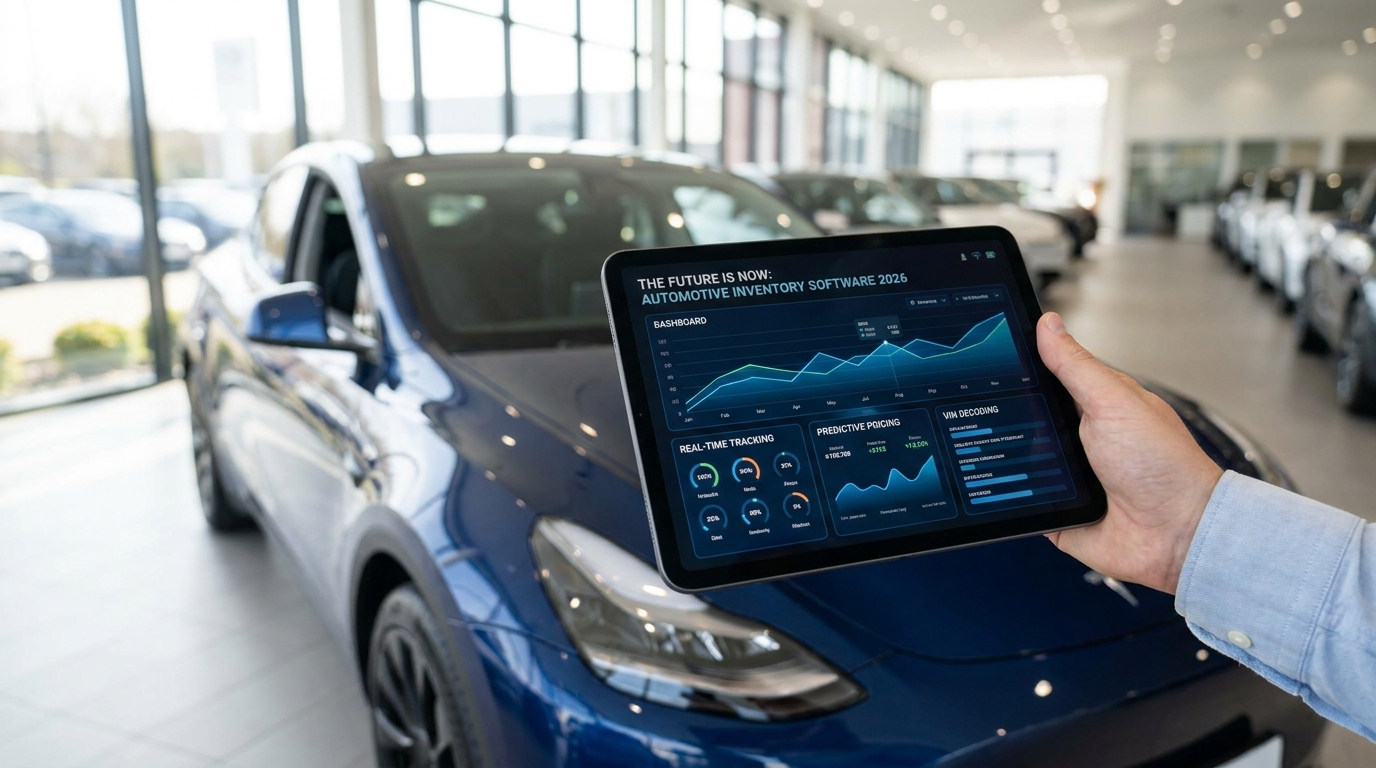
The roar of an engine, the gleam of polished chrome, the unmistakable new-car smell—these are the timeless elements of the automotive world. Yet, behind the scenes, the engine that truly drives a modern dealership is digital. In today’s hyper-competitive, fast-paced market, managing a lot full of vehicles with spreadsheets and clipboards is like trying to win a Grand Prix on a bicycle. It’s not just inefficient; it’s a direct path to lost sales and shrinking profit margins. The success of a dealership in 2026 and beyond will be inextricably linked to the sophistication of its technology stack, with automotive inventory software sitting right at the core. This is no longer just a tool for counting cars. It’s evolving into a dynamic, intelligent command center that powers every facet of the business, from acquisition and pricing to marketing and sales. As we look toward the horizon, a new generation of software is emerging, equipped with features that were once the stuff of science fiction. In this article, we will explore the essential, cutting-edge features your dealership’s inventory software will need to thrive in 2026, including real-time vehicle tracking, predictive pricing analytics, deeply integrated VIN decoding, and much more. Prepare to shift your perspective from simple inventory management to strategic inventory intelligence.
The End of “Where’s That Car?”: Real-Time Tracking and Geolocation
One of the most persistent and frustrating time-wasters at any dealership is the simple act of locating a specific vehicle. A customer is on the lot, ready to test drive a blue SUV, and the salesperson spends ten minutes jogging around, keys in hand, trying to remember where it was parked. By 2026, this scenario will be a relic of the past. Advanced automotive inventory software will make real-time location tracking a standard, non-negotiable feature, transforming lot management from a guessing game into a precise science.
How It Works: The Technology Behind the Dot on the Map
This isn’t just about general location; it’s about pinpoint accuracy. Future systems will leverage a combination of technologies to provide a comprehensive view of every single asset:
- GPS Trackers: Small, battery-powered devices placed discreetly in each vehicle provide precise location data, updated every few minutes. This is ideal for tracking vehicles across large lots, in off-site storage, or even during test drives.
- RFID and BLE Beacons: For more granular, zone-based tracking within the dealership property (e.g., “Service Bay 3,” “Detailing Center,” “Front Line – Section B”), Radio-Frequency Identification (RFID) and Bluetooth Low Energy (BLE) beacons are perfect. As a vehicle moves from one zone to another, its status is automatically updated in the system.
- Geofencing: This creates a virtual perimeter around your dealership. If a vehicle leaves this designated area without authorization (i.e., not checked out for a test drive or sold), the system will send an instant alert to management, drastically improving security and loss prevention.
The Tangible Benefits of Real-Time Visibility
The impact of this technology extends far beyond convenience. It directly boosts efficiency and profitability. Sales staff can instantly pull up a lot map on their tablet, see the exact location of any car, and walk the customer directly to it, slashing wait times and creating a seamless, professional customer experience. Operationally, managers can optimize the flow of vehicles from trade-in, to reconditioning, to the front line, eliminating bottlenecks. This level of visibility ensures that the most desirable, sales-ready vehicles are always where they need to be, ready for a customer’s eyes.
Beyond the Basics: Advanced VIN Decoding and Data Enrichment
For years, VIN decoding has been a staple of inventory software, pulling up the basic make, model, year, and engine type. By 2026, this feature will evolve into a powerful data enrichment engine that automatically builds a complete and compelling story for every single vehicle on the lot. The simple act of scanning a VIN will unlock a treasure trove of information that is crucial for pricing, marketing, and sales.
Unlocking a Vehicle’s Complete DNA
Next-generation software will not just decode the VIN; it will use it as a key to unlock data from a multitude of external sources, integrating it seamlessly into the vehicle’s profile. This includes:
- Factory-Installed Options and Packages: The system will automatically identify not just the trim level, but every specific option, package, and feature installed at the factory, from the premium sound system to the panoramic sunroof and technology package. This eliminates manual data entry and ensures every value-adding feature is accounted for.
- Original MSRP and Window Sticker Data: Instantly pull the original Monroney sticker data, providing a clear picture of the vehicle’s original value and configuration. This is a powerful tool for both appraisal and for showcasing value to a potential buyer.
- Vehicle History and Recall Information: Deep integration with services like CARFAX and AutoCheck will be standard. The software will automatically flag vehicles with title issues, accident history, or open safety recalls, ensuring transparency and mitigating liability before the vehicle is even offered for sale.
Turning Raw Data into Sales Power
This enriched data becomes the foundation for smarter operations. When a vehicle is added to inventory, the software can use this comprehensive feature list to automatically generate detailed, SEO-friendly descriptions for your website and third-party listing sites. This saves hours of manual work and ensures your online listings are rich with the keywords customers are searching for. For the sales team, it provides instant access to every talking point, allowing them to confidently answer customer questions and highlight the unique features that set one vehicle apart from another. It transforms every salesperson into an expert on every car on the lot.
From Guesswork to Guarantee: Predictive Analytics and Pricing Intelligence
Perhaps the most significant leap forward for automotive inventory software in 2026 will be the widespread adoption of AI-driven predictive analytics and pricing intelligence. Historically, pricing a used vehicle has been more of an art than a science, relying on gut feelings, book values, and a quick scan of competitor websites. The future of pricing is data-driven, dynamic, and strategic, turning your software from a simple record-keeper into a trusted financial advisor.
The AI-Powered Pricing Engine
This isn’t about static book values. An intelligent pricing engine in 2026 will continuously analyze a massive stream of real-time market data to provide precise, actionable recommendations. Key data sources will include:
- Live Market Data: Analyzing the current listings of identical or similar vehicles within a specific geographic radius (e.g., 50, 100, or 200 miles), looking at their price, days on market, and sales velocity.
- Auction Data: Tracking real-time results from major wholesale auctions like Manheim and ADESA to understand the true acquisition cost and market value of inventory.
- Proprietary Dealership Data: Analyzing your own sales history to understand which models, trims, and colors sell fastest and for the highest gross profit at your specific location.
- Economic and Seasonal Trends: Factoring in broader trends, such as gas prices (affecting truck vs. sedan demand), tax season, and time of year to forecast shifts in consumer demand.
The software will synthesize this information to recommend an optimal “sweet spot” price—one that is competitive enough to attract buyers quickly but high enough to protect your dealership’s margin. It will also provide guidance on the appraisal process, suggesting exactly what you should offer for a trade-in to ensure a profitable resale.
Tackling the Silent Profit Killer: Dynamic Inventory Aging Reports
Every day a car sits on the lot, it costs money. Depreciation, insurance, lot maintenance, and opportunity cost all chip away at potential profit. This “holding cost” is a silent killer of dealership profitability. While basic aging reports that show “days on lot” have been around for a while, the software of 2026 will offer dynamic, actionable aging intelligence that proactively helps you manage this threat.
More Than Just a Number
A sophisticated aging report will provide a multi-faceted view of your inventory, allowing you to identify potential problems before they escalate. Features will include:
- Customizable Buckets: Grouping vehicles not just by 0-30, 31-60, and 61-90 days, but by customizable categories like model, acquisition source (trade-in vs. auction), or even salesperson. This helps you identify patterns, such as a particular auction source consistently providing slow-moving inventory.
- Holding Cost Calculation: The system will automatically calculate and display the cumulative holding cost for each specific vehicle. Seeing that a car has already cost you $800 just to sit on the lot is a powerful motivator to take action.
- Automated Alerts and Recommendations: This is the most crucial evolution. The software won’t just present data; it will prompt action. When a vehicle crosses a critical age threshold (e.g., 45 days), the system will automatically send an alert to the manager and suggest specific strategies, such as “Recommend a $500 price reduction,” “Feature in this weekend’s email blast,” or “Move to front-line position.” This transforms the aging report from a passive document into an active management tool.
By using this intelligence, managers can make proactive decisions to move aging units, freeing up capital and lot space for fresh, faster-selling inventory. It’s a fundamental shift from reacting to old inventory to preventing it in the first place.
The Connected Dealership: Seamless Ecosystem Integration
In the modern dealership, inventory software cannot exist in a vacuum. It must be the central hub that communicates seamlessly with every other piece of technology in your operation. By 2026, the quality of a software’s integrations will be just as important as its core features. The goal is to create a single, unified source of truth for every vehicle, eliminating redundant data entry and ensuring every department is working with the most up-to-date information.
Breaking Down the Silos
API-first design will be the standard, allowing your inventory platform to have deep, two-way conversations with other critical systems:
- Dealership Management System (DMS): When a vehicle is sold in the DMS, it should be instantly and automatically removed from the inventory software, which in turn removes it from your website and all third-party listings. This prevents the frustration of a customer calling about a car that is already sold.
- Customer Relationship Management (CRM): Your inventory should be linked directly to your CRM. If a customer in your CRM has expressed interest in a white Ford Explorer, the system should automatically notify their salesperson the moment one is acquired and added to inventory.
- Online Merchandising and Listing Syndication: The moment a vehicle’s status is changed to “Front-Line Ready,” the software should automatically push its data—including the high-quality photos, videos, and rich descriptions generated from the VIN data—to your dealership website, Autotrader, Cars.com, Facebook Marketplace, and any other platform you use.
- Service Department Software: Track the reconditioning process with precision. The system should show a vehicle’s status as it moves from “Needs Inspection” to “In Mechanical Repair” to “In Detail” and finally to “Ready for Sale,” giving the sales team a clear ETA on when they can start showing it.
This interconnected ecosystem ensures data flows freely and automatically between departments, reducing errors, saving countless man-hours, and accelerating the entire sales cycle from acquisition to delivery.
Empowering Your Team: Mobile-First Functionality
The business of selling cars doesn’t happen behind a desk. It happens on the lot, in the service bay, and on test drives. Recognizing this, the automotive inventory software of 2026 will be fundamentally mobile-first. Powerful, intuitive applications for smartphones and tablets will put the full capabilities of the system into the hands of every employee, no matter where they are on the dealership grounds.
A Tool for Every Role
Mobile functionality will be tailored to the specific needs of different roles within the dealership, empowering your team and streamlining daily tasks:
- For the Salesperson: Standing with a customer next to a car, a salesperson can use their tablet to instantly access its complete history report, original window sticker, list of features, and even compare it side-by-side with other vehicles on the lot. They can start a deal, add a trade-in, and manage the entire process without ever having to say, “Let’s go back to my desk.”
- For the Appraiser: During a trade-in appraisal, the manager can use their phone to scan the customer’s VIN, input condition grades, take photos of any damage, and the app—powered by the predictive pricing engine—will deliver a data-backed appraisal value on the spot.
- For the Lot Porter: As vehicles are moved, a lot attendant can quickly scan a VIN and update its location or status (e.g., “Moved to customer parking,” “Low fuel”), ensuring the real-time tracking system is always accurate.
- For the General Manager: A manager can review key performance indicators, approve price changes on aging units, and monitor the overall health of the inventory from a comprehensive dashboard on their phone, whether they are on the lot or at a 20 Group meeting across the country.
This mobile-first approach untethers your team from their desks, making them more agile, efficient, and responsive to customer needs. It accelerates every workflow and fosters a more collaborative and informed dealership environment.
Conclusion: Investing in Intelligence for a More Profitable Future
The journey of automotive inventory management is a clear story of evolution. We’ve moved from handwritten logs to digital spreadsheets, and now, we are on the cusp of a new era defined by intelligence and automation. The features that will define the leading software of 2026—real-time geolocation, deeply enriched data, predictive AI pricing, dynamic aging reports, seamless ecosystem integration, and mobile-first functionality—are not just incremental improvements. They represent a fundamental paradigm shift. They transform inventory software from a passive database into an active, strategic partner that guides better decision-making across the entire dealership. Choosing to invest in this next-generation technology is no longer a luxury or a competitive edge; it is a foundational requirement for survival and growth. By embracing these advancements, dealerships can eliminate inefficiencies, empower their staff, enhance the customer experience, and, most importantly, protect and maximize the profitability of their single greatest asset: their inventory. The future of the car business isn’t just about selling cars; it’s about leveraging data to sell the right cars, to the right people, at the right price, and faster than ever before. The right software is the key that will unlock that future.