Dealer Websites: Your Guide to Converting Leads and Sales
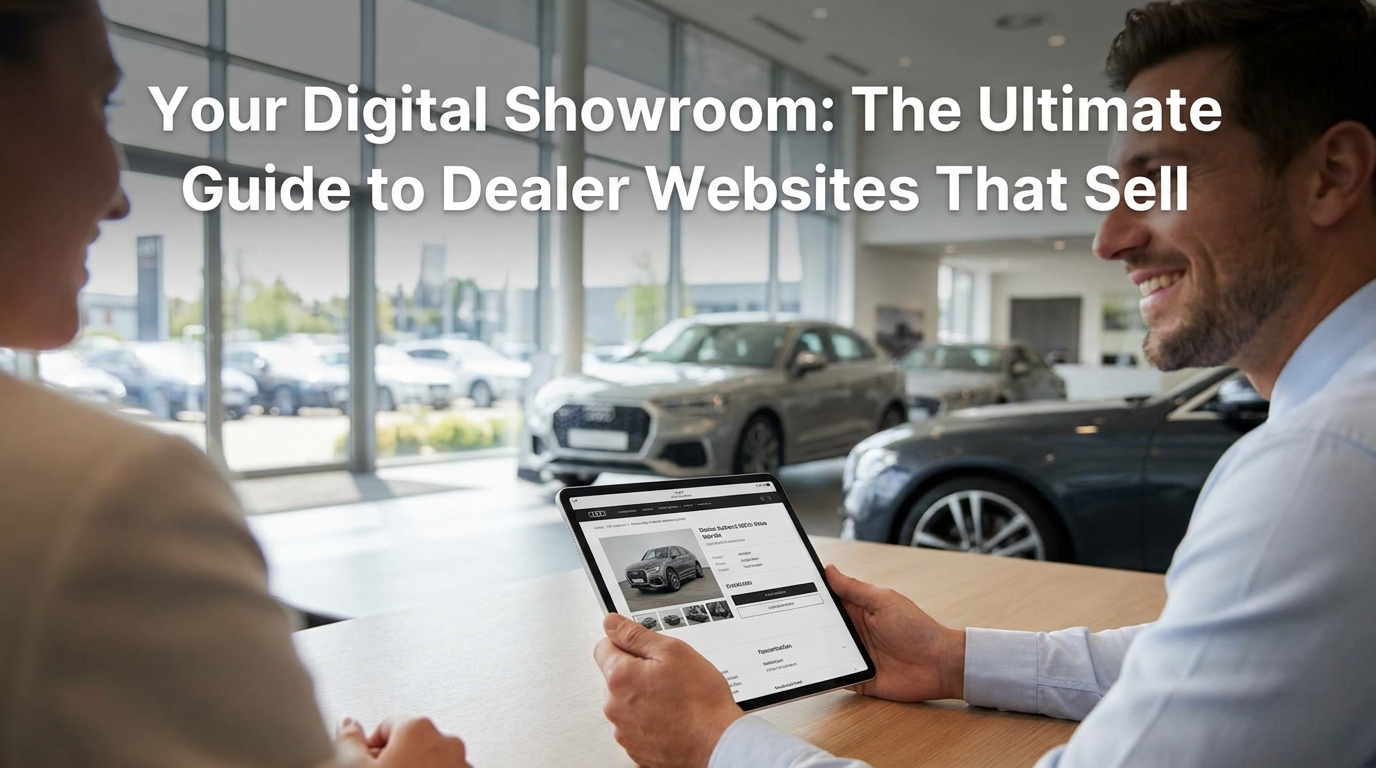
In today’s hyper-competitive automotive market, your dealership’s physical showroom is no longer the first point of contact for the majority of your customers. That role has been decisively claimed by your website. A modern car buyer’s journey almost always begins online, with hours spent researching models, comparing prices, and reading reviews long before they ever consider stepping onto your lot. This seismic shift means your dealer website is far more than a digital business card; it is your primary sales tool, your 24/7 lead generation engine, and the virtual front door to your business. A poorly designed, slow, or confusing website is the equivalent of a locked door, turning away valuable prospects before you ever have a chance to engage with them. Conversely, a high-performing website acts as your best salesperson, guiding visitors seamlessly from initial interest to qualified lead.
So, what separates a simple online brochure from a powerful, lead-converting machine? It’s a strategic blend of intelligent design, intuitive user experience (UX), compelling content, and robust technical optimization. This article will serve as your comprehensive guide to the essential features that make a dealership website successful. We will dive deep into everything from the non-negotiable foundation of mobile-first design to the sophisticated nuances of automotive SEO. We’ll explore how to craft Vehicle Detail Pages (VDPs) that captivate buyers, build unshakeable trust with your audience, and implement the right lead-generation tools to turn casual browsers into concrete appointments. By the end, you’ll have a clear roadmap for transforming your website into your dealership’s most valuable asset.
The Foundation: Responsive Design and Mobile-First Dominance
Before we delve into flashy features or conversion tactics, we must start with the bedrock of any successful modern website: its performance on mobile devices. The era of desktop-first web design is long over. According to recent studies, over half of all web traffic comes from mobile phones, and for automotive research, that number is often even higher. Customers are searching for inventory while on their lunch break, comparing prices while waiting in line, and looking up your dealership’s address on their way to visit. If your website fails to provide a flawless experience on a smartphone, you are alienating a massive portion of your potential market.
This is where responsive design becomes non-negotiable. A responsive website automatically adjusts its layout, images, and content to fit the screen size of the device it’s being viewed on. This means no frustrating pinching and zooming, no tiny, unclickable buttons, and no sideways scrolling to read text. The experience is seamless whether the user is on a 27-inch monitor or a 6-inch smartphone screen. But the importance of mobile extends beyond just user convenience. Google now operates on a “mobile-first indexing” model. In simple terms, this means Google primarily uses the mobile version of your website for indexing and ranking. If your mobile site is slow, difficult to navigate, or missing content that’s on your desktop site, your search engine rankings will suffer dramatically, making it harder for customers to find you in the first place.
Key Elements of a Mobile-First Foundation:
- Lightning-Fast Load Speed: Mobile users are impatient. A site that takes more than three seconds to load will see a significant drop-off in visitors. Optimize images, leverage browser caching, and use a reliable hosting provider to ensure your site is quick and snappy.
- Thumb-Friendly Navigation: Menus, buttons, and clickable links must be large enough and spaced far enough apart to be easily tapped with a thumb. Dropdown menus should be easy to operate, and the search bar should be prominent.
- Simplified Forms: Filling out long, complex forms on a mobile device is a major pain point. Keep your contact and lead forms as concise as possible, asking only for essential information. Implement features like autofill where possible.
- Click-to-Call Functionality: Your dealership’s phone number should be a clickable link on your mobile site, allowing users to call you with a single tap. This simple feature removes friction and encourages direct contact.
User Experience (UX) is King: Creating an Intuitive Customer Journey
Once you have a solid mobile foundation, the next layer is creating an exceptional user experience (UX). UX design is the art and science of making your website easy, intuitive, and enjoyable to use. For a dealership, this means helping a visitor accomplish their primary goals—finding a specific car, learning about financing options, or contacting the sales team—with the least amount of effort possible. A confusing website structure or a clunky search tool will cause frustration and lead potential customers to click away to a competitor’s site.
The entire journey should be mapped out from the customer’s perspective. When a visitor lands on your homepage, what is the first thing they want to do? Most likely, it’s to search your inventory. Therefore, your vehicle search bar should be one of the most prominent elements on the page, placed “above the fold” (visible without scrolling). This search tool shouldn’t be basic; it should be a powerful filtering system that allows users to quickly narrow down your entire inventory to the exact vehicles that meet their criteria. The goal is to reduce clicks and get the customer to the right Vehicle Detail Page (VDP) as quickly as possible.
Pillars of an Excellent Dealer Website UX:
- Powerful Search and Filtering: Allow users to filter by new/used, make, model, year, body style, price range, mileage, color, and even specific features (e.g., sunroof, leather seats, AWD). The more granular the filtering, the better.
- Clear and Consistent Navigation: Your main menu should be simple and logical. Use clear labels like “New Inventory,” “Used Vehicles,” “Financing,” “Service Center,” and “Contact Us.” Avoid confusing jargon. This navigation should be consistent across every page of the site.
- High-Impact Calls-to-Action (CTAs): Every page should have a clear next step for the user. Use action-oriented, high-contrast buttons for your CTAs, such as “View Details,” “Check Availability,” “Get ePrice,” or “Schedule a Test Drive.” These CTAs guide the user through the sales funnel.
- Easy Access to Key Information: Don’t make users hunt for your address, phone number, and hours of operation. This information should be clearly visible in the header or footer of every single page.
The Digital Handshake: VDPs and Visuals That Convert
If your website is the showroom, the Vehicle Detail Page (VDP) is the point where a customer gets up close with a specific car. It is arguably the most critical conversion point on your entire site. A weak VDP with poor photos and limited information can kill a potential sale, while a robust, feature-rich VDP can get a customer excited enough to submit a lead form or schedule a visit. The key is to replicate the in-person experience of inspecting a car as closely as possible through digital means.
This starts and ends with high-quality visuals. Grainy, poorly lit photos taken with a smartphone are no longer acceptable. Invest in professional-grade photography for every vehicle in your inventory. A comprehensive photo gallery should include at least 20-30 high-resolution images showing every angle of the car: exterior shots from all sides, detailed interior photos of the dashboard, seats, and cargo space, and close-ups of the wheels and engine. But don’t stop at static photos. Incorporating 360-degree interactive views of both the exterior and interior allows users to virtually “walk around” and “sit inside” the car. Short walk-around videos are also incredibly effective at showcasing the vehicle’s condition and features in a dynamic way.
Essential Components of a High-Converting VDP:
- Comprehensive Photo and Video Gallery: A mix of high-resolution photos, 360-degree views, and a short video is the gold standard.
- Transparent and Prominent Pricing: Display the price clearly. If you offer special pricing or incentives, highlight them. Hiding the price creates distrust. Include a clear CTA to “Get ePrice” or “Unlock Today’s Price” to capture leads.
- Detailed Vehicle Specifications: Provide all the key data points upfront: VIN, stock number, mileage, engine type, transmission, drivetrain, and MPG. Pull in a detailed list of features and options automatically from the VIN.
- Vehicle History Reports: Integrate services like CARFAX or AutoCheck directly into the VDP. A free, accessible vehicle history report is a massive trust-builder for used car shoppers.
- Multiple Conversion Points: A great VDP should offer several ways for a customer to take the next step. Include clear buttons to “Check Availability,” “Schedule Test Drive,” “Get Pre-Approved,” and “Value My Trade.”
Building Trust and Authority: Content and Social Proof
A dealership website that only lists inventory is missing a huge opportunity to connect with customers and build trust. People buy from businesses they know, like, and trust. Your website is the perfect platform to tell your story, showcase your expertise, and prove that you are a reputable, customer-focused dealership. This is achieved through a combination of compelling content and powerful social proof.
Start with a well-crafted “About Us” page. Don’t just list the year you were founded. Tell your story. Why did you get into the car business? What is your commitment to the local community? Feature photos and brief bios of your key staff members, from the general manager to the sales team and service advisors. Putting a face to the name humanizes your dealership and makes you more approachable. This content shows that you are more than just a faceless entity; you are a team of local experts dedicated to helping your neighbors. Beyond your own story, let your happy customers speak for you. Social proof is one of the most powerful marketing tools available. Prominently display customer testimonials and reviews on your website. Integrate a live feed of your latest Google or DealerRater reviews to show fresh, authentic feedback from real people. When a prospective buyer sees that dozens of others have had a positive experience with your dealership, their confidence in you skyrockets.
Lead Generation Tools That Work Around the Clock
The ultimate goal of your website is to generate qualified leads for your sales and BDC teams. To do this effectively, you need to strategically place lead-capture tools throughout the site that provide value to the customer in exchange for their contact information. These tools act as your digital BDC, working 24/7 to engage visitors and convert them into actionable leads. Gone are the days of a simple, one-size-fits-all “Contact Us” form. Modern dealer websites employ a suite of sophisticated tools designed to capture leads at various stages of the buying funnel.
For example, a “Value Your Trade” tool is a fantastic lead magnet. Many customers need to know what their current vehicle is worth before they can seriously consider a new purchase. By offering a free, instant trade-in estimate powered by a reputable source like Kelley Blue Book, you provide immediate value. In return, you capture the user’s contact information and details about their current vehicle—a high-quality lead for your sales team. Similarly, an online financing application or a quick pre-approval form captures high-intent buyers who are moving from the research phase to the purchase phase. These are some of the most valuable leads you can get. Even a well-implemented live chat or AI-powered chatbot can be a lead generation powerhouse, answering common questions in real-time and collecting contact details for follow-up.
Must-Have Lead Generation Features:
- Online Credit Application: A secure, easy-to-use form that allows customers to get pre-approved for financing from the comfort of their home.
- Trade-In Value Estimator: An integrated tool that provides an instant, estimated value for a user’s current vehicle.
- Live Chat and Chatbots: Offer instant engagement to answer questions, schedule appointments, and capture lead information when your team is unavailable.
- “Get ePrice” / “Check Availability” Forms: Simple, low-friction forms on every VDP that make it easy for a customer to express interest in a specific vehicle.
The Unseen Engine: Technical and Local SEO Strategy
All the great design and user experience in the world won’t matter if customers can’t find your website in the first place. This is where a robust Search Engine Optimization (SEO) strategy comes in. SEO is the process of optimizing your site to rank higher in search engine results for relevant queries, like “used trucks near me” or “Ford dealership in [Your City].” For car dealerships, SEO can be broken down into two critical components: technical SEO and local SEO.
Technical SEO refers to the behind-the-scenes optimizations that help search engine crawlers understand and index your site more effectively. This includes things like having a clean and logical URL structure, an XML sitemap that guides crawlers through your pages, and fast page load speeds. One of the most powerful technical SEO elements for dealerships is schema markup. Schema is a type of code that you add to your website to provide search engines with more detailed information about your content. For example, you can use “Vehicle” schema to explicitly label a car’s make, model, year, VIN, and price. This helps Google understand exactly what’s on your VDPs and can lead to richer, more informative search results (known as “rich snippets”), making your listings stand out. Local SEO, on the other hand, is focused on making your dealership visible to customers searching in your specific geographic area. The cornerstone of local SEO is a fully optimized Google Business Profile (GBP). Your GBP listing is a powerful mini-website within Google’s ecosystem, and it must be kept up-to-date with your correct name, address, phone number, hours, and a link to your website. Encouraging satisfied customers to leave Google reviews is also paramount, as positive reviews heavily influence local search rankings.
Conclusion: Your Website is Your Most Valuable Asset
In conclusion, creating a dealership website that consistently sells is not about finding a single magic bullet. It’s about building a comprehensive digital ecosystem where every element works in harmony to attract, engage, and convert visitors. It begins with an unshakeable, mobile-first foundation, recognizing that the majority of your customers are shopping on their phones. From there, it’s about crafting an intuitive user experience that guides customers effortlessly from the homepage to the exact vehicle they’re looking for, removing friction at every step. The heart of the conversion process lies in your Vehicle Detail Pages, which must use a rich tapestry of high-quality photos, videos, and transparent information to build excitement and trust.
However, selling cars is about more than just the vehicles themselves. It’s about building relationships. Your website must reflect this by sharing your story, showcasing your team, and leveraging the power of social proof through genuine customer reviews. This human element is what transforms a transactional website into a trusted local brand. By layering in strategic lead-generation tools like trade-in estimators and financing applications, you provide tangible value to your visitors, making them more willing to share their information. Finally, all of this is powered by the unseen engine of technical and local SEO, ensuring that when a customer in your area searches for a vehicle you sell, your dealership is the one they find. Viewing your website not as a static online brochure but as a dynamic, ever-evolving sales tool is the key to unlocking its full potential and driving your dealership’s success in the digital age.