Automotive CRM: Drive Dealership Loyalty and Retention
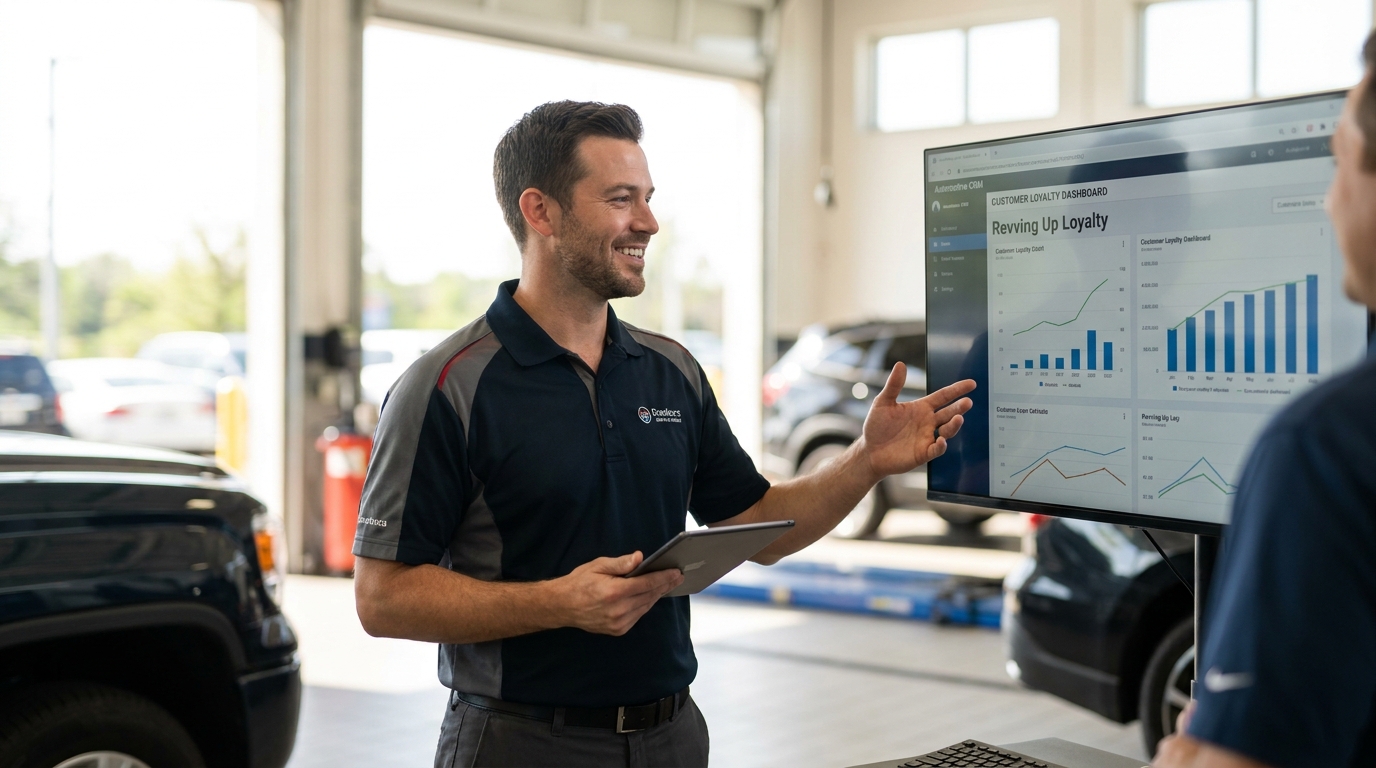
In the fiercely competitive automotive market, the roar of a new engine leaving the lot is a sound of success. But what happens after the taillights disappear around the corner? For many auto dealers, that customer relationship fades just as quickly. The focus on the next new sale often overshadows the immense value of the customer who just left. This transactional mindset creates a revolving door, where dealerships spend a fortune acquiring new customers, only to lose them to a competitor when it’s time for their next service or vehicle purchase. The statistics are clear: acquiring a new customer can cost five times more than retaining an existing one. In an industry with tightening margins and evolving consumer expectations, relying solely on new leads is an unsustainable business model. The key to long-term profitability and stability lies in transforming one-time buyers into lifelong, loyal advocates for your dealership.
This is where a modern Automotive Customer Relationship Management (CRM) system becomes an indispensable tool. Far more than a simple digital address book, a CRM is the central nervous system of a forward-thinking dealership. It’s a strategic platform designed to manage and nurture every single customer interaction, from the initial web inquiry to their tenth oil change and third vehicle purchase. By centralizing data, automating communication, and providing actionable insights, an automotive CRM empowers dealers to build meaningful, lasting relationships. This article will delve deep into how implementing a robust CRM can fundamentally shift your dealership’s focus from single transactions to maximizing customer lifetime value, ultimately driving the repeat business and service revenue that are the cornerstones of sustainable success.
Why Customer Retention is a Make-or-Break Metric for Auto Dealers
For decades, the primary metric of success for many dealerships was the number of units sold per month. While sales volume is undeniably important, an exclusive focus on it ignores a more powerful and profitable metric: customer retention. In today’s landscape, where customers can research, compare, and even purchase vehicles online from a multitude of competitors, loyalty is no longer a given. It must be earned, consistently and deliberately. Failing to prioritize retention means you are constantly fighting an expensive, uphill battle to replace the customers you let slip away.
The true value of a customer extends far beyond the profit margin on a single car sale. This concept is known as Customer Lifetime Value (CLV), which represents the total net profit a dealership can expect to make from a given customer over the entire duration of their relationship. Consider the full scope of potential revenue from a single loyal customer: they purchase a new vehicle every five to seven years. In between those purchases, they bring their car to your service department for routine maintenance, oil changes, tire rotations, and unexpected repairs. They buy parts and accessories from your parts department. Even more powerfully, a happy, loyal customer becomes a source of high-quality, low-cost referrals, bringing their friends, family, and colleagues to your showroom. When you multiply this potential across hundreds or thousands of customers, the financial impact of retention becomes staggering. A 5% increase in customer retention can lead to a profit increase of 25% to 95%. This is the economic reality that makes retention a critical pillar of a healthy dealership.
Demystifying the Automotive CRM: Your Dealership’s Central Nervous System
When some dealers hear “CRM,” they picture a glorified spreadsheet or a complicated contact list. This outdated perception misses the transformative power of a system specifically designed for the unique workflows of an automotive dealership. A modern automotive CRM is a dynamic, integrated platform that serves as the single source of truth for all customer-related activities. It’s the hub that connects your sales, service, BDC, and marketing departments, breaking down the information silos that so often lead to a disjointed and frustrating customer experience.
Think of it as the dealership’s central nervous system. It captures signals (customer inquiries, service visits, website clicks), processes that information, and triggers coordinated responses (automated follow-ups, salesperson tasks, targeted marketing). It ensures that every team member, from the newest salesperson to the most experienced service advisor, has the complete context of a customer’s history at their fingertips, enabling them to provide a seamless and personalized experience. A well-implemented CRM touches nearly every aspect of the customer journey.
Key Features of a Modern Automotive CRM
- Centralized Customer Database: This is the core of the CRM. It consolidates every piece of data into a single, comprehensive profile for each customer, providing a true 360-degree view of their entire relationship with your dealership.
- Sales Process and Lead Management: It tracks every lead from its source (website, third-party site, walk-in) through every stage of the sales funnel, ensuring no opportunity falls through the cracks and providing managers with visibility into pipeline health.
- Marketing Automation: This powerful feature allows you to build and execute targeted email and SMS campaigns automatically. From “Happy Birthday” messages to equity mining campaigns, it nurtures relationships without manual effort.
- Service Department Integration: A crucial component for retention, this links the sales and service records. The CRM can automatically trigger service reminders, track repair history, and notify the sales team of service-related sales opportunities.
- Reporting and Analytics: Beyond just storing data, a great CRM helps you understand it. It provides detailed reports on everything from salesperson performance and marketing ROI to customer satisfaction and retention rates, turning raw data into actionable business intelligence.
From Anonymous Lead to Loyal Advocate: Creating the 360-Degree Customer Profile
The secret to exceptional customer service and effective marketing is personalization. Generic, one-size-fits-all communication no longer works. Customers expect you to know who they are, what they’ve bought, and what they might need next. This is impossible to achieve when customer data is fragmented across multiple, disconnected systems—the sales DMS, the service scheduler, a salesperson’s personal notes, and a separate email marketing list. The automotive CRM solves this fundamental problem by creating a unified, 360-degree customer profile.
This comprehensive profile acts as a living history of the customer’s entire relationship with your dealership. It meticulously consolidates a vast array of data points, including:
- Personal and Vehicle Data: Name, address, phone number, email, as well as the make, model, year, and VIN of every vehicle they own or have purchased from you.
- Complete Purchase History: Details of every sale, including the date, the salesperson involved, financing terms, and any add-ons or warranties purchased.
- Full Service History: A complete log of every visit to your service bay, from routine oil changes to major repairs. This includes dates, services performed, parts used, and money spent.
- Communication Logs: A record of every touchpoint—every phone call, email opened, text message exchanged, and showroom visit—creating a complete timeline of their interactions.
- Online Behavior: Integration with your website allows the CRM to track which vehicles a customer has viewed, what forms they’ve filled out, and what marketing emails they’ve engaged with.
With this rich, centralized data, personalization becomes effortless. A salesperson preparing for a follow-up call can instantly see that the customer they’re calling bought a crossover three years ago, has two children (based on notes from the previous sale), and just had their vehicle in for a 30,000-mile service. Instead of a cold, generic call, they can open with, “Hi Sarah, I see you recently had your Highlander serviced with us. With your lease ending in six months and the kids getting bigger, I wanted to let you know about the new Grand Highlander that just arrived.” This level of informed, relevant communication builds trust and demonstrates that your dealership sees them as a valued individual, not just another sales number.
Automating Engagement: How a CRM Ensures Consistent and Timely Follow-Ups
In a busy dealership, even the most well-intentioned salesperson can get overwhelmed. Leads get forgotten, post-sale thank-you calls are missed, and service reminders are sent inconsistently. Human error is inevitable, but its impact on customer retention can be devastating. A single missed follow-up can be the difference between a repeat customer and one who feels neglected and takes their business elsewhere. Automation, powered by a CRM, is the solution. It acts as a safety net, ensuring that critical communications happen consistently, on time, every time, freeing up your staff to focus on high-value, personal interactions.
Automating the Sales and Post-Sale Process
The journey doesn’t end when the customer drives off the lot; in terms of retention, it’s just beginning. A CRM can automate a multi-step follow-up cadence that keeps your dealership top-of-mind and reinforces the customer’s purchase decision. For example, a workflow could be built to automatically:
- Send a “Thank You” email from the General Manager one day after the sale.
- Create a task for the salesperson to make a personal check-in call three days later.
- Send an SMS message after three weeks asking the customer to leave a review.
- Email a “Happy 1-Year Purchase Anniversary” message with a coupon for their first service.
This consistent outreach makes customers feel valued and cared for long after the transaction is complete.
Automating Service Reminders and Communication
The service drive is arguably the most important engine for customer retention. A CRM integrated with your DMS can automate the entire service communication process. Based on the vehicle’s mileage and time since the last visit, the system can automatically send personalized reminders via email or SMS for upcoming maintenance like oil changes, tire rotations, and milestone services. It can also send a “We Miss You” campaign to customers who haven’t been in for service in over a year, including a special offer to entice them back. After each service visit, the CRM can automatically send a satisfaction survey. This not only provides valuable feedback but also shows the customer you care about their experience, further strengthening the relationship.
Beyond Reminders: Using CRM Analytics for Proactive Retention
While automation is fantastic for ensuring consistent communication, the true power of a modern CRM lies in its ability to transform raw data into proactive, intelligent retention strategies. The reporting and analytics tools within the CRM allow you to move beyond simply reacting to customers and start anticipating their needs and behaviors. Instead of waiting for a customer to leave, you can use data to identify at-risk customers and opportunities for engagement long before they start shopping elsewhere.
Here’s how you can leverage CRM analytics to build a proactive retention machine:
- Identifying At-Risk Customers: A CRM allows you to build custom reports that act as an early-warning system. You can easily generate a list of all customers who have not visited your service department in the last 12 months. This is your “at-risk” list. Instead of letting them defect to a local independent shop, you can enroll them in a targeted re-engagement campaign with a compelling offer. Similarly, you can create reports to identify customers nearing the end of their loan or lease term, flagging them for proactive outreach from your sales team.
- Executing Hyper-Targeted Marketing Campaigns: Forget generic email blasts. A CRM allows you to segment your entire customer database with surgical precision. Want to run a trade-in event? You can build a campaign targeting only customers who own a specific SUV model between 4 and 6 years old, who have a positive service history, and live within a 20-mile radius. This level of targeting dramatically increases the relevance and effectiveness of your marketing, leading to higher engagement and better ROI.
- Measuring and Acting on Customer Satisfaction: You can’t improve what you don’t measure. By automating post-sale and post-service surveys, you can constantly track customer satisfaction metrics like Net Promoter Score (NPS). More importantly, the CRM can create automated alerts. If a customer responds with a low score (a “Detractor”), a task can be immediately assigned to a manager to call that customer personally, address their concerns, and turn a negative experience into a positive one. This proactive service recovery is a powerful retention tool.
Breaking Down Silos: How CRM Unites Sales and Service for Maximum Retention
One of the most common and damaging issues within a dealership is the proverbial wall between the sales and service departments. Sales is focused on the next deal, and service is focused on the current repair order. They often operate from different systems with little to no communication, resulting in missed opportunities and a fragmented customer experience. A shared automotive CRM demolishes this wall, creating a unified ecosystem where information flows freely between departments, all centered around the customer.
This integration creates a symbiotic relationship that directly boosts retention. Imagine these common scenarios, transformed by a shared CRM:
- The Service-to-Sales Hand-Off: A customer brings their six-year-old sedan in for service and is facing a costly repair bill. The service advisor sees this in the system and also notes from the CRM that the customer’s original salesperson is still with the dealership. With a single click, the advisor can send an alert to that salesperson. The salesperson receives the notification, reviews the customer’s full history, and walks over to the service lounge. They can then have an informed, empathetic conversation: “Hi Mr. Smith, I see you’re facing a tough repair decision on your Camry. I know you’ve loved that car. While you wait, would you be interested in seeing how little the payment would be on a brand-new model with a full warranty? We have some great trade-in incentives right now.” This seamless hand-off turns a negative service experience into a positive sales opportunity.
- The Sales-to-Service Introduction: After a sale is complete, a good salesperson will walk their customer over to the service drive and introduce them to an advisor. A great salesperson uses the CRM to schedule that customer’s first oil change right then and there. This simple act establishes a critical link, making it significantly more likely that the customer will return to your dealership for service instead of going to the nearest quick-lube shop. The CRM ensures this vital step is part of the standard, trackable sales process.
When both departments work from the same playbook—the customer’s 360-degree profile in the CRM—the customer feels like they are dealing with one cohesive organization that knows and values them. This unified experience builds profound trust and makes it incredibly difficult for a competitor to lure them away.
Conclusion: Investing in Relationships for a More Profitable Future
In the end, the path to long-term success for any auto dealership is paved with strong customer relationships. The era of focusing solely on the fresh lead and the immediate sale is giving way to a more sustainable, profitable model centered on customer loyalty and maximizing lifetime value. As we’ve explored, an automotive CRM is the essential technology that makes this strategic shift possible. It is far more than just software; it is a fundamental change in business philosophy—a commitment to knowing your customer on a deeper level and engaging with them in a personal, relevant, and consistent manner throughout their entire ownership lifecycle.
By providing a 360-degree view of every customer, a CRM empowers your team to move beyond generic interactions. The power of automation ensures that no opportunity for connection is missed, from a simple birthday greeting to a critical service reminder, building a foundation of continuous engagement. The deep analytics transform your dealership from reactive to proactive, allowing you to identify opportunities and solve problems before they arise. Most critically, a CRM breaks down the internal walls between sales and service, creating a single, unified team dedicated to providing a seamless customer experience. Investing in a robust automotive CRM is not an expense; it is an investment in your most valuable asset—your customer base. It’s an investment that pays dividends in the form of increased service revenue, repeat vehicle sales, valuable referrals, and a resilient business built to thrive for years to come.