Dealership Management Tips for Peak Efficiency and Profit
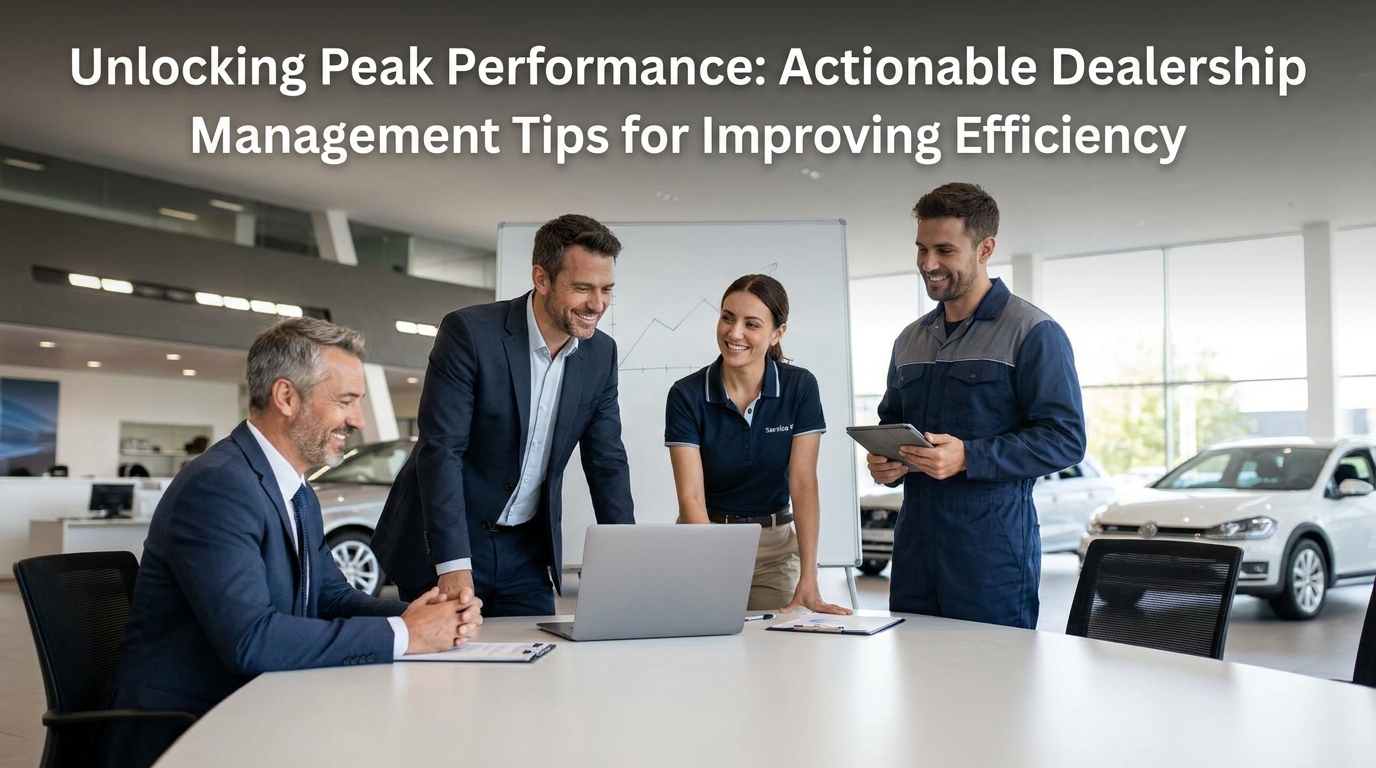
Unlocking Peak Performance: Actionable Dealership Management Tips for Improving Efficiency
In the fast-paced, highly competitive automotive retail landscape, efficiency isn’t just a buzzword—it’s the engine that drives profitability, customer satisfaction, and long-term success. A modern dealership is a complex ecosystem with multiple moving parts: sales, service, parts, finance, and administration. When these departments operate in disconnected silos, the result is friction, wasted time, and missed opportunities. Customers feel it in longer wait times and disjointed experiences. Employees feel it in frustrating workflows and inter-departmental blame games. Ultimately, the bottom line feels it most. Improving dealership efficiency is no longer about simply doing more with less; it’s about working smarter, not harder. It requires a holistic approach that examines every touchpoint, from the first online lead to the follow-up service appointment years later. This involves refining your organizational structure, optimizing core processes, and committing to continuous training for your team. This article will serve as a comprehensive guide, providing actionable dealership management tips to help you streamline operations, eliminate bottlenecks, and build a more resilient and profitable business. We will delve into best practices for fostering communication, refining your sales and service workflows, leveraging technology, investing in your people, and making data-driven decisions that propel your dealership forward.
Breaking Down the Silos: Fostering Seamless Inter-Departmental Communication
One of the most significant barriers to efficiency in any dealership is the invisible walls that often exist between departments. The sales team might not know the status of a vehicle in service, the service department may struggle to get timely information from parts, and the F&I office can become a bottleneck without proper coordination. Breaking down these silos is the foundational step toward a truly efficient operation.
Conduct Regular, Cross-Functional Meetings
Don’t let the first time your sales manager and service manager talk all week be when there’s a problem. Institute regular, structured meetings with a clear agenda. A daily “save-a-deal” meeting or a weekly leadership huddle can work wonders.
- Daily Huddles: A quick, 15-minute stand-up meeting each morning with heads of sales, service, and F&I can align daily priorities. Discuss vehicles scheduled for delivery, any VIP service customers, or potential trade-ins that need quick appraisal.
- Weekly Strategy Meetings: Use this time to review performance from the past week and plan for the next. Look at shared metrics, such as the total gross profit generated by a single customer across all departments, to foster a sense of shared ownership.
Utilize a Unified Technology Platform
Your Dealership Management System (DMS) and Customer Relationship Management (CRM) system should be the central nervous system of your operation. When everyone works from the same data set, communication becomes clearer and more efficient. For example, a salesperson should be able to look up a customer in the CRM and see their complete service history, including past repair orders and recommended future services. This not only provides valuable context for the sales conversation but also creates a seamless experience for the customer, who feels known and valued. Similarly, the service department can use this data to understand a customer’s purchasing history and tailor their approach accordingly.
Optimizing the Sales Process: From First Click to Final Handshake
The modern customer journey often begins long before they step foot on your lot. An efficient sales process must account for this digital-first reality and ensure a smooth, transparent, and expedited experience from lead to delivery. Every point of friction is a potential exit ramp for a prospective buyer.
Mastering Lead Management and Response Time
In the digital age, speed is everything. A lead that isn’t responded to within five minutes sees a dramatic drop in the likelihood of conversion. Your process must be built for rapid, high-quality engagement.
- Automate Initial Responses: Use your CRM to send an immediate, personalized automated email or text to acknowledge the customer’s inquiry. This confirms you’ve received their request and sets the expectation that a team member will be in touch shortly.
- Implement a Round-Robin System: Ensure leads are distributed fairly and instantly to available salespeople. This prevents leads from sitting in a general inbox and creates accountability.
- Track Your Metrics: Monitor your dealership’s average response time and set aggressive goals. This is a critical KPI that directly impacts sales volume.
Creating a Standardized and Transparent Road to the Sale
While every customer is unique, your process should be consistent. A standardized “road to the sale” ensures that every customer receives the same high level of service and that no steps are missed. This includes everything from the initial needs assessment and vehicle presentation to the trade-in appraisal and the introduction to the F&I manager. Transparency is a key component here. Be upfront about pricing, fees, and financing options. Using digital retailing tools on your website allows customers to structure much of their own deal, which not only empowers them but also saves significant time once they arrive at the dealership. The final delivery should be a celebration, not an ordeal. Have the vehicle detailed, gassed up, and ready to go. Ensure all paperwork is prepared in advance to minimize the time spent in the business office.
Maximizing Throughput and Profitability in the Service Department
The service department, or fixed operations, is often the most consistent profit center for a dealership. Improving its efficiency directly impacts your bottom line and is critical for long-term customer retention. The goal is to maximize throughput—the number of billable hours your technicians can produce—without sacrificing quality.
Streamlining the Workflow from Appointment to Pick-Up
Every step of the service process is an opportunity for efficiency gains. Start by analyzing the journey of a repair order (RO) through your shop.
- Online Scheduling and Digital Check-In: Allow customers to book appointments online and provide their vehicle information and service concerns in advance. Consider using tablets for a digital check-in process at the service drive, which can pre-populate customer data and speed up the write-up.
- Efficient Dispatching: Your dispatching system should be strategic. Don’t just hand the next RO to the next available technician. Route work based on skill level and certifications. Quick lube and maintenance work should go to your express or C-level technicians, freeing up your master or A-level technicians for complex diagnostic and heavy repair jobs.
- Digital Multi-Point Inspections (MPI): This is a game-changer. Technicians can use tablets to perform inspections, take photos and videos of problem areas, and send the results directly to the service advisor. The advisor can then text or email this detailed report to the customer for quick approval, dramatically reducing the time spent playing phone tag.
- Parts Kitting: For common jobs like brake replacements or timing belt services, have the parts department “kit” all the necessary components together in advance. When the technician is ready for the job, the complete kit is waiting, eliminating multiple trips back and forth to the parts window.
Leveraging Technology as an Efficiency Multiplier
In today’s dealership, technology is not just a tool; it’s the backbone of an efficient operation. While a modern DMS is a given, a truly efficient dealership integrates a full suite of technologies designed to automate tasks, improve communication, and provide actionable insights.
Beyond the Basics: A Tech Stack for the Modern Dealership
Look beyond your core DMS and CRM to find tools that solve specific operational bottlenecks. The right technology should free up your team to focus on what they do best: selling cars and providing excellent service.
- Inventory Management Software: Use tools that leverage market data to help you price your new and used inventory accurately and competitively. These systems can also help you identify which vehicles are turning quickly and which are aging, allowing you to make smarter stocking and marketing decisions.
- Automated Marketing Platforms: These platforms can integrate with your DMS to send targeted and timely communications to your customers. Think automated service reminders, happy birthday emails with a service coupon, or equity mining campaigns aimed at customers who are in a good position to trade in their vehicle.
- Digital F&I Menus: Move away from paper menus and use tablet-based systems in the F&I office. These tools can make the process more interactive and transparent for the customer, while also ensuring compliance and reducing the time it takes to complete the paperwork.
- Internal Communication Tools: Consider using platforms like Slack or Microsoft Teams for quick internal messages. This can be much faster than email or trying to track someone down for a simple question, especially for coordinating between the sales floor and the service bay.
Investing in Your People: The Power of Continuous Training and Development
You can have the most streamlined processes and the latest technology, but if your team isn’t properly trained to use them, your efficiency efforts will fall flat. A continuous commitment to training and professional development is not an expense; it’s an investment that pays dividends in productivity, employee morale, and customer satisfaction.
Building a Culture of Learning
Training shouldn’t be a one-time event during onboarding. It needs to be an ongoing part of your dealership’s culture. A well-trained employee is more confident, makes fewer mistakes, and is better equipped to handle challenging customer situations.
- Role-Specific Training: Your training program should be tailored to the specific needs of each role. Salespeople need ongoing product training from the manufacturer, as well as coaching on negotiation and your CRM process. Service advisors need training on customer service, conflict resolution, and how to effectively explain technical issues. Technicians require continuous factory training to keep up with new vehicle technologies.
- Process Training: Whenever you introduce a new process or technology, you must train your team on the “why” behind the change, not just the “how.” When employees understand how a new step or tool contributes to overall efficiency and makes their job easier, they are far more likely to adopt it.
- Performance Coaching: Managers should act as coaches, not just bosses. Regularly review performance with employees, using data and KPIs to guide the conversation. Provide constructive feedback and create a development plan to help them improve. This proactive approach builds skills and loyalty.
Making Data-Driven Decisions: Using KPIs to Find and Fix Inefficiencies
You can’t improve what you don’t measure. Moving from a “gut-feel” management style to a data-driven approach is essential for identifying inefficiencies and tracking the impact of your improvement initiatives. Your DMS and other systems are treasure troves of data; the key is knowing which metrics to track and how to act on them.
Key Performance Indicators (KPIs) Every Manager Should Watch
While there are dozens of metrics you could track, focus on the ones that have the most significant impact on your operational efficiency and profitability.
- For the Sales Department: Track metrics like Lead Response Time, Appointment Show Rate, Closing Ratio, and Average Gross Profit Per Unit (New and Used). If your closing ratio is low, it could indicate a problem with your sales process or staff training.
- For the Service Department: Monitor KPIs such as Technician Efficiency (billable hours vs. hours worked), Effective Labor Rate, Hours Per Repair Order, and MPI Upsell Percentage. A low technician efficiency rate, for example, could point to issues with parts availability or shop dispatching.
- For the Overall Dealership: The ultimate metric is the Service Absorption Rate (the percentage of your dealership’s total fixed overhead that is covered by the gross profit from your fixed operations). A high absorption rate (ideally 100% or more) means your service and parts departments can cover all of the dealership’s fixed costs, making every vehicle sale purely profitable.
Regularly review these KPIs in your management meetings. Use them to diagnose problems, set goals, and hold your team accountable. When you see a metric trending in the wrong direction, dig deeper to understand the root cause and implement a targeted solution.
Conclusion: The Journey to Peak Dealership Efficiency
Transforming your dealership into a model of efficiency is not a one-time project but a continuous journey of improvement. It requires a strategic and sustained effort across every facet of your organization. As we’ve explored, the path begins with breaking down the communication barriers between departments, creating a culture of collaboration where everyone is working toward the same goals. From there, it involves meticulously optimizing your core processes in both sales and service, eliminating friction for customers and employees alike. This optimization is supercharged by the strategic implementation of technology, using digital tools not just as replacements for paper but as genuine efficiency multipliers that automate tasks and provide critical data. However, the most sophisticated processes and technologies are only as effective as the people who use them. That’s why a deep investment in continuous training and development is non-negotiable, empowering your team with the skills and confidence to execute flawlessly. Finally, a data-driven mindset, guided by the consistent tracking of key performance indicators, allows you to measure your progress, identify new bottlenecks, and make informed decisions. By embracing these principles of organization, process, and training, you can build a dealership that is not only more profitable but also a better place to work and a better place for your customers to do business.