Car and Lock Symbol: What It Means and How to Fix It
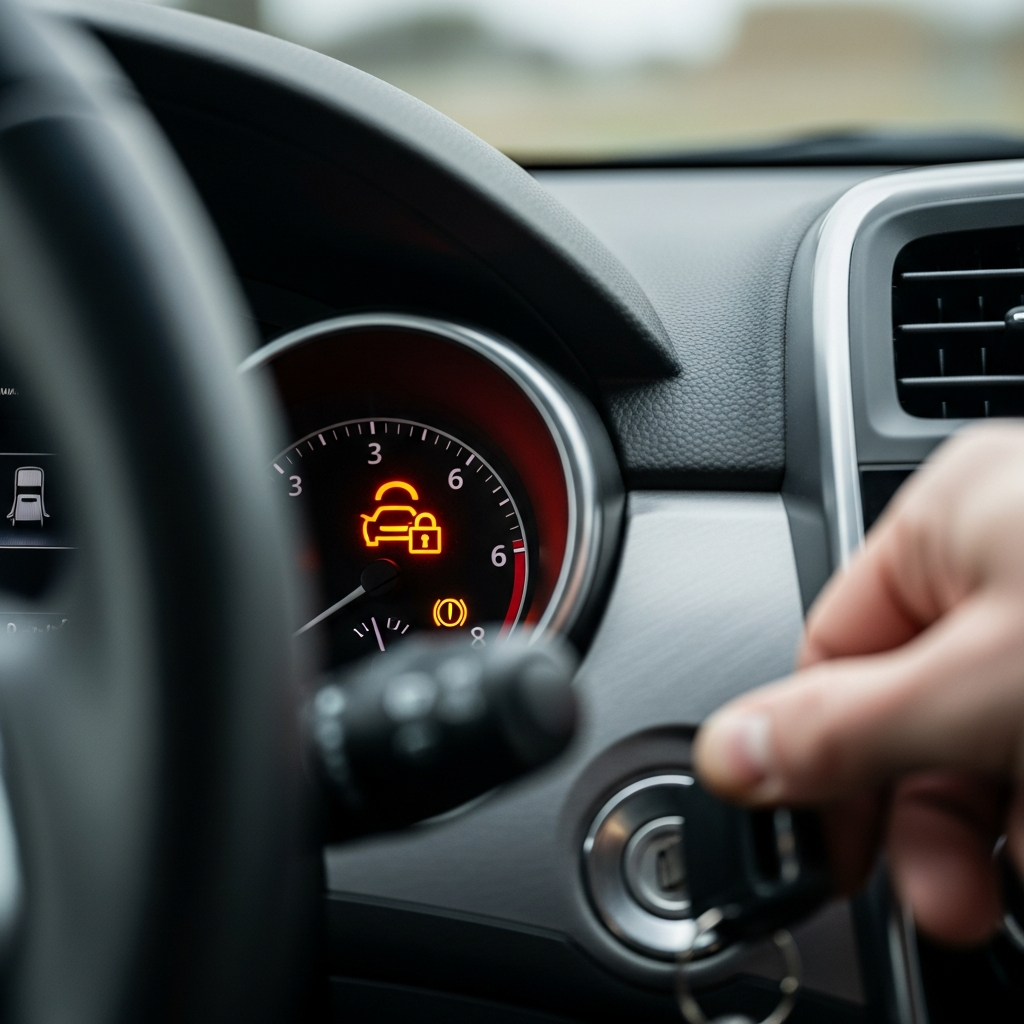
You’re running late, you jump in your car, turn the key, and… nothing. To make matters worse, you notice a new, unfamiliar light on your dashboard: a small icon of a car with a padlock over it. Panic can set in quickly. What does this light mean? Is your car broken? Is it a serious, expensive problem? This little symbol, often red or yellow, is one of the most misunderstood indicators on a modern vehicle’s dashboard, but it plays a crucial role in protecting your car from theft. It’s your car’s security light, and while its appearance can be alarming, it doesn’t always signal a catastrophe. More often than not, it’s an indicator of a communication breakdown between your car key and the vehicle’s anti-theft system, known as the immobilizer.
In this comprehensive guide, we will demystify the car with the lock symbol. We’ll explore what this light is designed to do, the difference between its normal operation and a genuine warning, and the common culprits that cause it to activate and prevent your car from starting. We will also walk you through a series of practical, do-it-yourself troubleshooting steps you can take before reaching for your phone to call for a tow. Finally, we’ll discuss when it’s time to hand the problem over to a professional and how to prevent these frustrating issues from happening in the first place. Understanding this system is the first step toward a quick resolution, saving you time, stress, and potentially unnecessary repair costs.
What is the Car and Lock Symbol Really Telling You?
At its core, the car and lock symbol is the face of your vehicle’s engine immobilizer system. This sophisticated anti-theft technology has been standard on most cars for over two decades and is incredibly effective at preventing hot-wiring and other traditional theft methods. It’s a silent guardian, working in the background every time you use your car. The system operates on a simple principle of digital verification, much like a password for your computer.
Here’s a breakdown of how it works:
- The Transponder Key: Your car key or key fob isn’t just a piece of cut metal. Embedded within the plastic head is a tiny, passive radio-frequency identification (RFID) chip called a transponder. This chip contains a unique, encrypted security code that is programmed to match your specific vehicle. It doesn’t need a battery to function; it’s powered wirelessly by the signal from the car when the key is near or in the ignition.
- The Receiver/Antenna: Located around the ignition cylinder (or in the steering column for push-to-start models) is an antenna ring or receiver. When you insert the key and turn it to the “On” position, this receiver sends out a low-frequency signal that energizes the transponder chip in your key.
- The Handshake: Once powered, the transponder chip broadcasts its unique security code back to the receiver. This code is then sent to the car’s brain, typically the Engine Control Unit (ECU) or Body Control Module (BCM).
- Verification and Ignition: The ECU compares the received code to the one stored in its memory. If the codes match perfectly—the digital “handshake” is successful—the immobilizer system deactivates. The ECU then allows the fuel pump and ignition systems to operate, and the car will start. If the codes do not match, or if no code is received at all, the immobilizer remains active. It will cut power to critical components, preventing the engine from turning over or firing up, and it will illuminate the security light on your dashboard to let you know what’s happening.
So, when you see that car and lock symbol, it’s not just a random light. It’s your car communicating the status of this vital security check. Understanding this process is key to diagnosing why it might be staying on when it shouldn’t be.
Flashing, Solid, or Off: Understanding the Security Light’s Behavior
The behavior of the security light is not random; each state—flashing, solid, or off—conveys a specific message about the immobilizer system. Learning to interpret these signals can help you instantly differentiate between normal operation and a real problem that needs your attention.
A Flashing Security Light (Car is Off)
This is the most common state and, in almost all cases, is completely normal. When you turn off your car, remove the key, and lock the doors, you may notice the car and lock symbol begins to flash slowly and steadily. This is not a warning. It’s an indicator that the vehicle’s anti-theft system is armed and actively monitoring for any unauthorized entry or starting attempts. It serves as a visual deterrent to potential thieves, letting them know that the vehicle is protected by an immobilizer. Think of it as the blinking red light on a home security system—it’s just letting you know it’s on duty.
A Solid Security Light (When Trying to Start)
This is the scenario that typically indicates a problem. You get in the car, insert the key, and turn it to the “On” or “Start” position. The security light comes on and stays on as a solid, non-flashing light. When this happens, the engine will usually either crank but not start, or do nothing at all. A solid light during a start attempt means the immobilizer system has failed its security check. The car has not recognized or authenticated the transponder key. Because it cannot verify that the correct key is being used, the system enters a lockdown mode to prevent theft, disabling the fuel and/or ignition systems. The solid light is your car’s way of saying, “I don’t recognize this key, so I am not starting.”
A Security Light That Stays On While Driving
In some rarer cases, the security light might come on and stay on while you are already driving. The car will continue to operate normally, but this is a clear sign of a fault within the immobilizer system. It could be an issue with the key, the receiver, or the control module. While the car won’t shut off mid-drive (for safety reasons), the significant risk is that it may not restart once you turn it off. If you see this light while driving, your top priority should be to get to a safe location or directly to a repair shop without turning off the engine if possible.
Top Reasons Your Car’s Immobilizer Light is Activated
When your car refuses to start and the security light is glaring at you, it’s because the security handshake failed. There are several potential culprits behind this communication breakdown, ranging from very simple issues to more complex electronic failures.
1. Dead or Weak Key Fob Battery
This is one of the most common and easiest problems to fix. While the transponder chip that communicates with the immobilizer is passive, the key fob itself has a small battery that powers the remote lock, unlock, and panic buttons. In some vehicle systems, a very low or dead fob battery can create enough electrical interference or a weak signal that prevents the car’s receiver from properly reading the transponder chip. Before assuming the worst, replacing the key fob battery should always be your first step.
2. Damaged Transponder Key
Your car key goes through a lot of abuse. It gets dropped, tossed, and exposed to the elements. The tiny transponder chip inside the key’s plastic housing is durable, but it’s not indestructible. A hard drop onto a concrete floor or repeated impacts can damage the chip or its internal connections. Similarly, extreme heat or water damage can also cause it to fail. If the chip is damaged, it can no longer broadcast its security code, and the car will not recognize it.
3. Using the Wrong or an Unprogrammed Key
It might sound obvious, but it happens more often than you’d think. You might have accidentally grabbed a key for a different car that looks similar. More commonly, this issue arises with newly cut keys. A simple duplicate key cut at a hardware store will have the correct physical shape to turn the ignition but will lack the programmed transponder chip. Without that chip, the car’s immobilizer will immediately activate and prevent the engine from starting. Every new key must be professionally programmed to the vehicle’s computer.
4. Faulty Ignition Switch or Transponder Receiver
The problem might not be with the key, but with the car itself. The receiver ring around the ignition cylinder is the component responsible for reading the key’s signal. Over time, this component or its wiring can fail. If the receiver isn’t working, it cannot pick up the transponder’s code, even from a perfectly good key. The result is the same: a failed security check and a no-start condition.
5. Issues with the Vehicle’s Computer (ECU/BCM)
In more complex cases, the issue may lie deeper within the car’s electronic systems. The Engine Control Unit (ECU) or Body Control Module (BCM) is what processes the key’s code and makes the final decision to start the car. A software glitch, voltage spike, or internal failure in one of these modules can disrupt the immobilizer function. This is often a more complicated and expensive repair that requires advanced diagnostic tools to pinpoint.
Before You Call a Pro: Simple Fixes for the Security Light
Before you spend money on a tow truck or a diagnostic fee, there are several troubleshooting steps you can perform yourself. These simple procedures can often resolve the issue, especially if it’s caused by a minor glitch or key-related problem.
- Try Your Spare Key: This is the single most important diagnostic step. If you have a spare key, try using it to start the car. If the car starts normally with the spare, you have successfully isolated the problem to your primary key. It’s either damaged or its battery is dead. If the spare key also fails to start the car, the issue is more likely with the vehicle’s systems (like the receiver or ECU).
- Replace the Key Fob Battery: As mentioned earlier, this is a cheap and easy potential fix. Most key fobs can be pried open with a small flathead screwdriver. They typically use a common coin-cell battery (like a CR2032 or CR2025) that you can find at any supermarket or electronics store. A fresh battery can sometimes be all it takes to restore proper communication.
- Inspect the Key for Damage: Look closely at the key. Is the plastic casing cracked? Has it been exposed to water? If the key looks physically damaged, there’s a high probability the internal transponder chip has been compromised.
- Attempt a Security System Reset/Relearn: Some vehicles, particularly those from General Motors (Chevrolet, Buick, GMC), have a manual relearn procedure you can try. It often works as follows:
- Insert the key and turn it to the “ON” position (without starting the engine).
- Observe the security light. It should be solid. Leave the key in this position for 10-15 minutes, or until the security light turns off.
- Once the light is off, turn the key to the “OFF” position for 5-10 seconds.
- Repeat the process two more times for a total of three cycles.
- After the third cycle, the car should be relearned to the key and start.
Note: This procedure is not universal. Check your owner’s manual or look online for a process specific to your vehicle’s make and model.
- Check for Interference: Sometimes, other RFID devices on your keychain, such as office key cards or other car keys, can interfere with the signal. Try starting the car with only the single car key, away from any other electronic devices.
Knowing Your Limits: When It’s Time for a Mechanic or Locksmith
If you’ve tried all the DIY fixes—you’ve replaced the battery, tried the spare key, and attempted a reset—and the security light remains stubbornly on, it’s time to call in a professional. Continuing to try to start the car can drain the battery, and tampering with complex electrical systems without the right knowledge can cause more harm than good. At this stage, your problem likely stems from a faulty vehicle component that requires specialized tools and expertise to diagnose and repair.
You generally have three options for professional help:
- Automotive Locksmith: For issues directly related to the key or key programming, a mobile automotive locksmith is often your best bet. They specialize in transponder keys, key fob programming, and immobilizer systems. They have the equipment to test your key’s signal, cut new keys, and program them to your vehicle on-site, which can save you the cost of a tow.
- Dealership Service Center: The dealership will have the most specific, up-to-date tools and information for your exact make and model. They are the go-to source for complex issues involving the ECU or other control modules that may require proprietary software to diagnose or replace. While often the most expensive option, their expertise is sometimes necessary for challenging cases.
- Trusted Independent Auto Repair Shop: A well-equipped, reputable independent shop is a fantastic middle ground. Many modern repair shops, like ours, invest in advanced diagnostic scanners and have technicians trained to handle complex vehicle electronics, including immobilizer systems. We can accurately read the specific trouble codes stored in your car’s computer, pinpointing whether the fault lies with the key, antenna, wiring, or a control module, and perform the necessary repairs or reprogramming at a competitive price.
A professional will use an advanced OBD-II scanner to pull codes from the BCM and ECU, which will point them directly to the source of the fault, taking the guesswork out of the diagnosis and ensuring an accurate and efficient repair.
Proactive Care: Preventing Future Security System Headaches
While some electronic failures are unavoidable, you can take several proactive steps to minimize the chances of being stranded by an immobilizer issue in the future. Prevention is always simpler and cheaper than a cure.
- Handle Your Keys with Care: Treat your key fob like the sensitive electronic device it is. Avoid dropping it on hard surfaces, and protect it from water and extreme temperatures. Store it in a safe place, not just tossed in a bag or pocket with heavy or sharp objects.
- Be Proactive with Battery Replacement: Don’t wait for the low battery warning. Get into the habit of replacing your key fob battery every 2-3 years as part of your regular maintenance routine. It’s a small investment that can prevent a major inconvenience.
- Always Have a Spare Key: If your car only came with one key, or if you’ve lost one, make getting a spare your top priority. It is significantly easier and more affordable for a professional to program a new key when they have a working original to clone. Creating a key from scratch when all keys are lost is a much more involved and expensive process.
- Pay Attention to Electrical Warning Signs: Your car’s electrical system is interconnected. If you notice other strange electrical issues—like flickering lights, a radio that resets itself, or other random warning lights—get them checked out promptly. These could be early signs of a failing battery or alternator, which can cause voltage issues that affect sensitive modules like the immobilizer system.
Conclusion: Your Next Steps for That Pesky Lock Symbol
That little icon of a car with a lock on your dashboard is more than just a light; it’s the window into your vehicle’s sophisticated anti-theft immobilizer system. While its sudden appearance during a no-start situation can be incredibly stressful, understanding its function is the first step toward a solution. We’ve learned that a flashing light when the car is off is perfectly normal, indicating the security system is armed and ready. It’s the solid, unwavering light when you try to start the car that signals a problem—a failed digital handshake between your key and your vehicle. The cause can be as simple as a dead key fob battery or a damaged transponder chip, or it could point to a more complex issue with the car’s receiver or computer modules.
By following a logical troubleshooting process—starting with the easiest and most common solutions like trying your spare key and replacing the fob battery—you can often diagnose or even fix the problem yourself. However, it’s equally important to recognize when the issue is beyond a simple fix. If these initial steps don’t resolve the problem, the most efficient path forward is to seek professional help. A qualified technician can use diagnostic tools to accurately identify the root cause, saving you from a frustrating cycle of guesswork. If you’re in our area and facing this persistent warning light, don’t let it leave you stranded. Our team of expert technicians is equipped with the specialized tools and knowledge to diagnose and repair immobilizer system issues on a wide range of vehicles. Contact us today, and let us get you back on the road with confidence and peace of mind.