Automotive SEO: Drive Traffic and Sales to Your Dealership
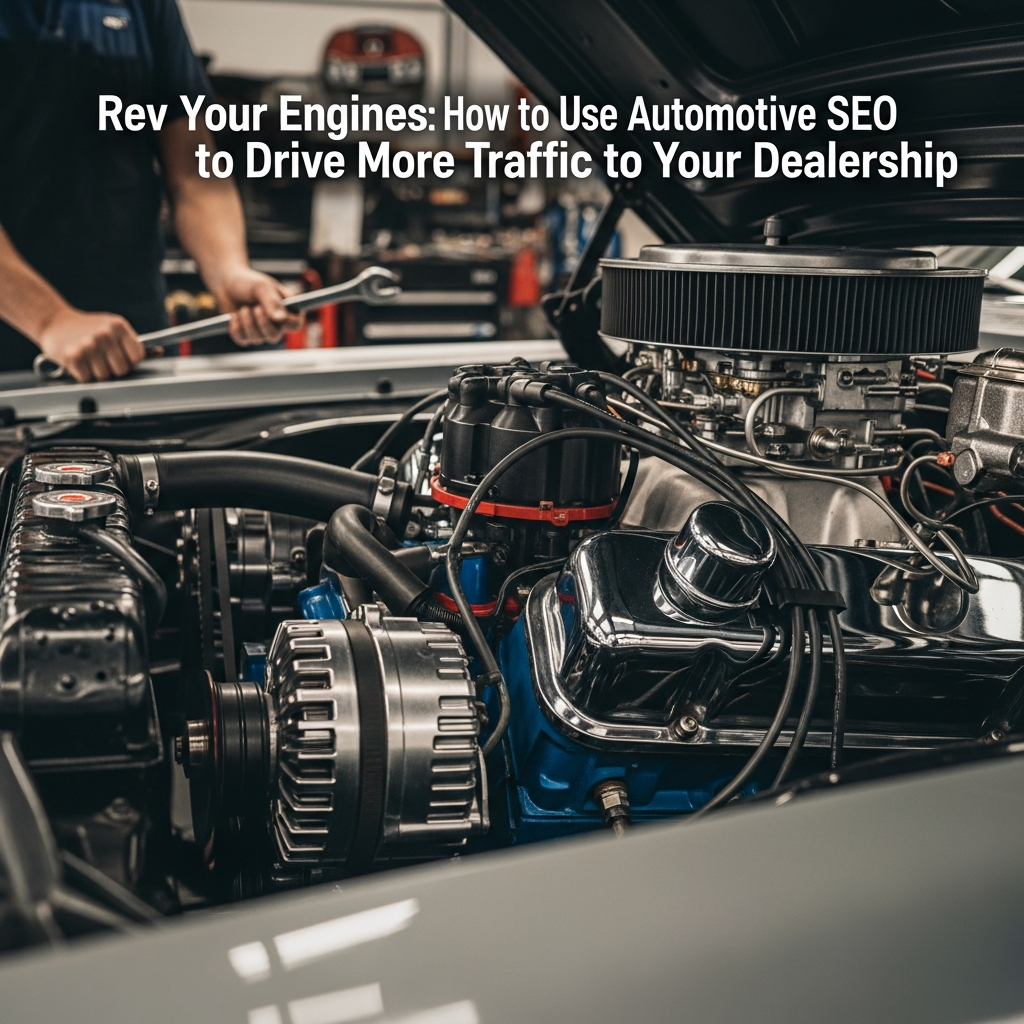
In today’s hyper-connected world, the car buying journey has fundamentally changed. The days of customers visiting multiple lots to kick tires are dwindling. Instead, the modern car shopper begins their quest not on the pavement, but on a search engine results page. They are typing queries like “used Honda CR-V near me,” “best lease deals on Ford F-150 in Austin,” or “Toyota service center open Saturday.” If your dealership doesn’t appear prominently for these searches, you are, for all intents and purposes, invisible to a massive segment of your potential market. This is where automotive Search Engine Optimization (SEO) shifts from a marketing buzzword into an essential business strategy. It is the engine that powers your digital showroom, ensuring that when a local customer is ready to research, compare, or buy, your dealership is the first one they find. This comprehensive guide will move beyond the basics, providing you with a detailed roadmap to understanding and implementing powerful automotive SEO tactics. We will explore everything from mastering local search to optimizing individual vehicle pages, all designed to drive more qualified traffic to your website and, ultimately, more customers onto your lot.
What is Automotive SEO and Why Does It Matter?
Automotive SEO is a specialized discipline of digital marketing focused on improving a car dealership’s visibility in search engine results like Google and Bing. It’s not just about general SEO principles; it’s about applying those principles to the unique context of the automotive industry. This means understanding the specific ways customers search for vehicles, services, and dealerships. The goal is to connect your dealership with high-intent buyers in your specific geographic area at the precise moment they are looking for what you offer.
So, what makes it different from generic SEO? It’s all about intent and locality. A national e-commerce store might target broad keywords, but a dealership’s success hinges on capturing local traffic. Automotive SEO focuses on a highly specific customer journey that involves researching models, comparing local inventory, seeking financing information, and looking for service centers. It’s about optimizing for queries that have strong commercial and local intent.
The importance of this cannot be overstated. Consider these points:
- The Buyer’s Journey Starts Online: Studies consistently show that over 90% of car buyers conduct online research before ever setting foot in a dealership. They use search engines to compare models, read reviews, and find local inventory. If you aren’t visible, you aren’t part of their consideration set.
- High-Intent Searches: When someone searches for “Chevy Silverado for sale in Dallas,” they are not just casually browsing. This is a potential customer actively in the market. Ranking for these terms puts you directly in front of people ready to make a purchase.
- Cost-Effective Marketing: Compared to the recurring costs of paid ads (PPC), traditional radio spots, or television commercials, SEO is a long-term investment. While it requires effort upfront, a strong ranking can deliver a steady stream of “free,” highly qualified organic traffic for months or even years.
- Building Trust and Authority: Ranking high on Google organically builds credibility. It signals to potential customers that your dealership is a legitimate, authoritative, and relevant player in the local market, making them more likely to trust you with their business.
The Foundation: Mastering Local SEO for Your Dealership
For any brick-and-mortar business, local SEO is critical. For a car dealership, it’s the absolute bedrock of your entire digital marketing strategy. Your customers live and work in the communities you serve, and your SEO efforts must reflect that. The single most powerful tool in your local SEO arsenal is your Google Business Profile (GBP), formerly known as Google My Business. This free listing is what appears in Google Maps and the “Local Pack” box in search results—prime digital real estate.
Optimizing your GBP is non-negotiable. Here’s how to do it right:
- Claim and Verify Your Listing: First, ensure you have claimed and verified ownership of your dealership’s profile. This gives you control over the information displayed.
- Perfect Your NAP Consistency: Your dealership’s Name, Address, and Phone number (NAP) must be exactly the same across your website, your GBP, and all other online directories. Any inconsistencies can confuse search engines and harm your local ranking.
- Choose the Right Categories: Select primary and secondary categories that accurately describe your business. Your primary category should be “Car Dealer.” Secondary categories can include “Used Car Dealer,” “[Brand] Dealer” (e.g., “Ford Dealer”), “Auto Repair Shop,” etc.
- Write a Compelling Description: Use the business description to highlight what makes your dealership unique. Mention your commitment to customer service, special financing options, or your extensive inventory of new and used vehicles. Naturally include keywords like “used cars in [Your City].”
- Upload High-Quality Media: A picture is worth a thousand words. Upload high-resolution photos of your showroom, service bays, staff, and your best-looking inventory. Consider a virtual tour video. This helps customers get a feel for your dealership before they visit.
- Leverage Google Posts: Use Google Posts to share updates, promotions, new arrivals, and events. This keeps your profile fresh and shows Google that your business is active. Post about a weekend sales event or a new shipment of popular models.
- Manage Reviews Actively: Reviews are a massive local ranking factor. Encourage satisfied customers to leave reviews. Crucially, respond to all reviews—both positive and negative. A thoughtful response to a negative review can often win over prospective customers by showing you care.
- Utilize the Q&A Feature: Proactively populate the Questions & Answers section. Think about common customer questions (“Do you offer financing for bad credit?”, “What are your service hours on Saturday?”) and answer them yourself. This provides quick value and controls the narrative.
On-Page SEO for Dealership Websites: Optimizing Your Digital Lot
Once you’ve solidified your local foundation with GBP, the focus shifts to your own website. On-page SEO involves optimizing the individual pages of your site to tell search engines exactly what they’re about. For a dealership, this goes far beyond the homepage. Your most valuable pages are your Vehicle Listing Pages (VLPs) and, most importantly, your Vehicle Detail Pages (VDPs).
First, you need to understand the keywords your customers are using. Conduct keyword research focusing on three main types:
- Informational Keywords: “Honda CR-V vs. Toyota RAV4”
- Navigational Keywords: “[Your Dealership Name]”
- Transactional Keywords: “used Toyota Tacoma for sale in [Your City]”
Once you have your keywords, it’s time to optimize your key pages:
Homepage: Your homepage’s title tag should clearly state who you are, what you do, and where you are (e.g., “[Dealership Name] | New & Used Cars for Sale in [City, ST]”). The content should feature clear calls-to-action (CTAs) to “Search New Inventory,” “View Used Specials,” or “Schedule Service.”
Vehicle Listing Pages (VLPs): These are your category pages (e.g., all used SUVs, all new sedans). Optimize the title tag and H1 heading for broader terms like “Used SUVs for Sale in [City].” The content on this page should briefly describe the types of SUVs you offer and why a customer should buy one from you.
Vehicle Detail Pages (VDPs): This is where the magic happens. Every single car on your lot needs its own, uniquely optimized VDP. This is arguably the most important on-page SEO task for a dealership.
- Unique Title Tags: Don’t use a generic template. The title tag should be specific: “Used 2022 Ford Explorer XLT in Blue | [Dealership Name], [City].”
- Unique Descriptions: Avoid simply copying and pasting the manufacturer’s standard description. Write a unique paragraph or two for each vehicle. Mention its specific condition, unique features (like a sunroof or tech package), and its history if available. Use descriptive language that helps a customer imagine driving it.
- High-Quality Media: Each VDP should have a comprehensive gallery of at least 15-20 high-resolution photos of that specific vehicle—exterior, interior, engine, and any notable features or flaws. A short walk-around video is even better.
- Schema Markup: Implement “Vehicle” and “Offer” schema markup on your VDPs. This structured data gives Google specific details like the VIN, make, model, year, mileage, and price, which can lead to rich snippets in search results.
Creating High-Value Content That Attracts and Converts
A website with just inventory pages is a digital car lot. A website with a helpful blog and local resources is a community hub and an authority in the automotive space. Content marketing is a powerful SEO strategy that attracts customers at the top of the sales funnel—when they are still in the research and consideration phase.
By creating content that answers your potential customers’ questions, you build trust and draw them into your ecosystem. When they’re ready to buy, your dealership will be top of mind. The key is to think beyond just selling cars and focus on being a valuable resource.
Here are some proven automotive content marketing ideas:
- Model Comparisons: Write detailed blog posts comparing popular models you sell. For example, “Ford F-150 vs. Chevy Silverado: Which Truck is Right for [City] Drivers?” This captures searchers who are trying to make a decision.
- Financing and Buying Guides: Demystify the car-buying process. Create content like “A First-Time Car Buyer’s Guide to Financing in [State]” or “Understanding Leasing vs. Buying.” This positions you as a helpful expert.
- Maintenance and Service Tips: Create posts from your service department’s perspective. “5 Signs You Need New Brakes” or “How Often Should You Really Get an Oil Change?” This not only drives SEO traffic but also promotes your high-margin service business.
- Local Community Content: This is a fantastic way to boost local relevance. Write about “The Best Scenic Drives Near [Your City]” or “Sponsoring the [Local High School] Football Team.” This shows you are invested in the community and provides opportunities for local links.
Beyond the blog, create dedicated Location-Specific Pages. If your dealership is in a major city but serves several surrounding suburbs, create a unique page for each of those suburbs (e.g., “[Your Dealership]: Your Trusted Dealer for [Suburb Name]”). On these pages, include tailored content, driving directions from that suburb, and testimonials from customers who live there. This is a highly effective tactic for capturing “near me” searches from outside your immediate city limits.
Technical SEO: The Engine Under the Hood
If on-page SEO is the shiny paint job and interior of your car, technical SEO is the finely tuned engine, transmission, and chassis. It’s the behind-the-scenes work that ensures your website is fast, accessible, and easily understood by search engine crawlers. Without a solid technical foundation, all your other SEO efforts can be wasted.
For a dealership website, which is often heavy with images and complex inventory feeds, technical SEO is especially crucial. Here are the key areas to focus on:
- Mobile-First Experience: Google primarily uses the mobile version of a website for indexing and ranking. More importantly, the majority of your customers are searching for cars on their smartphones. Your website must be fully responsive, easy to navigate on a small screen, and load quickly on a mobile connection. Test your site’s mobile-friendliness with Google’s own tool.
- Site Speed: A slow-loading website is a conversion killer. If your VDPs take more than a few seconds to load, potential buyers will simply click the back button and go to a competitor. The number one culprit for slow dealership sites is unoptimized images. Ensure all your vehicle photos are compressed to reduce file size without sacrificing too much quality.
- Logical Site Structure: Your website should be organized in a clear, hierarchical way that makes sense to both users and search engines. A typical structure might be: Homepage > New Inventory > Ford > SUVs > Explorer. This structure should be reflected in your URL paths (e.g., `yourdealership.com/new-inventory/ford/explorer`). Use internal links strategically to connect related pages, such as linking from a blog post about the Explorer to your actual Explorer VLP and VDPs.
- XML Sitemap: Your website should have a dynamic XML sitemap that includes all your indexable pages, especially every single VDP. This sitemap acts as a roadmap for Google, helping it discover and index your entire inventory quickly as it changes.
- Advanced Schema Markup: We mentioned schema for VDPs, but it can be used throughout your site. Implement `AutomotiveDealership` and `LocalBusiness` schema on your homepage and contact page. Use `Review` schema to mark up customer testimonials. This structured data helps Google understand the context of your content and can enhance your appearance in search results.
Building Authority with Link Building and Citations
Off-page SEO refers to actions taken outside of your own website to impact your rankings. The most significant part of this is link building. In Google’s eyes, a link from another website to yours acts as a vote of confidence or an endorsement. The more high-quality, relevant websites that link to your dealership’s site, the more authority and trustworthiness you build, which leads to higher rankings.
For a car dealership, the focus should be on acquiring local and relevant links.
Local Citation Management:
A citation is any online mention of your dealership’s Name, Address, and Phone number (NAP). These appear in online business directories like Yelp, Yellow Pages, and hundreds of other industry-specific sites. The absolute key here is consistency. Your NAP information must be identical across every single listing. Inconsistent information sends mixed signals to Google and can hurt your local search rankings. Use a service like Moz Local or BrightLocal to audit and clean up your citations to ensure 100% consistency.
Local Link Building Strategies:
Beyond citations, you need to actively earn links from other local websites. This requires outreach and community engagement. Here are some effective tactics:
- Sponsorships: Sponsor a local charity 5K run, a youth sports team, or a community event. In most cases, these organizations will have a sponsors page on their website where they will link back to your dealership’s site. This is a powerful, highly-relevant local link.
- Chamber of Commerce: Join your local Chamber of Commerce. Not only is it good for business networking, but you’ll also get a valuable link from a trusted local authority site.
- Partnerships with Local Businesses: Build relationships with complementary, non-competing local businesses. For example, you could partner with a local auto detailer, a tire shop, or an insurance agent. You can write a blog post featuring them, and they can do the same for you, with each of you linking to the other’s website.
- Host an Event: Host a community event at your dealership, like a “new model reveal” night or a “meet Santa” event for families. Promote the event to local news outlets and bloggers, which can result in media coverage and valuable links.
Conclusion: Driving Your Dealership into the Future
Navigating the world of automotive SEO can seem complex, but at its core, it’s about a single, simple goal: being the most helpful and relevant answer for a potential customer in your area. It’s a long-term strategy that requires patience and consistent effort, but the payoff is immense. By moving away from a reliance on expensive, short-term advertising and investing in a robust organic presence, you are building a sustainable asset for your dealership. We’ve covered the essential pillars: mastering your local presence with an optimized Google Business Profile, performing meticulous on-page SEO on your VDPs, creating valuable content that answers customer questions, ensuring your site is technically sound, and building local authority through links and citations. Each of these components works together, creating a powerful digital marketing engine. When you successfully implement these strategies, you stop chasing customers and start attracting them. You connect with buyers at the most crucial moments of their journey, building trust before they even walk through your doors. In the competitive automotive landscape, a strong SEO strategy is no longer a luxury—it’s the key to driving more traffic, selling more cars, and securing your dealership’s success for years to come.