Auto Dealer SEM: A Guide to Selling More Cars
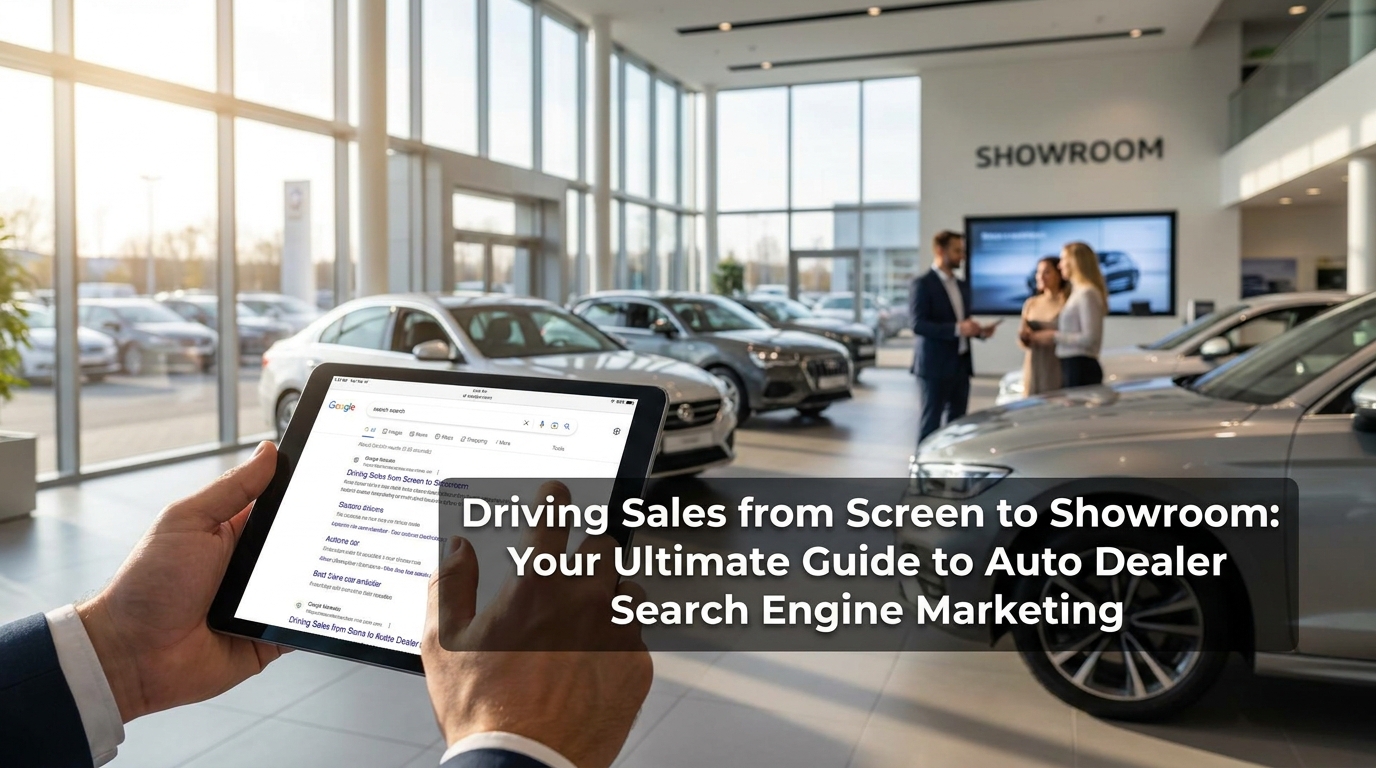
In today’s hyper-digital world, the path to purchasing a new or used vehicle no longer begins on the dealership lot. It starts with a simple search query typed into a Google search bar. The modern car buyer is empowered, informed, and does the vast majority of their research online before ever setting foot in a showroom. For auto dealerships, this fundamental shift in consumer behavior represents both a massive challenge and an incredible opportunity. How do you capture the attention of these digital-first shoppers? The answer lies in a powerful, targeted, and measurable strategy: Search Engine Marketing (SEM). Gone are the days of relying solely on billboard placements and radio spots, hoping to reach the right person at the right time. SEM allows you to place your dealership and your inventory directly in front of motivated buyers precisely when they are looking for what you sell. This comprehensive guide is your roadmap to navigating the world of auto dealer SEM. We will demystify the core components of a successful strategy, from the foundational principles of Google Ads to the game-changing power of inventory-specific advertising and the art of meticulous keyword research. By the end of this article, you will have a clear understanding of how to leverage SEM to fill your pipeline, drive qualified traffic to your website and your lot, and ultimately, sell more cars.
Why Search Engine Marketing is a Non-Negotiable for Modern Dealerships
For decades, automotive marketing was a predictable landscape of print ads, television commercials, and radio jingles. While these methods built brand awareness, they were notoriously difficult to measure and often felt like casting a wide, expensive net in hopes of catching a few fish. Search Engine Marketing completely flips this model on its head. It’s not about interrupting potential customers; it’s about being the answer they are actively searching for.
The core difference between traditional advertising and SEM is intent. A person driving down the highway might see your billboard, but you have no idea if they are in the market for a car. However, a person searching “used Honda CR-V for sale near me” has explicitly declared their intent. They are a high-quality, motivated lead, and SEM allows you to engage them at this critical moment. This is the primary advantage of paid search over even its digital cousin, Search Engine Optimization (SEO). While SEO focuses on earning organic, unpaid rankings over time, SEM provides immediate visibility, allowing you to turn on a campaign and appear at the top of the search results page that same day. This speed and control are invaluable in the fast-paced auto market, where inventory and promotions change weekly. SEM provides a level of targeting, measurability, and return on investment (ROI) that traditional methods simply cannot match, making it an essential pillar of any successful dealership’s marketing strategy.
The Foundation: Mastering Keyword Research for Your Dealership
Before you spend a single dollar on an ad, you must understand the language of your customer. Keyword research is the bedrock of any successful SEM campaign. It’s the process of identifying the specific words and phrases potential buyers use when searching for vehicles online. Getting this right means your ads show up for relevant searches, attracting qualified buyers. Getting it wrong means wasting your budget on clicks from people who are not in the market for a car.
Understanding Keyword Categories
Automotive keywords can be broken down into several key categories. A comprehensive strategy will utilize a mix of all of them:
- Branded Keywords: These include your dealership’s name, like “[Your City] Ford” or “[Your Dealership Name] service center.” Bidding on your own name is crucial to defend against competitors trying to poach your customers.
- Geo-Targeted Keywords: These are essential for a local business. Examples include “car dealerships in [Your City],” “used trucks for sale in [Your County],” or “new Toyota dealer near me.”
- Model-Specific Keywords: These are the bread and butter for driving sales. They target shoppers looking for a particular vehicle, such as “new Ford F-150 lease deals,” “2022 Honda Civic price,” or “certified pre-owned Subaru Outback.”
- Long-Tail Keywords: These are longer, more specific phrases that often indicate a buyer is further down the purchasing funnel. Think “best three-row SUV for families” or “what is the towing capacity of a Ram 1500.” They have lower search volume but often a much higher conversion rate.
The Importance of Intent and Negative Keywords
Beyond the words themselves, you must understand the searcher’s intent. Are they just looking for information (“Ford Explorer reviews”), or are they ready to transact (“Ford Explorer for sale”)? Your ad copy and landing pages should match this intent. Equally important is the use of negative keywords. These are terms you explicitly tell Google not to show your ads for. For a sales-focused campaign, you would want to add negative keywords like “jobs,” “careers,” “parts,” “salvage,” “recall,” and “diagram” to ensure your budget is spent only on prospective buyers, not job seekers or DIY mechanics.
Building High-Performance Google Ads Campaigns
With your keyword research complete, it’s time to build your campaigns in Google Ads. A well-structured account is easier to manage, optimize, and analyze. The standard hierarchy is Campaigns > Ad Groups > Keywords > Ads. For a dealership, you might structure your account with separate campaigns for each brand you carry (e.g., “Ford,” “Chrysler,” “Jeep”) or by vehicle condition (“New Vehicles,” “Used Vehicles”).
Choosing the Right Campaign Types
Within these campaigns, you’ll create Ad Groups. For example, within your “New Ford” campaign, you might have Ad Groups for “Ford F-150,” “Ford Explorer,” and “Ford Mustang.” This allows you to group tightly related keywords and write highly specific ads for each model. Google offers several campaign types, but for dealers, the most important are:
- Search Campaigns: These are the classic text-based ads that appear on the Google search results page. They are essential for capturing high-intent searchers actively looking for vehicles.
- Display Campaigns: These are visual, image-based ads that appear across Google’s network of millions of websites. They are excellent for building brand awareness and for retargeting users who have previously visited your website.
- Video Campaigns: These run on YouTube and are perfect for showcasing your dealership’s personality, running vehicle walkaround videos, or sharing customer testimonials to build trust and engagement.
Crafting Compelling Ad Copy and Using Extensions
Your ad is your digital storefront. It needs to be compelling enough to earn the click over your competitors. Effective ad copy includes a strong, clear call-to-action (CTA) like “View Our Inventory” or “Schedule Your Test Drive.” It should also highlight your unique selling propositions (USPs). What makes your dealership special? Is it a lifetime powertrain warranty, no-haggle pricing, or an award-winning service department? Put that in your ad! Finally, leverage ad extensions. These are additional snippets of information that expand your ad’s size and provide more ways for users to engage. Key extensions for dealers include Sitelink Extensions (linking to specific pages like “New Specials” or “Value Your Trade”), Call Extensions (adding a clickable phone number), and Location Extensions (showing your address and a map).
The Power of Google Vehicle Ads: Putting Your Inventory Front and Center
While traditional search ads are vital, Google has a specialized ad format that is a true game-changer for auto dealerships: Google Vehicle Ads. These are the highly visual, image-rich listings that appear in a carousel at the very top of the search results page when a user searches for a specific vehicle. They display a picture of the car, its make, model, year, price, mileage, and your dealership’s name, all before the user even clicks.
The primary benefit of Vehicle Ads is their ability to pre-qualify traffic. A shopper sees the most important details upfront. If they click, it’s because they are genuinely interested in that specific car at that specific price. This leads to higher quality, lower-funnel leads compared to a generic text ad. These ads work by connecting your live inventory feed directly to Google. The setup process is more involved than a standard search campaign but is well worth the effort. It requires three key components:
- A Google Merchant Center Account: This is where you will upload and manage your inventory data feed.
- A Verified Google Business Profile: Your dealership’s physical location must be linked and verified.
- An Inventory Feed: This is a data file (usually a .csv or .xml) containing all the details about every vehicle you have for sale. Most dealership website and inventory providers can generate this feed for you in the correct format required by Google.
Once these are connected, you can create a specific Vehicle Ads campaign within Google Ads. The system will then automatically generate ads for every car in your inventory, targeting relevant searches. It’s a powerful, automated way to showcase your entire lot directly on the search results page, driving high-intent shoppers directly to your Vehicle Detail Pages (VDPs).
Optimizing for Local: Winning the “Near Me” Battle
Despite the digital nature of the research phase, the final transaction in car buying is overwhelmingly local. No one is going to buy a Honda Civic from a dealership 500 miles away. This makes local optimization a critical component of your SEM strategy. Your goal is to dominate the search results for customers in your Primary Market Area (PMA).
The cornerstone of local digital marketing is your Google Business Profile (GBP). This is the free listing that appears in Google Maps and the “Local Pack” in search results. A fully optimized GBP is a magnet for local customers. Ensure it includes:
- Accurate NAP: Your Name, Address, and Phone number must be correct and consistent across the web.
- High-Quality Photos and Videos: Showcase your showroom, service bays, staff, and a rotating selection of your best inventory.
- Customer Reviews: Actively encourage happy customers to leave reviews and make sure you respond to all of them—both positive and negative. This shows you are engaged and value customer feedback.
- Google Posts: Use this feature to promote weekend sales events, new model arrivals, or service specials directly in your GBP listing.
Within your Google Ads campaigns, you must also use precise location targeting. Don’t just target your entire state. Focus your budget on the zip codes and cities within a reasonable driving distance of your dealership. You can use bid adjustments to bid more aggressively for users who are physically closer to your location. This ensures your ad spend is concentrated on the shoppers most likely to walk through your doors.
Measuring Success: Key Metrics That Drive Dealership Growth
The beauty of digital marketing is that everything is measurable. However, it’s easy to get lost in a sea of data. Focusing on the right Key Performance Indicators (KPIs) is what separates a successful campaign from a failing one. Move beyond vanity metrics like “clicks” and “impressions” and focus on the data that directly impacts your bottom line.
Here are the essential KPIs for any auto dealer SEM campaign:
- Click-Through Rate (CTR): This is the percentage of people who see your ad and click on it. A low CTR often indicates that your ad copy is not relevant to the keywords you’re targeting.
- Cost Per Click (CPC): This is the average amount you pay for each click. Monitoring this helps you manage your budget effectively.
- Conversion Rate: This is arguably the most important metric. A conversion is any desired action a user takes after clicking your ad. For a dealership, this could be filling out a “contact us” form, making a phone call, viewing a VDP, or getting pre-approved for financing. Your conversion rate tells you how effective your website is at turning traffic into leads.
- Cost Per Conversion (or Cost Per Lead): This is your total ad spend divided by the number of conversions. This KPI tells you exactly how much it costs to generate a lead from your SEM efforts, allowing you to calculate your true return on investment.
- Impression Share: This metric tells you what percentage of the total possible impressions (ad views) you are actually capturing for your target keywords. If your impression share is low, it could mean your budget is too small or your bids are too low to compete effectively.
To track these KPIs accurately, you need robust tracking in place. This includes setting up Google Ads conversion tracking, linking your account to Google Analytics, and implementing a call tracking solution to attribute phone call leads back to the specific ad campaign that generated them. Without proper tracking, you are simply guessing at what works.
Conclusion: The Road Ahead for Your Dealership’s Digital Strategy
The journey of the modern car buyer is paved with digital touchpoints, and the first and most important of these is the search engine. Embracing a sophisticated Search Engine Marketing strategy is no longer optional for auto dealerships; it is the fundamental price of admission to compete in today’s market. We’ve journeyed through the core pillars of a winning SEM program, starting with the “why”—the undeniable shift to online research and the superior targeting and measurability of SEM over traditional methods. We then delved into the “how,” covering the critical foundation of automotive keyword research, the art of building well-structured Google Ads campaigns, and the immense power of visually-driven Google Vehicle Ads that place your live inventory directly in front of motivated shoppers. We also underscored the importance of a local-first mindset, optimizing your digital presence to win the crucial “near me” searches that lead to showroom visits. Finally, we highlighted the necessity of meticulous tracking and focusing on the KPIs that truly matter—the ones that translate clicks into customers and ad spend into sales. By integrating these strategies, you can move beyond simply being present online and start actively dominating your local market, meeting customers at the exact moment of their need, and driving a steady stream of qualified leads from the screen to your showroom floor.