A Dealer Guide to Smart Auto Software Investments
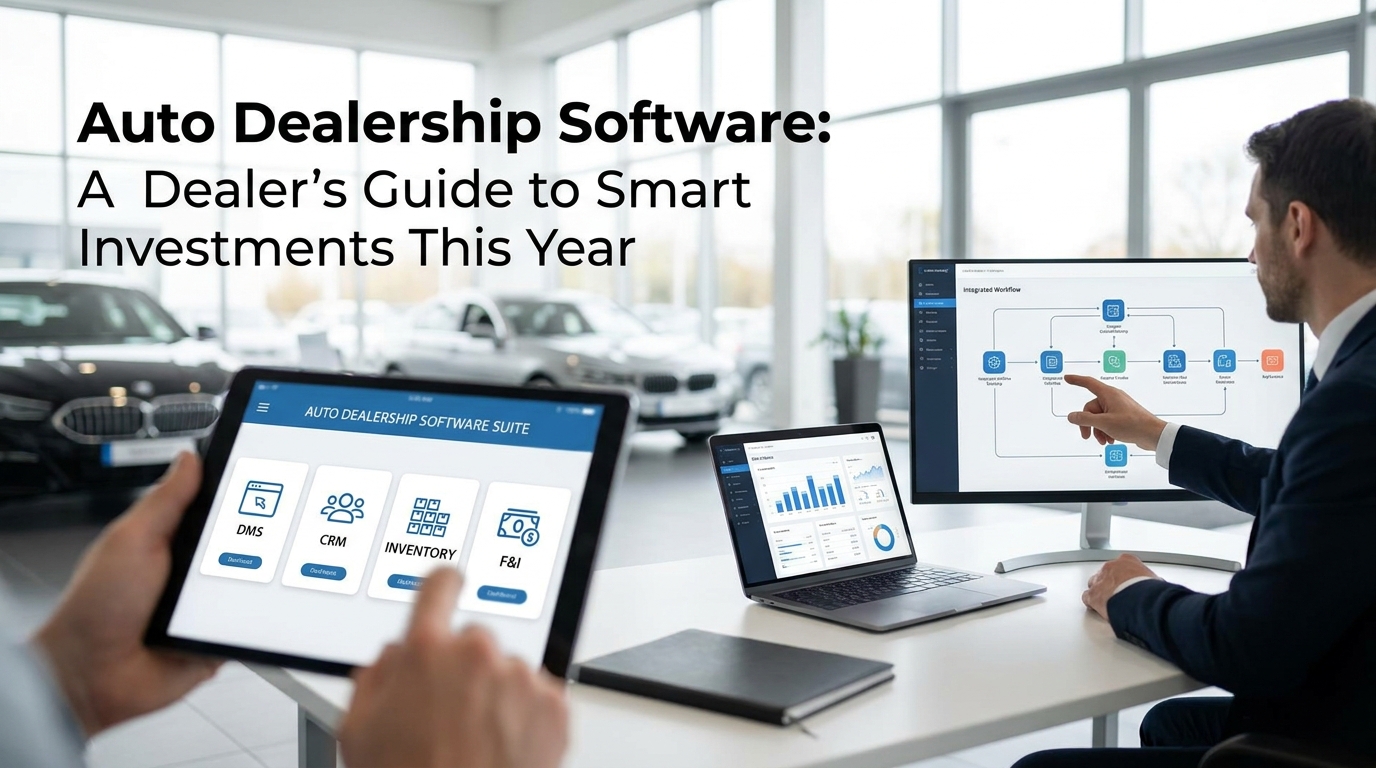
The modern auto dealership is a complex, fast-paced environment. Gone are the days of handwritten ledgers and Rolodexes. Today’s most successful dealerships are powered by sophisticated software that streamlines operations, enhances customer relationships, and maximizes profitability. The car buying journey has fundamentally changed; it now begins online, involves extensive digital research, and demands a seamless, transparent experience from the first click to the final signature. To not only survive but thrive in this new landscape, dealers must be strategic about their technology investments. Simply having software is no longer enough; you need the right software, working together in a cohesive ecosystem.
But with so many options on the market, each promising to be the ultimate solution, where should you focus your budget? The core of any dealership’s tech stack can be broken down into four critical pillars: the Dealership Management System (DMS), the Customer Relationship Management (CRM) system, Inventory Management tools, and Finance & Insurance (F&I) platforms. Each plays a distinct and vital role. Understanding the function of each module, how they differ, and, most importantly, how they should integrate is the key to building a powerful operational backbone. This guide will provide a detailed comparison of these essential software categories, helping you identify areas for investment and build a technology strategy that will drive your dealership forward this year and beyond.
The Digital Shift: Why Modern Dealership Software is Non-Negotiable
The transition from a traditional, in-person sales model to a digitally-driven one has been accelerating for years. Today’s customers arrive at your dealership armed with more information than ever before. They have researched models, compared pricing from multiple sources, read reviews, and may have even secured pre-approved financing. Their expectation is not to start the process, but to continue a journey they began long before stepping onto your lot. This shift in consumer behavior makes a robust software strategy an absolute necessity.
Relying on outdated systems or manual processes creates friction, both for your customers and your staff. It leads to inefficiencies, costly errors, and a disjointed customer experience. Consider the risks: a salesperson promising a test drive for a vehicle that was sold an hour ago because the inventory system wasn’t updated in real-time; a customer having to repeat their information multiple times as they move from the sales desk to the F&I office; or management making purchasing decisions based on stale, inaccurate sales data. These are not just minor inconveniences; they are cracks in your operational foundation that lead to lost sales and damaged reputations. Modern auto dealership software solves these problems by creating a single source of truth and automating the flow of information across every department, from sales and service to accounting and F&I.
The Core of Your Operations: Understanding the Dealership Management System (DMS)
If your dealership were a living organism, the Dealership Management System (DMS) would be its central nervous system. It is the foundational software, the system of record where every crucial piece of data ultimately resides. A DMS is essentially an Enterprise Resource Planning (ERP) system tailored specifically for the unique needs of an auto dealership. Its primary function is to manage the core operational and financial aspects of the business.
Traditionally, the DMS is responsible for several key areas:
- Accounting: This is the heart of the DMS. It manages the general ledger, accounts payable and receivable, payroll, and financial reporting. Every dollar that flows through the dealership is tracked and accounted for here.
- Parts Management: The DMS tracks parts inventory, ordering, pricing, and sales. It ensures you have the right parts on hand for your service department and retail customers, optimizing inventory levels to reduce carrying costs.
- Service Operations: This module handles everything from scheduling service appointments and writing repair orders (ROs) to tracking technician time and processing warranty claims.
- Deal Structuring: The DMS is where the final numbers for a vehicle sale are calculated, including taxes, fees, and trade-in values, creating the final buyer’s order.
When evaluating a DMS for investment, look beyond these basic functions. A modern DMS should be cloud-based, offering secure access from anywhere and eliminating the need for costly on-site servers. Crucially, it must feature a robust set of Application Programming Interfaces (APIs). These APIs are what allow your DMS to “talk” to other software, like your CRM. A DMS with an open API architecture is a strategic asset, allowing you to build a best-in-class tech stack rather than being locked into the limited, and often mediocre, tools offered by a single provider.
Building Relationships and Driving Sales: The Power of a Customer Relationship Management (CRM) System
While the DMS manages the transactions and operations of the dealership, the Customer Relationship Management (CRM) system manages your most valuable asset: your customers. A CRM is your sales and marketing engine, designed to track and manage every interaction with a lead, prospect, or existing customer. In today’s competitive market, a powerful, automotive-specific CRM is arguably the most critical tool for your sales team.
An effective dealership CRM goes far beyond being a simple digital address book. Its purpose is to provide a complete 360-degree view of the customer journey. Key features to look for include:
- Lead Management: The CRM should capture leads from all sources—your website, third-party sites like Autotrader, social media, phone calls, and walk-ins—and consolidate them in one place. It should then allow for intelligent, rules-based routing to ensure the right salesperson gets the lead instantly.
- Communication Tools: Integrated email and SMS/texting capabilities are essential. The system should allow for both personalized communication and automated follow-up campaigns, ensuring no lead falls through the cracks.
- Sales Pipeline and Activity Tracking: Managers and salespeople need a clear view of the entire sales pipeline. The CRM should track every activity, from the first phone call and test drive to the final negotiation, providing visibility and accountability. Daily work plans and task reminders keep the sales team focused and productive.
- Desking and Quoting: Modern CRMs include sophisticated “desking” tools that allow salespeople to structure a deal, present payment options, and handle initial negotiations without having to leave the system, creating a smoother workflow before pushing the final deal to the DMS.
Investing in a CRM that is built specifically for the automotive industry is vital. These systems understand the unique sales process, incorporate VIN decoding, manage trade-in information, and integrate with other key dealership tools in a way that a generic CRM like Salesforce or HubSpot simply cannot without extensive and expensive customization.
Your Biggest Asset: Mastering Inventory Management Software
For any dealership, the new and used vehicle inventory is the single largest asset and expense on the books. Managing this asset effectively is the difference between profit and loss. Specialized Inventory Management software provides the data and tools necessary to make intelligent, market-driven decisions about every vehicle on your lot, from acquisition to sale.
This software is the central hub for all vehicle data. It replaces guesswork and gut feelings with actionable intelligence. A top-tier inventory platform should offer several core functionalities:
- Vehicle Acquisition: The best systems provide tools that help your used car manager source the right vehicles. They offer access to auction run lists and provide market data to show which models are in high demand and have the best potential profit margins in your specific area.
- Appraisal and Pricing Analytics: It should provide powerful appraisal tools that pull data from major vehicle history reports (CarFax, AutoCheck) and market guides (NADA, KBB, Black Book). More importantly, it should provide live market data, showing you what similar vehicles are listed for at competing dealerships and what their average “days on lot” are. This allows you to price your inventory competitively and dynamically from day one.
- Merchandising and Syndication: A vehicle with poor photos and a generic description will languish online. Inventory software helps manage the merchandising process, ensuring high-quality photos, videos, and detailed descriptions are attached to each VIN. It then automatically “syndicates” or pushes this data to your dealership website and all the major third-party listing sites, ensuring consistency and saving countless hours of manual work.
The true power of this software is realized when it is tightly integrated with your CRM and website. When your inventory is managed in real-time, your website always displays accurate information, and your salespeople in the CRM have immediate access to every detail about a vehicle, ensuring they can answer customer questions confidently and precisely.
Maximizing Profitability: The Crucial Role of F&I Software
The Finance and Insurance (F&I) office has long been a primary profit center for dealerships. However, it can also be a significant bottleneck in the sales process and a major source of compliance risk. Modern F&I software is designed to address these challenges head-on, creating a more efficient, transparent, and profitable F&I experience for both the customer and the dealership.
An investment in a dedicated F&I platform can yield substantial returns by streamlining workflows and improving product penetration. Look for solutions that provide:
- Digital Menu Selling: Instead of a printed, one-size-fits-all form, digital menus allow F&I managers to present products (like extended warranties, GAP insurance, and tire & wheel protection) in a clear, interactive format on a tablet or screen. This creates a less pressure-filled, more consultative experience for the customer, which often leads to higher acceptance rates.
- E-Contracting and E-Signature: This is a game-changer. E-contracting allows the entire deal package to be completed and signed electronically. This dramatically reduces errors, as the system ensures all required fields are completed. It also significantly speeds up the funding process with lenders, improving cash flow for the dealership.
- Compliance and Reporting: F&I is governed by a web of regulations. F&I software helps ensure compliance by creating a digital audit trail of every presentation and transaction. It can generate the necessary forms and disclosures automatically, reducing the risk of costly fines and legal issues. Robust reporting also gives managers insight into which products are selling, which F&I managers are most effective, and overall departmental profitability.
The Integration Imperative: How CRM, DMS, Inventory, and F&I Software Work Together
We’ve explored the individual roles of the DMS, CRM, Inventory, and F&I software. However, the most important consideration for your investment this year is not which individual module is best, but how well they all work together. A dealership operating with siloed systems that do not communicate is leaving an immense amount of money and efficiency on the table. The goal is to create a seamless, integrated ecosystem where data flows effortlessly from one stage of the customer journey to the next.
Imagine the ideal workflow powered by integrated software:
- A customer submits a lead on your website. This lead flows instantly into the CRM, which automatically assigns it to a salesperson and sends an initial confirmation text to the customer.
- The salesperson uses the CRM to communicate with the customer, accessing real-time vehicle data pulled directly from the Inventory Management software to answer questions.
- The customer comes in for a test drive. The salesperson builds a preliminary deal in the CRM’s desking tool, which then pushes the customer and deal information with a single click into the DMS. There is no manual re-entry of data.
- The deal moves to the F&I office. The F&I manager opens the deal in their F&I Software, which has already been populated with all the customer and vehicle data from the DMS.
- The F&I manager completes the menu presentation and e-contracting. The finalized, signed deal data, including all product sales, is then automatically written back to the DMS for accounting and finalization.
This single-entry data flow eliminates redundant work, drastically reduces the chance of human error, and shortens the total transaction time significantly. The result is a more professional and pleasant experience for the customer and a more efficient and profitable operation for the dealership.
Conclusion: Investing in a Connected Future
Choosing the right auto dealership software is one of the most impactful decisions a dealer principal or general manager can make. The landscape is no longer about simply having a DMS or a CRM; it’s about architecting a comprehensive technology stack where each component enhances the others. Your DMS remains the operational core, managing the dealership’s finances and fixed operations. Your CRM is the engine for growth, managing customer relationships and empowering your sales team. Your Inventory Management software is the key to optimizing your largest asset, ensuring you stock the right cars at the right price. And your F&I platform is the tool to maximize profitability and compliance in the final, critical stage of the sale.
As you plan your investments for this year, shift your focus from evaluating individual features in isolation to prioritizing seamless integration. Ask potential vendors not just what their software can do, but how it connects and shares data with the other systems you rely on. The greatest return on investment will come from eliminating data silos and creating a single, unified workflow. By investing in a connected software ecosystem, you empower your team with the tools they need to be efficient and effective, and you provide your customers with the modern, streamlined experience they expect and deserve. This strategic approach to technology is the blueprint for building a resilient and successful dealership for the future.